


As scientific research becomes increasingly intertwined with economic and social development, science has drawn unprecedented public attention, while simultaneously facing complex challenges of its own. What is the underlying logic of science education? From philosophy to paradigm, what obstacles does it confront?
And how can the “light of reason” embedded in scientific thinking illuminate the future? During the 2025 World Laureates Forum, Yin Fan, host of Two Perspectives on Yicai Global, engaged in an in-depth dialogue with Karolin LUGER, structural biologist at the University of Colorado Boulder and Laureate of the 2023 World Laureates Association Prize in Life Science or Medicine. Their conversation explored the core value of science education and the mechanisms through which it empowers both individual cognition and broader social progress.

The Foundational Logic and Core Value of Science Education
“Science belongs to everyone. This is the idea we must convey in schools, and a belief educators must deeply embrace.” In a recent interview with Business Insights on China Business Network, Professor Karolin LUGER, Biochemistry Chair Professor at the University of Colorado Boulder, shared her reflections on the philosophy and transformation of science education. In 2023, LUGER, together with Timothy J. RICHMOND and Daniela RHODES, was awarded the World Laureates Association Prize in Life Science or Medicine for elucidating the atomic structure of the nucleosome, a discovery that laid the theoretical foundation for research into chromatin organization, gene regulation, and epigenetic mechanisms.
From LUGER’s perspective, a widespread misconception persists that science is “inaccessible” and reserved for a select group, leading to a separation between science education and general education. This false dichotomy, she argues, pushes people away from science. In reality, science belongs to everyone and people practice it every day. For example, when adjusting water temperature or brewing parameters to explore how they affect the flavor of coffee, one is already engaging in scientific inquiry. At its core, science education should guide people to explore the world through curiosity and be embedded across all stages of learning. Scientists and educators share a responsibility to help dismantle cognitive barriers and encourage the integration of scientific methods into everyday life.
When discussing the deeper value of science education, Professor LUGER highlighted a well-known psychological tendency: confirmation bias, the inclination to favor information that confirms existing beliefs while ignoring contradictory evidence. The danger of confirmation bias lies in its invisibility: people often fail to recognize or correct flawed assumptions, falling ever deeper into “rabbit holes” of misinformation. Examples abound, from beliefs that COVID-19 vaccines implant 5G chips to persistent claims that vaccines cause autism. Science education, she emphasized, cultivates logical reasoning and rational thinking, helping individuals resist blind conformity and misinformation.

Constants and Variables in Science Education
At its essence, science education is about protecting curiosity, forging resilience, and igniting confidence, teaching students to coexist with failure while navigating a landscape full of variables and uncertainty. As Professor LUGER observed, true scientists are explorers who grow through trial and error.
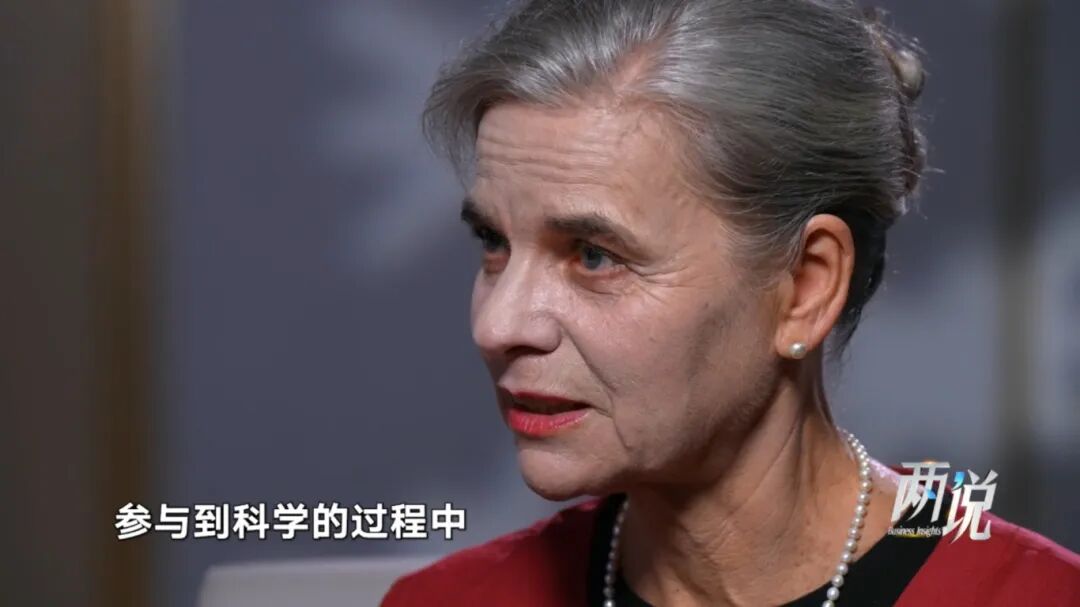
Curiosity, she noted, requires active maintenance. Observing infants, one sees them explore objects by biting, touching, or dropping them, testing how things respond.
This is, fundamentally, the scientific mindset. Yet in many modern education systems, excessive emphasis on grades and rote knowledge transmission compresses space for exploration, causing curiosity to wither. “Like all talents, curiosity fades if it is not carefully nurtured,” she said, noting with regret the prevalence of “adults who are no longer curious,” consumed by work and survival, having forgotten the joy of exploration.
“I allow my students to make mistakes. I encourage them to make mistakes, and I applaud their mistakes,” LUGER shared during the opening ceremony of the 2025 World Laureates Forum, “Because we are doing research. We are exploring the unknown. That is our job.” In her view, research is a marathon, not a sprint. Failure is inevitable, and education must do more than make students “smart”, it must cultivate resilience. Many high-achieving students, accustomed to being “right,” develop a fear of failure. Upon entering the laboratory, experimental errors often trigger self-doubt. “You must accept the limits of your knowledge,” she emphasized, “and become comfortable with making mistakes, far more often than succeeding.” She likened challenges to “running into a wall.” Stepping back may reveal a path around it, or clarify that it is time to change direction. She encourages aspiring researchers to complete this mindset shift early: stop striving to be the rule-following top student, and instead become a scientist who tests, fails, adapts, and tries again.
On building confidence, Professor LUGER observed significant individual differences.
Overconfident students should be guided to break ambitious goals into manageable stages while strengthening foundational skills. Students lacking confidence, by contrast, need encouragement through visible progress rather than negation, helping them avoid spirals of self-doubt. Confidence, she stressed, is a vital engine of growth, and must be cultivated deliberately.
Regarding the impact of AI and automation on research, Professor LUGER described it as “a double-edged sword.” While powerful, AI-generated outputs still require verification. She called for expanded training in modern pedagogy for educators, particularly in the responsible use of AI tools, to support meaningful educational transformation.
The “Light of Reason” in Scientific Thinking: Empowering Individual Cognition and Social Progress
In an era of information overload, where truth and falsehood intermingle, scientific thinking functions as a “light of reason.” It illuminates individual cognitive blind spots while helping society recalibrate its direction. Professor LUGER noted that many public misunderstandings of science stem from the barriers scientists themselves create through overly technical language, making science appear distant and elitist.
Effective communication of scientific thinking, she argued, requires abandoning unnecessary complexity and building bridges between science and daily life, so that people can feel science is present, not abstract.
When asked what scientific literacy is most crucial in a world saturated with misinformation, Professor LUGER acknowledged that she, too, continues to seek solutions. She reiterated that cultivating scientific thinking begins with confronting confirmation bias and guiding the public toward rational inquiry. When confronted with claims such as “vaccines are dangerous” or “Tylenol causes autism,” one must at minimum ask: Where does this claim come from? What evidence supports it? Reason must replace blind belief.
“I truly believe hands-on experience is essential,” she emphasized, “What stays with you is what you have personally engaged in. Active learning is the key to real understanding.” She called for students, from primary school through high school, to enter laboratories and engage in project-based learning. Rather than passively absorbing established knowledge, they should be guided to explore on their own, even if their discoveries seem small.

From dismantling knowledge barriers to cultivating discernment, from safeguarding curiosity to building supportive educational ecosystems, Professor LUGER concluded that only when scientific thinking is fully integrated into everyday life can the light of reason continue to illuminate the unknown path ahead.
