

> For the eighth consecutive year, a silver-haired scholar stood on the stage of the World Laureates Forum in Shanghai, delivering the same message with unwavering conviction. Like the vesicular transport system within a cell, his ideas move with precision and persistence, carrying the spirit of open and collaborative science to every corner of the world.
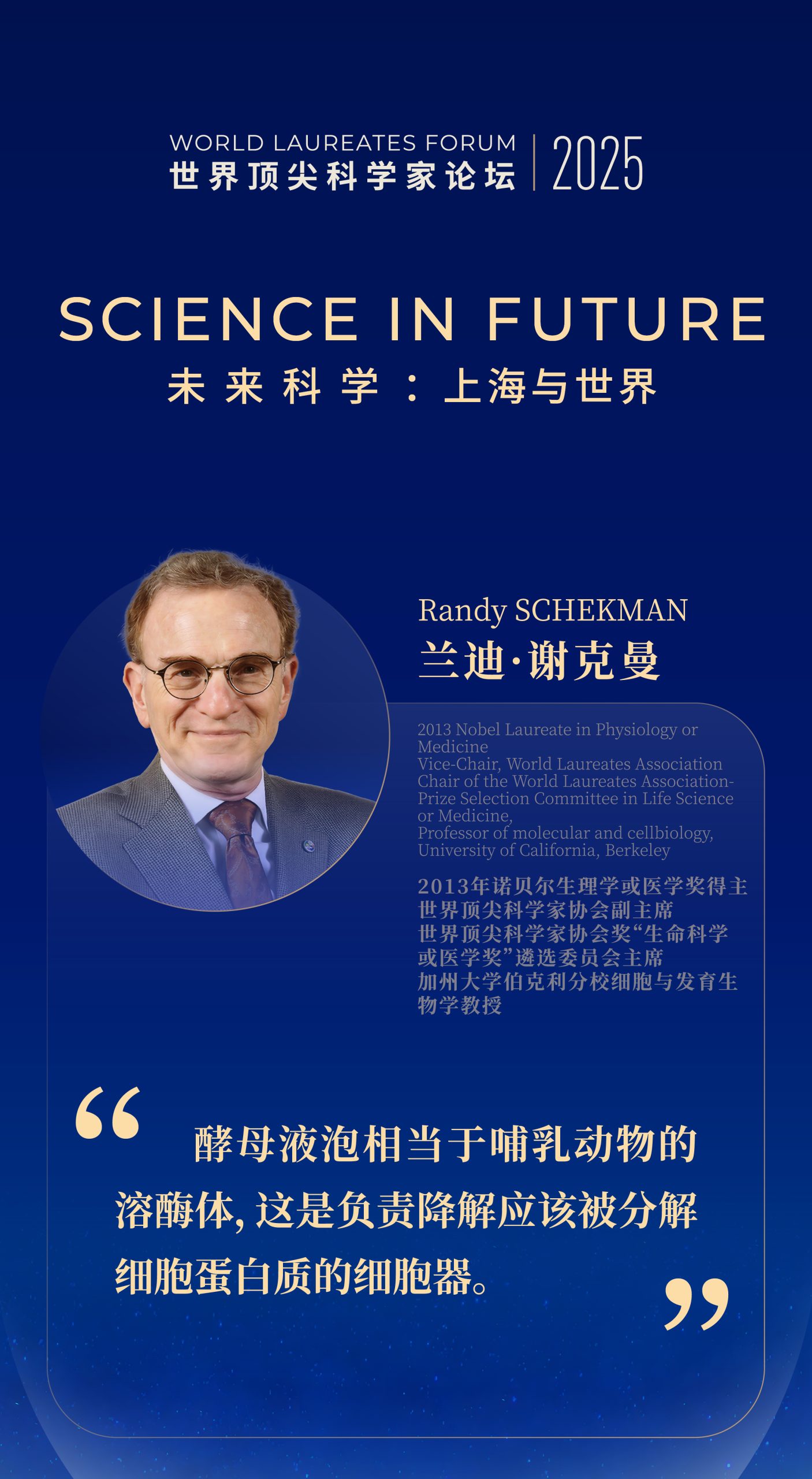
In October 2025, at the World Laureates Forum in Shanghai, Randy W. SCHEKMAN, Nobel Laureate in Physiology or Medicine (2013), took the WLF stage for the eighth consecutive year. From his groundbreaking discoveries in cellular transport mechanisms, to his global advocacy for open access to scientific knowledge, and his deep commitment to Parkinson’s disease research, Professor SCHEKMAN’s decades-long career has consistently embodied a single promise: science in the service of humanity.
As a co-organizer of the World Laureates Forum, the Shanghai Lingang Science and Technology Innovation Development Foundation has witnessed how Professor SCHEKMAN has transformed this international platform into a bridge for ideas and a vital link between China and the global scientific community.
Microscopic Mysteries
Professor SCHEKMAN’s scientific journey began at the age of twelve, peering through a toy microscope at pond scum. “The invisible yet vibrant microorganisms,” he later recalled, ignited his lifelong curiosity about the mechanisms of life. As a young scholar, he shifted from pre-medical studies to fundamental research, ultimately uncovering the core principles of intracellular transport using yeast cells as a model system.
In 2013, the Nobel Committee awarded him the highest honor for his pioneering discoveries on the regulation of vesicle trafficking in cells. By identifying three major classes of genes that govern vesicular transport, SCHEKMAN’s work revealed how proteins and other molecules are precisely “delivered” within cells.
These mechanisms underpin essential biological processes such as insulin secretion and neurotransmitter release, and have become foundational to research on diabetes and neurological disorders. Beyond basic science, this work has driven technological innovation in fields ranging from biofuel production to vaccine development, demonstrating the far-reaching impact of fundamental research.
The Open-Access Revolution
“Scientific research should not be locked behind paywalls.” Professor SCHEKMAN’s public appeal in Scientific American sent shockwaves through the academic world. Confronting the high subscription costs imposed by commercial publishers, he openly criticized the excessive profit margins of major publishing houses and called for structural reform.
In 2011, he became the founding Editor-in-Chief of eLife, an open-access journal jointly founded by the Howard Hughes Medical Institute, the Max Planck Gesellschaft, and the Wellcome Trust, fundamentally challenging the traditional pay-to-read model. To uphold this principle, he resigned from editorial positions at leading journals such as Nature and Cell, urging the scientific community to move beyond the obsession with impact factors.
Professor SCHEKMAN has since become a global standard-bearer for the open-access movement. At the World Laureates Forum, he has repeatedly reaffirmed this vision, not only through words, but through action. Through initiatives such as the Aligning Science Across Parkinson’s (ASAP) alliance, he has translated the philosophy of open collaboration into practice, ensuring the free flow of knowledge across borders and disciplines. This unity of principle and action resonates deeply with the mission of the World Laureates Forum, creating a powerful and sustained synergy.
Breaking the Ice
Personal loss became scientific resolve. After his wife passed away from Parkinson’s disease, Professor SCHEKMAN redirected his research focus toward what he has described as an “epidemic of aging.” Facing the reality that tens of millions of people worldwide live with Parkinson’s disease, he has consistently argued that research must go beyond clinical observation, toward uncovering the disease’s fundamental mechanisms and pathways to cure.
As Chair of the ASAP alliance, Professor SCHEKMAN has united 35 research teams worldwide, concentrating on critical challenges such as α-synuclein aggregation and neural circuit degeneration. The consortium’s publication, A Coordinated Approach to Basic Parkinson’s Disease Research, has introduced a new framework for the field.
Notably, he has extended insights from vesicle trafficking research into neurodegenerative disease studies, exploring the diagnostic potential of exosomes. At the same time, he actively promotes the translation of these foundational discoveries into clinical practice, seeking partnerships with the medical community to bridge the gap from laboratory research to patient care.
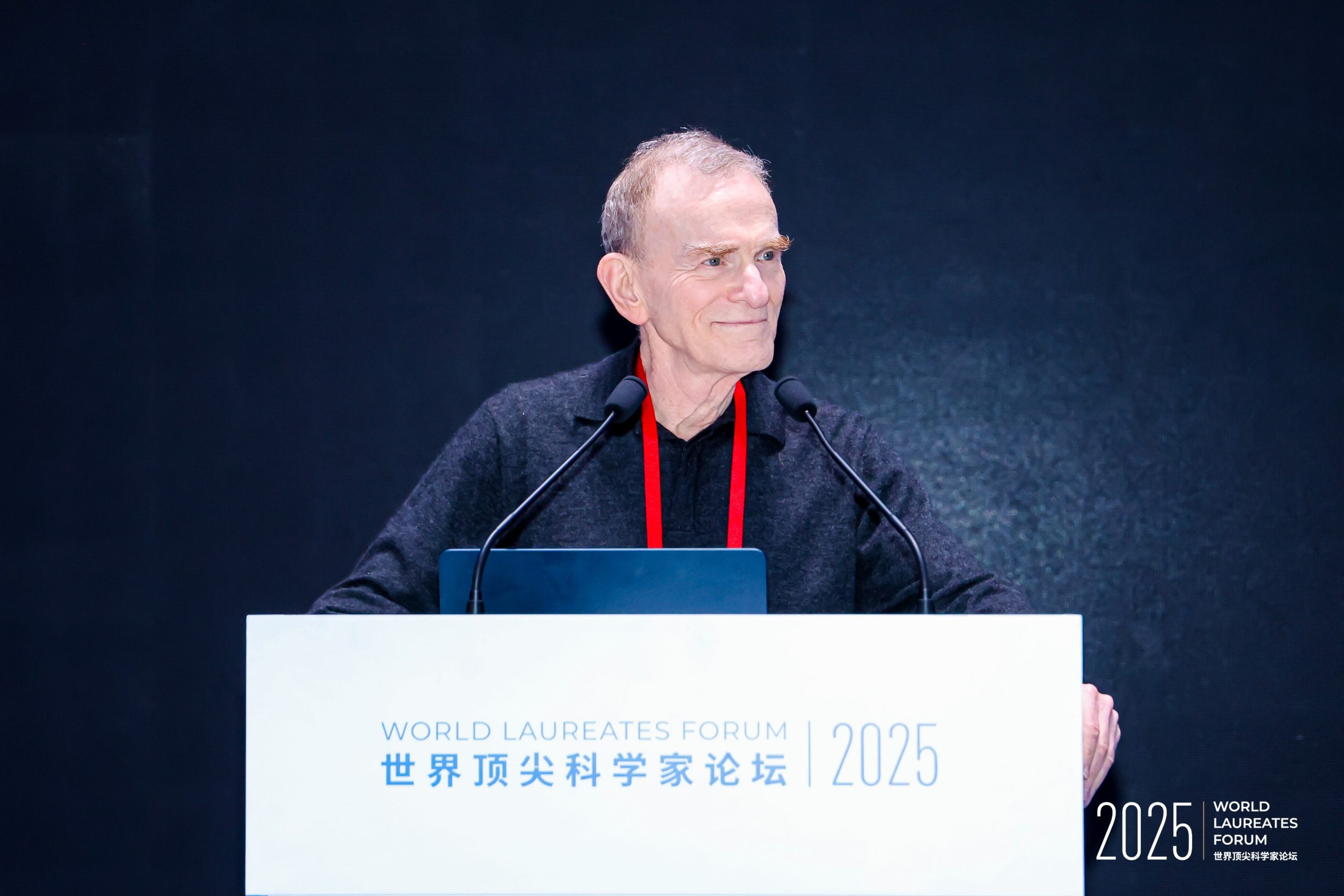
Professor SCHEKMAN’s relationship with China represents more than two decades of scientific partnership and mutual trust. From mentoring young Chinese researchers to collaborating with local institutions to build research platforms, his actions vividly demonstrate that great science speaks a universal language beyond national borders. The World Laureates Forum has become a central stage for this sustained dialogue and collaborative innovation.
As a co-organizer, the Shanghai Lingang Science and Technology Innovation Development Foundation is committed to serving as both catalyst and fertile ground, where Professor SCHEKMAN’s forward-looking ideas intersect with China’s innovation ecosystem to generate meaningful collaboration. We remain dedicated to building an open, trustworthy, and mutually beneficial international hub for scientific exchange, empowering leaders like Professor SCHEKMAN to share insight, build consensus, and co-create the future.
True scientific spirit ultimately points toward a more open, collaborative, and healthy future for humanity. This enduring vision is also the shared mission and promise of Lingang and the World Laureates Forum.

