


A physics student who had never taken a biology course.
How did he become one of the leading scientists reshaping the future of neurodegenerative disease?
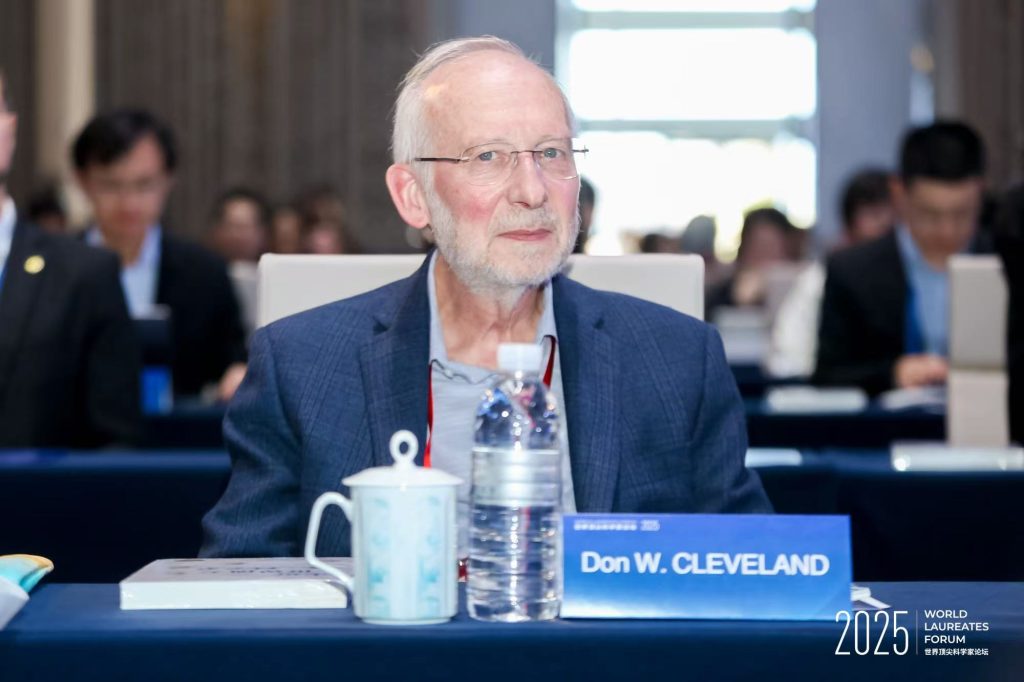
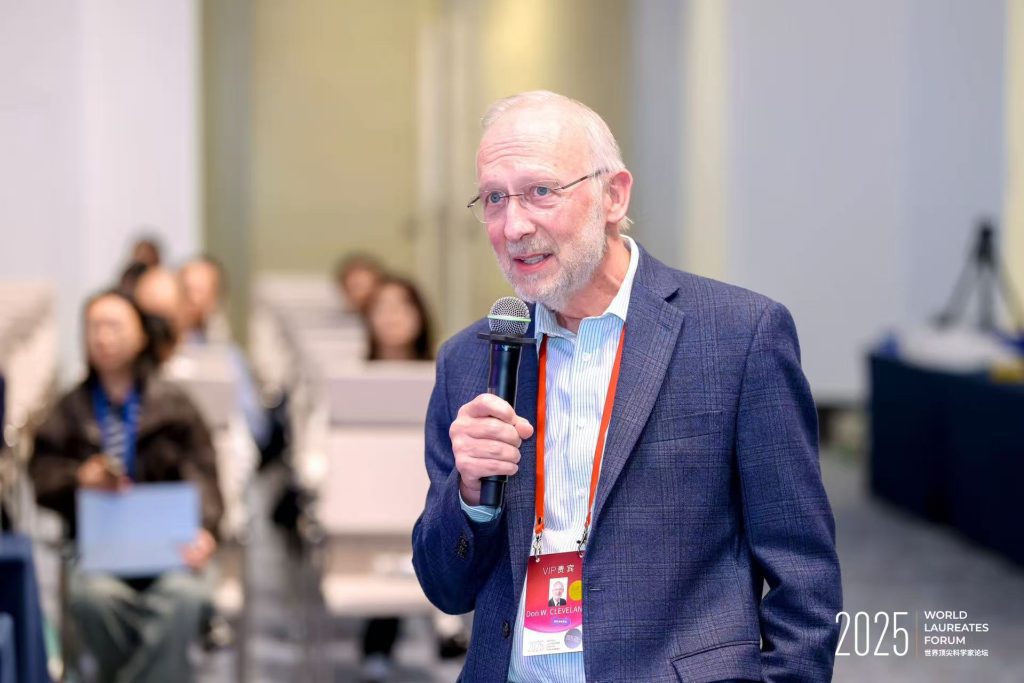
In 1972, Don W. CLEVELAND, newly graduated from the Department of Physics at New Mexico State University, entered graduate school at Princeton University. His mind was still filled with equations in fluid dynamics. Then a biochemistry professor stopped him, and invited him to change direction.
“I had never taken any course in biology,” CLEVELAND later recalled. “I immediately felt that I was far behind the other students. That feeling has never entirely left me.”
This student, who had received no formal training in biology, would become a world-leading scientist in uncovering the molecular mechanisms of amyotrophic lateral sclerosis, or ALS, and in pioneering antisense oligonucleotide therapies.
In October 2025, the 75-year-old authority on neurodegenerative disease came to Shanghai Lingang as a guest of the 2025 World Laureates Forum. At the venue beside Dishui Lake, he said, “What is needed to conquer ALS is only time.”
From Child of the Desert to Breakthrough Prize Laureate
“From the time I can remember, I wanted to be a scientist,” Don W. CLEVELAND said, looking back on his scientific career.
In 2018, he received the Breakthrough Prize in Life Sciences for elucidating the molecular pathogenesis of an inherited form of amyotrophic lateral sclerosis, and for establishing antisense oligonucleotide therapy in animal models of ALS and Huntington’s disease. The prize carried an award of three million US dollars, and is often described as one of the most prominent honours in modern science.
Today, CLEVELAND is a member of the United States National Academy of Sciences, the National Academy of Medicine, the American Academy of Arts and Sciences, the American Academy of Microbiology, and the American Association for the Advancement of Science. He has published more than 550 papers, which have been cited by peers more than 75,000 times.
Yet when asked to name the defining quality of a scientific career, CLEVELAND gives an answer that sounds almost old-fashioned.
“In biology and medicine, being smart is certainly useful, but it is neither necessary nor sufficient for success. Being good at experiments is also useful, but again it is neither necessary nor sufficient,” he told us. “The only quality that is truly necessary for success is perseverance.”
This is the answer of a scientist who came from the desert, and who has tested that belief across a lifetime.
It was this persistence that later allowed him to open a path in a field that few believed would succeed, the use of customized DNA medicines to treat diseases of the nervous system.
ALS Association’s “Bet Against the Odds”
Amyotrophic lateral sclerosis, known as ALS, is a devastating neurodegenerative disease. Muscles gradually weaken and waste away. A person may go from walking freely to being unable to speak, and eventually to paralysis, as if the body were slowly being frozen in place. More than a decade ago, the Ice Bucket Challenge brought global attention to the disease. For many, ALS became almost synonymous with an incurable diagnosis.
Don W. CLEVELAND is among those working, step by step, to erase that equation.
He describes the logic of his research in clear terms: identify which genes cause disease, or drive disease progression, and ask whether reducing their activity could provide an effective way to treat the disease.
Guided by this principle, he devoted himself to antisense oligonucleotide, or ASO, therapy. The approach uses customized DNA-based medicines that can be delivered broadly to the human nervous system, where they suppress the activity of disease-causing genes.
At the beginning, however, few believed the approach would work.
“There was deep skepticism in the field about whether this method could succeed,” CLEVELAND recalled.
In 2004, the ALS Association became the first to provide support. At a time when almost no one believed that gene silencing in the nervous system could be achieved, the Association offered the funding that made the work possible. This seed support allowed a line of research, once regarded by many as destined to fail, to take root.
Today, ASO therapy has expanded from ALS into clinical trials for spinal muscular atrophy, Huntington’s disease, Alzheimer’s disease, and other conditions. It has also been approved for the treatment of spinal muscular atrophy, a childhood neurodegenerative disease. Many children with this condition would once have died from fatal paralysis within the first one or two years of life. After receiving this therapy, some of the oldest treated children are now seven years old, and are able to walk normally.
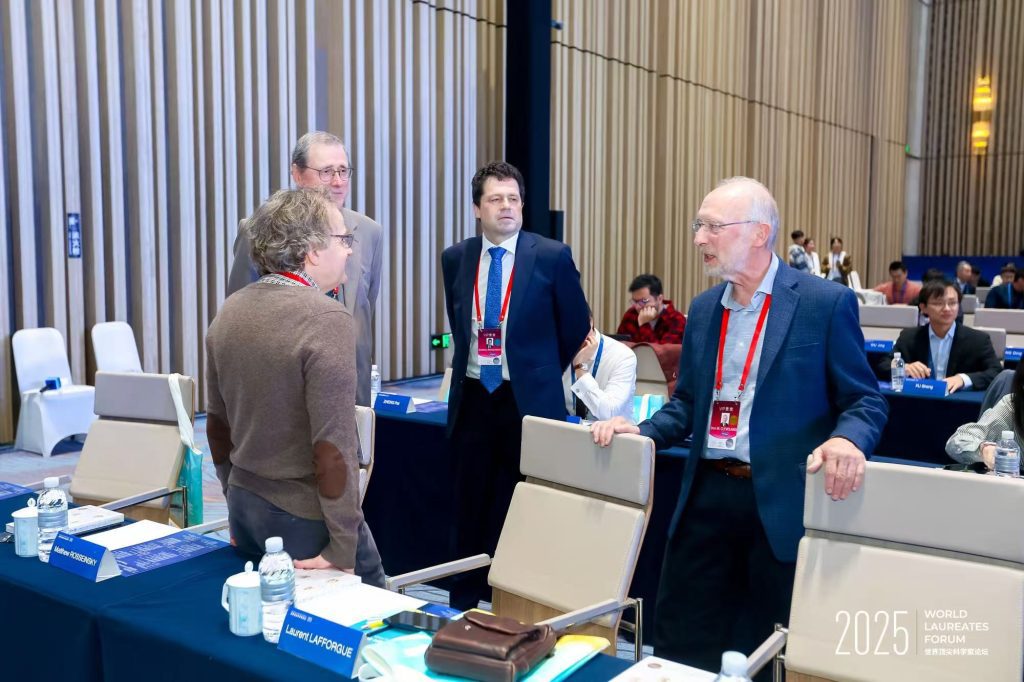
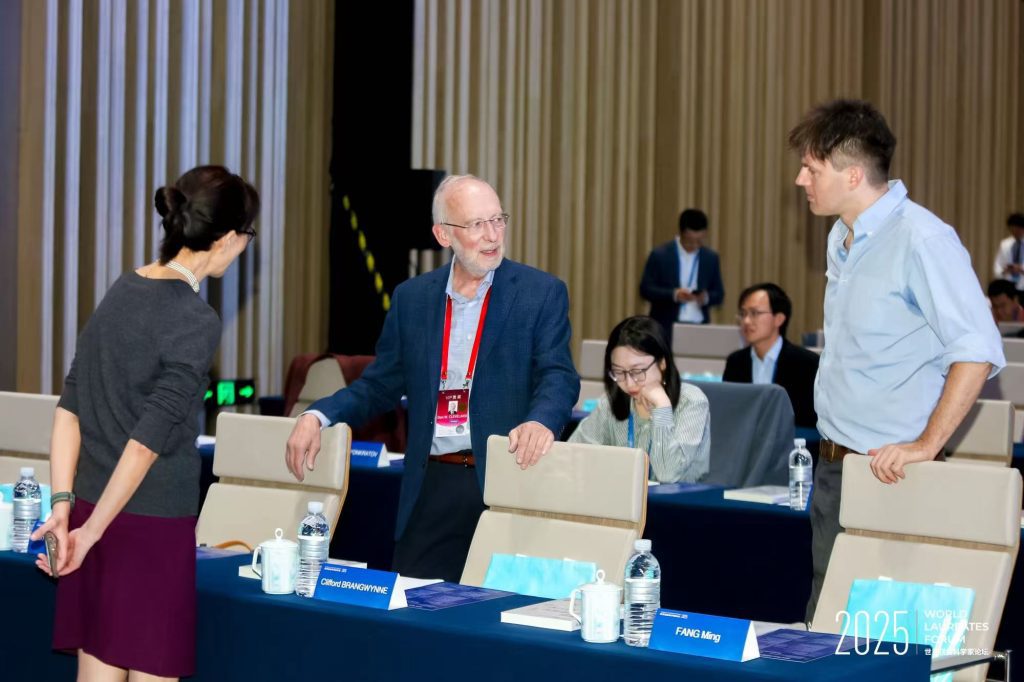
Exchange at the Youth Scientists Conference
A Breakthrough for 2%, a Promise for the Other 98%
In April 2023, tofersen, an antisense oligonucleotide drug developed with the participation of CLEVELAND’s team, was approved by the United States Food and Drug Administration. In September of the following year, it was approved in China. It is the world’s first and currently only ALS medicine that targets a known genetic cause of the disease, reducing motor neuron damage at its source.
“The greatest challenge in conquering ALS is to understand where the problem truly lies,” CLEVELAND said.
At present, tofersen is applicable only to patients with ALS caused by mutations in the SOD1 gene. These patients account for about two percent of ALS cases worldwide. Yet this stage of progress has also brought hope to the remaining 98 percent.
CLEVELAND noted that highly promising targets are now being tested.
“What we need is only time,” he said.
Before coming to Shanghai for the 2025 World Laureates Forum, he had just attended a meeting in Budapest on ASO therapy research. Around 1,000 participants were present, together with representatives from approximately 100 companies.
“I believe that when we look back five years from now, what we have today will seem behind the times,” he said with confidence. “By then, better therapies will certainly have emerged.”
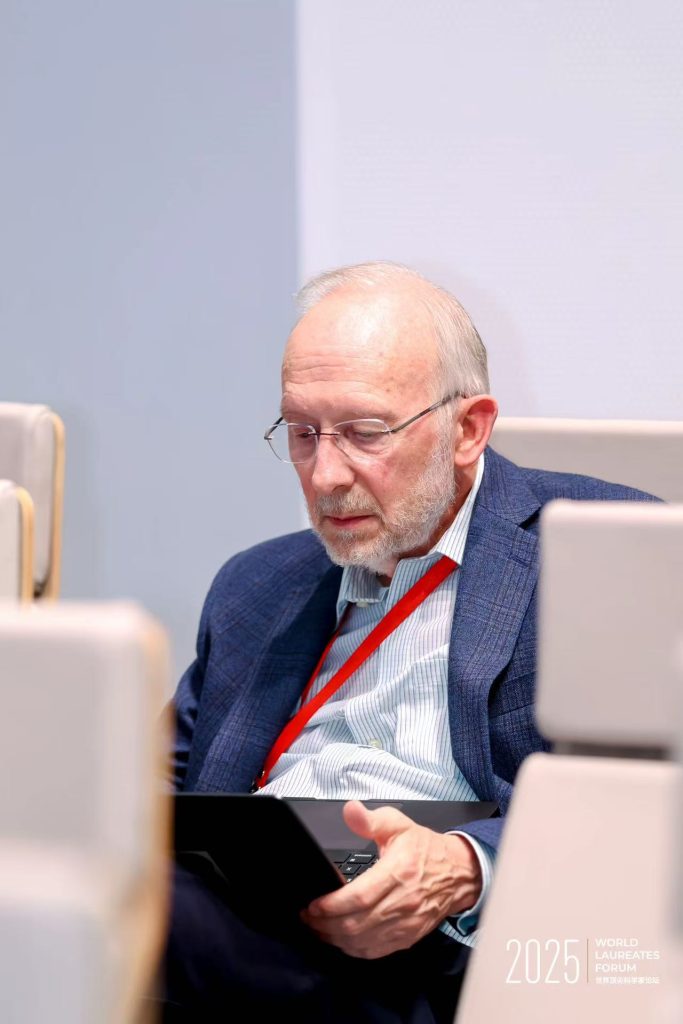
“Fighters Like Cai Lei Inspire Me”
CLEVELAND is not only an outstanding scientist. He is also deeply moved by those who continue to fight against disease.
When asked about Cai Lei, widely known in China for his struggle with ALS, CLEVELAND spoke with unmistakable respect.
“I have met Cai Lei twice. He is remarkable.”
In August 2024, Cai Lei’s research team formally appointed CLEVELAND as a scientific adviser, hoping to advance ALS research through international collaboration.
For CLEVELAND, Cai Lei’s perseverance is striking. Although his physical function continues to decline, Cai Lei has led his team in pursuing research and expanding cooperation with extraordinary determination.
“To remain brave, optimistic, and passionate in the face of a terminal disease is deeply inspiring,” CLEVELAND said. “It is also a motivation for us to keep moving forward.”
CLEVELAND has not only met Cai Lei. He also left him a note.
“I praised his courage, continuing to carry out these activities despite severe illness. I also admired his willingness to share these experiences through social media.”
Against the Tide, Eyes East
At a time when artificial intelligence is sweeping across almost every field, CLEVELAND retains the clarity of a traditional scientist.
“Almost everyone says AI will change everything, but I remain cautious about that,” he said. “Drug testing must be given sufficient time.”
Now in his seventies, CLEVELAND remains active at the front line of laboratory research. For decades, he has devoted himself to finding effective therapies for neurodegenerative diseases. His lifelong aim has been simple and profound, to move from helping one person, to ten people, and then to ten thousand.
When speaking about the future of science, CLEVELAND offered high praise for China’s research community.
“The future leaders of scientific development may well be in China,” he said.
Through his collaboration with Cai Lei’s team, he has been impressed by the creativity of Chinese colleagues.
“The improvements they have proposed may be better than the drugs we originally developed.”
“I have maintained long-term collaborations with several Chinese scientists,” he added. “One of them worked with me for twenty years, and is now at Westlake University.”
His words reflect the resilience and vitality of scientific exchange between China and the United States.
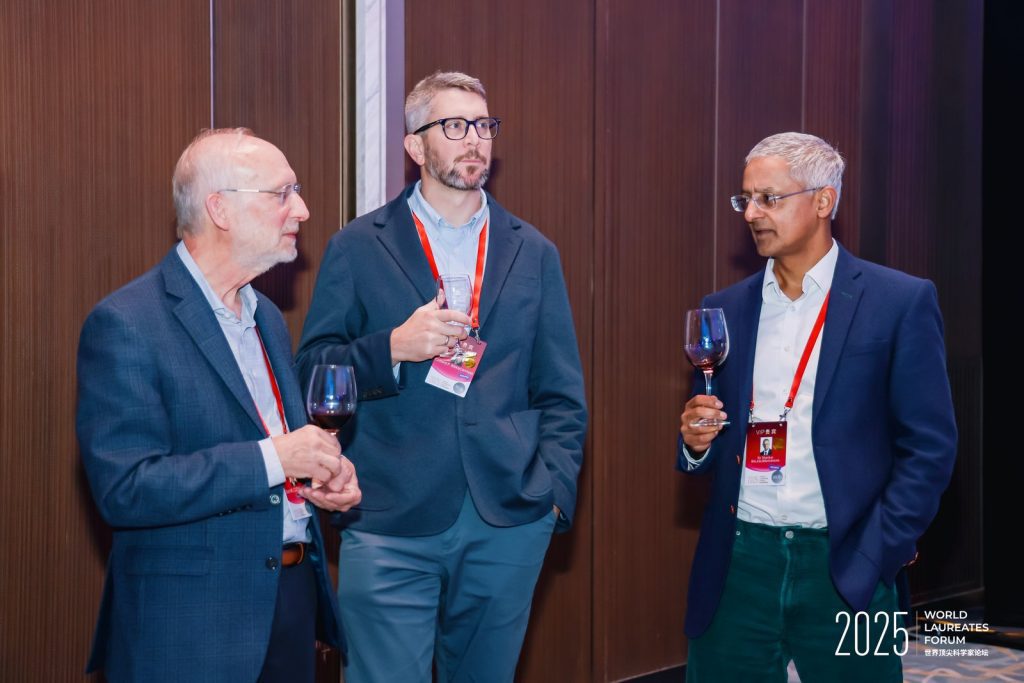
At the 2025 World Laureates Forum, CLEVELAND emphasized that the essence of science lies in collaboration. Bringing the world’s leading scientists together to discuss unresolved questions is, in his view, one of the best ways to move science forward.
This also speaks directly to the theme of this year’s Forum, “Future Science: Shanghai and the World.”
As the organizer of the Forum, the Shanghai Lingang Science and Technology Innovation Development Foundation remains committed to building an international platform for scientific exchange. The presence of Professor Don W. CLEVELAND, and the scientific spirit he represents, offers a vivid expression of our mission to promote scientific and technological innovation in service of human well-being.
CLEVELAND left young scientists with a piece of advice.
“What people generally accept as ‘facts’ may not actually be facts. First understand what is already known, then think carefully about what has truly been proven. After that, make your own judgment about what to do. Be brave. Do not be timid.”
This is the philosophy Don W. CLEVELAND has practiced throughout his life.
On the road toward treating ALS, he has never stopped moving forward. As he said, “We absolutely have the ability to treat some of these diseases effectively. For inherited forms of ALS, ASO therapy has already achieved partial reversal of disease.”
Perhaps, in the not too distant future, we may indeed see the day when the equation between ALS and incurability is erased completely.

