


In August 1997, inside the Panton Arms in Cambridge, a small group of scientists sat over beer, discussing a difficulty they had encountered in experiments with DNA polymerase.
They could not have known that an apparently ordinary conversation would help give rise to a technological revolution in the life sciences.
More than two decades later, the footsteps of one of those scientists would arrive on the coast of the East China Sea, in Shanghai Lingang.
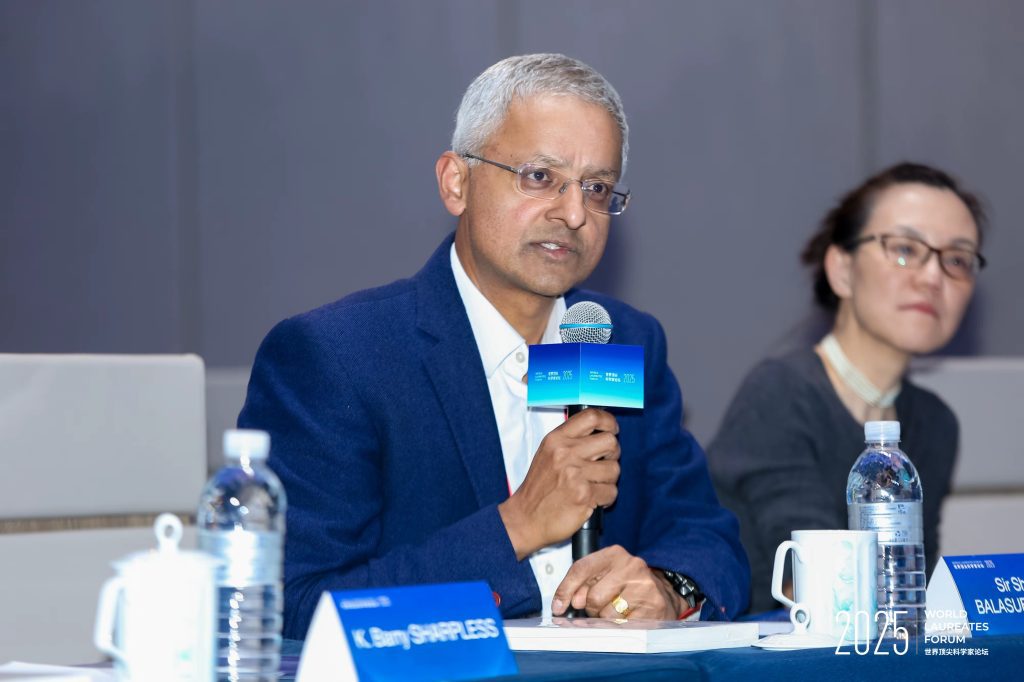
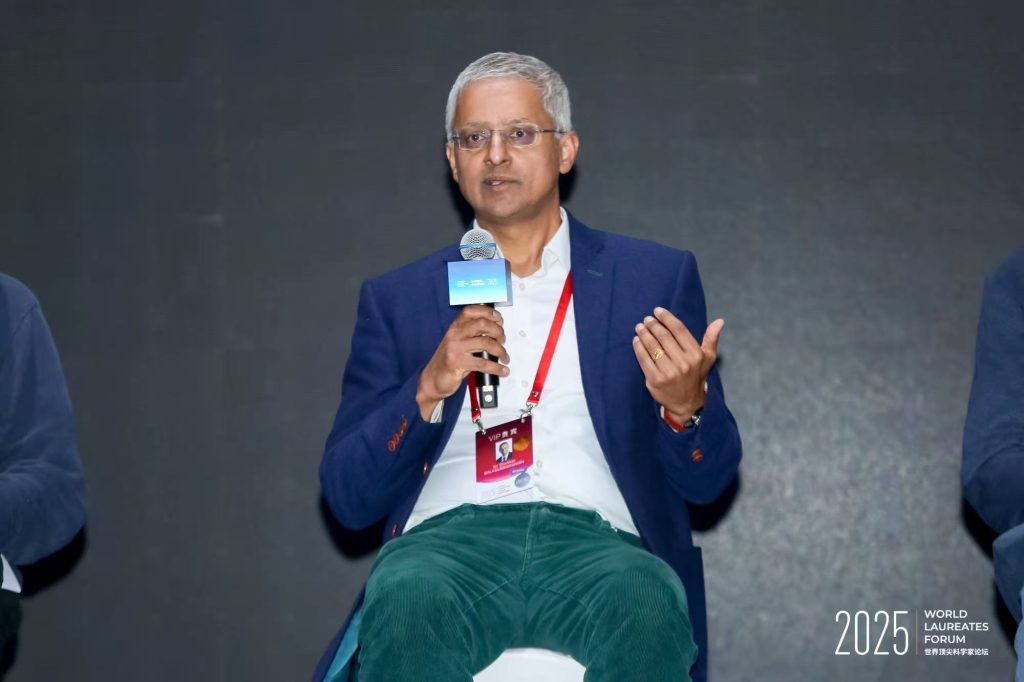
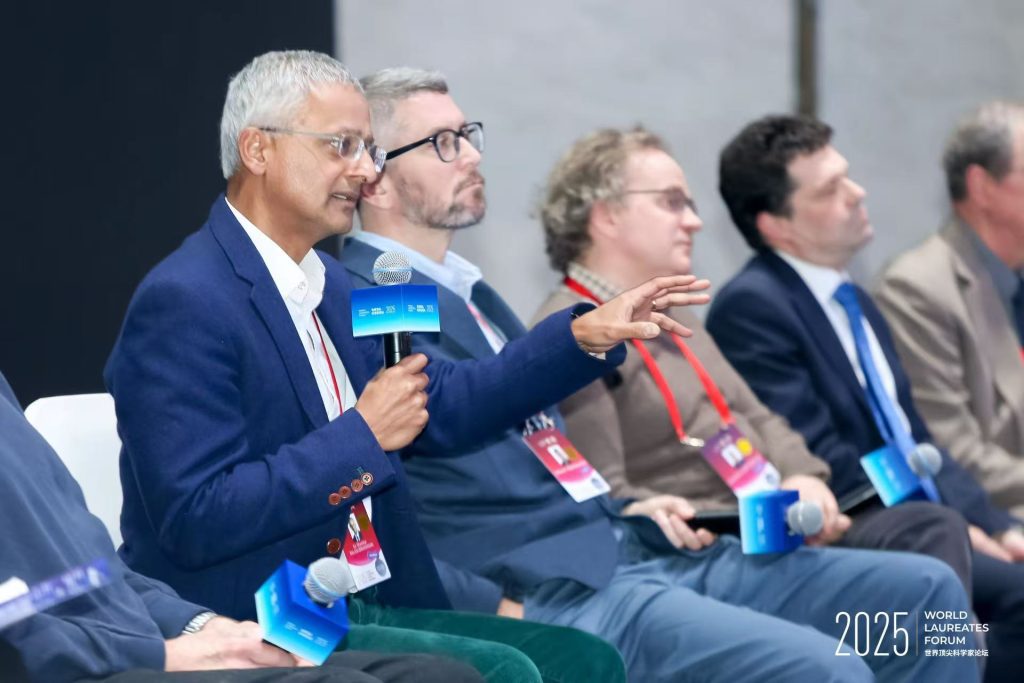
At the 2025 World Laureates Forum, among many of the world’s leading scientists, one figure stood out. He carried a well-worn green backpack, moved briskly through the venue, and spoke with an energy that seemed difficult to contain.
He was Sir Shankar BALASUBRAMANIAN, Professor of Chemistry at the University of Cambridge and Senior Group Leader at the Cancer Research UK Cambridge Institute. He was also among the twelve laureates of major international scientific awards making their first appearance at this year’s World Laureates Forum.
“Bad at Football, So Became a Scientist”
Sir Shankar has never concealed the dream of his youth. He once wanted to become a professional footballer for Liverpool.
“I grew up in a place called Runcorn, near Liverpool. When I was not at home, I was outside playing football. I later became captain of the school team. It was only around the age of seventeen that I gave up that dream.”
A knee injury brought that ambition to an abrupt end.
Fortunately, science gained a chemist whose work would help change the world.
“I do not think of what I do as work,” he said. “Like many scientists, I do it because I am driven by curiosity and by the desire to explore. I have always wanted to understand how things work, whether machines, devices, or the world around us.”
From Blackboard to Pub
The Solexa sequencing technology co-invented by Sir Shankar BALASUBRAMANIAN and Sir David KLENERMAN, now known as Illumina next-generation DNA sequencing, or NGS, is widely regarded as one of the most important advances in twenty-first-century life sciences.
Its impact is difficult to overstate.
> In 2000, sequencing a single human genome required more than ten years and cost over one billion US dollars.
> Today, multiple whole human genomes can be sequenced in a single day, at a cost of less than one thousand US dollars per genome.
> The speed of sequencing has increased by roughly one million-fold.
More than one million human genomes have now been sequenced, while genome sequencing of animals, plants, bacteria, and viruses continues to advance in parallel. Without this technology, humanity’s understanding of cancer, rare genetic diseases, infectious diseases, and vaccine development would have progressed far more slowly.
During the COVID-19 pandemic, NGS enabled scientists to read and share the genetic code of the coronavirus rapidly, and to monitor the spread of emerging variants in real time.
Yet the origin of this technology was unusually modest.
In August 1997, in the Panton Arms in Cambridge, BALASUBRAMANIAN and KLENERMAN had reached an impasse in the laboratory. They stepped away from the bench, sat down over beer, and continued discussing their DNA polymerase experiments. In that relaxed and open atmosphere, the first sparks of what would become Solexa sequencing began to form.
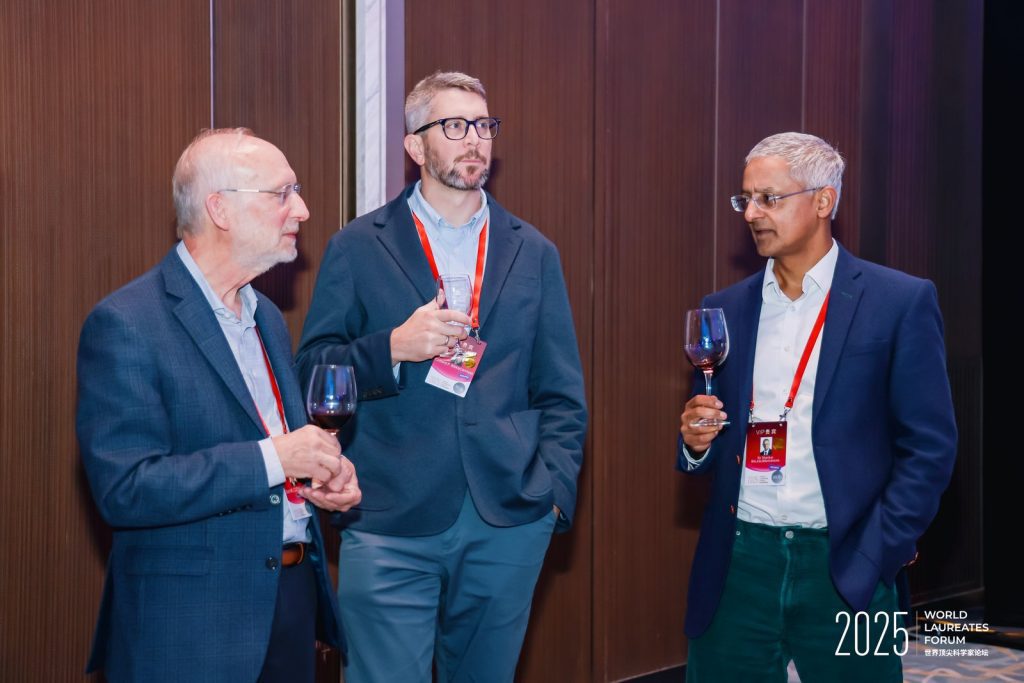
“I think pubs are places for relaxation and free exchange,” Sir Shankar said. “Scientists need to spend a great deal of time thinking about experiments and data. But sometimes, stepping away briefly and looking at a problem from another angle can lead to inspiration.”
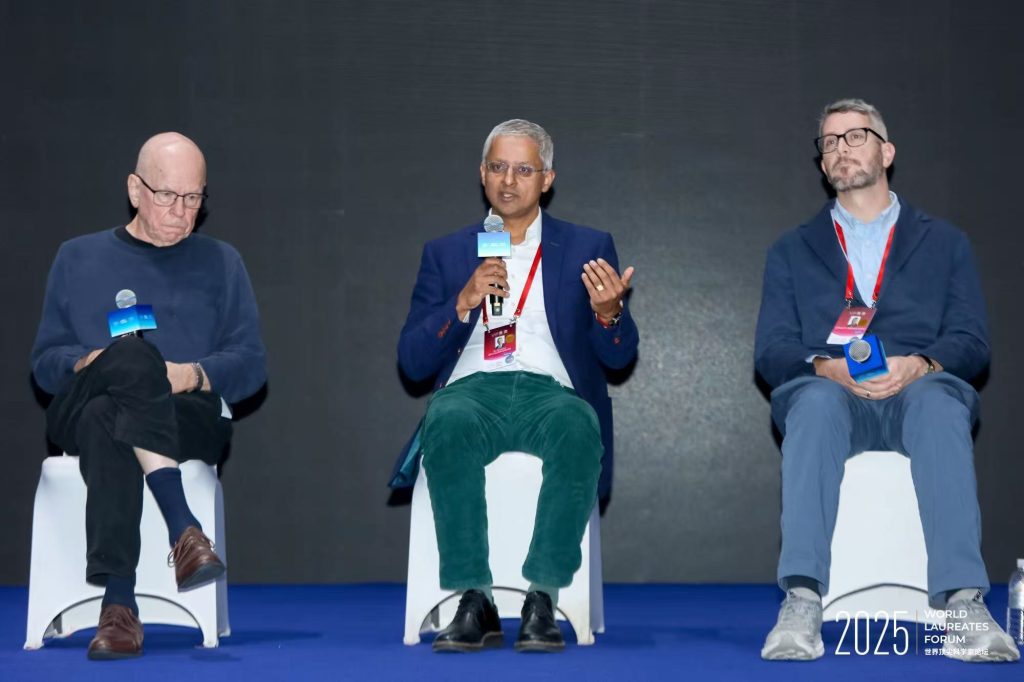
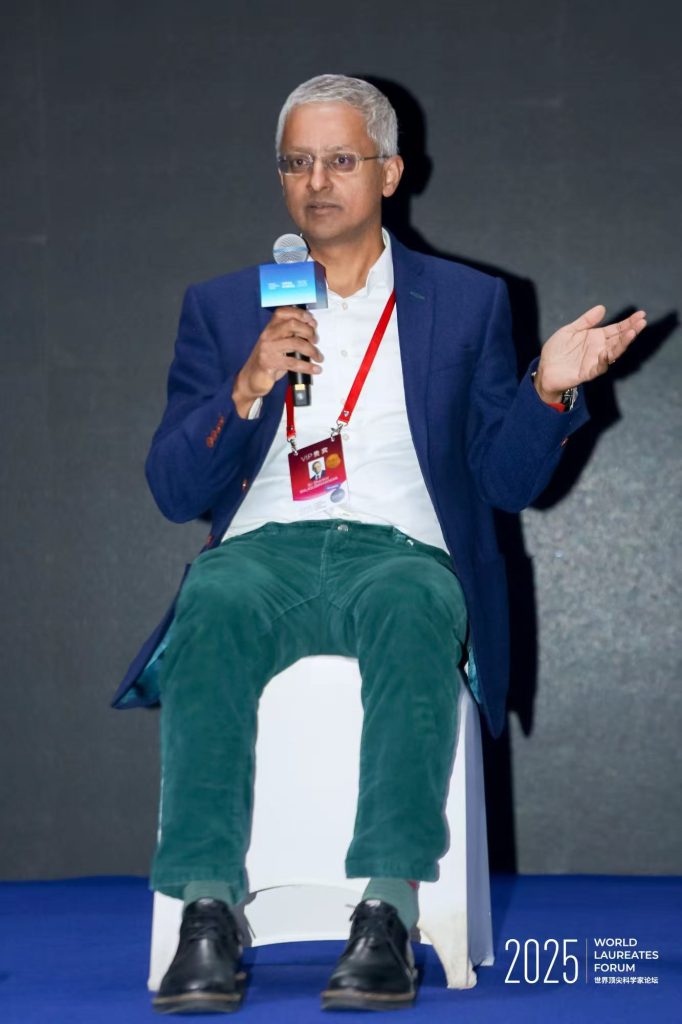
SharpMind Roundtable Dialogue at the Youth Scientists Conference
Failure Is the Best Teacher
Sir Shankar still keeps the original research proposal he wrote with KLENERMAN.
“The final outcome could not have been predicted from the proposal,” he said. “Yet it led to a commercialized method that is now changing the world.”
He often tells doctoral students and researchers that many of the things they try in the laboratory will fail.
“But if you never fail, it probably means you are not trying hard enough. The secret to success is to fail as quickly as possible. The path to the right answer often begins with failure.”
For him, scientific research is, by nature, unpredictable. Researchers should choose an important and interesting question with care, then pursue it deeply.
“Usually, it takes many years for an idea to develop into an important body of knowledge and understanding. Opportunities for transformative innovation often arrive unexpectedly, and a short-term research culture may cause them to be lost.”
He has therefore called on research funders to assess progress from a longer perspective. In particular, he hopes that project funding for young researchers can be extended to ten-year periods.
The Trio of Nucleic Acid Chemistry
Sir Shankar’s research extends far beyond sequencing technology. His contributions span fundamental chemistry and its applications in biology and medicine.
His work focuses on the chemistry, structure, and function of nucleic acids, and may be understood through three closely related directions.
01 The primary sequence of DNA, the foundation of genetics.
Solexa sequencing made routine, accurate, and low-cost human genome sequencing possible.
02 Concerns epigenetic modified bases.
His group developed chemical methods for decoding several forms of modified DNA bases across the genome.
03 The secondary structure of DNA, especially the G-quadruplex.
For more than two decades, his laboratory has studied this four-stranded DNA structure, making pioneering contributions to the understanding of its dynamic behaviour and biological function.
“Each exploration begins with chemistry,” he summarized in the Mendel Lecture, “and gradually moves toward biology and medicine.”
The Not So Cold Scientist
Thick lenses, close-cropped grey hair, a well-worn green backpack, and a brisk pace. At first glance, Sir Shankar may appear intense. Yet students often describe him in different words, warm, humorous, and full of curiosity.
His life has long carried a sense of crossing boundaries.
Born in India, he moved to the United Kingdom with his parents at the age of one. He attended an ordinary state school from which no student had previously gone to Cambridge, yet he entered the University of Cambridge with outstanding results. As an undergraduate, he worked as a DJ, specializing in hip-hop music in pubs. Before applying for a doctorate, he even considered moving to the United States with a friend to open a chain of bars.
After achieving international recognition, he developed a passion for collecting wine. He describes himself as a slow and careful cook. He also enjoys long-distance running, and has completed ultramarathons.
“I do not think I will ever stop being a scientist, at least not in the sense of thinking about science,” he said. “Every bottle of wine has a story.”
This “not so cold” scientist has also received a remarkable list of honours. He was knighted in 2017 for his services to science and medicine. In 2018, he received the Royal Medal of the Royal Society. In 2021, he shared the Millennium Technology Prize with Sir David KLENERMAN. In 2022, he received the Breakthrough Prize in Life Sciences with KLENERMAN and Pascal MAYER. In 2023, he was elected an international member of the United States National Academy of Sciences. In 2024, he received the Canada Gairdner International Award, often regarded as a significant indicator of future Nobel recognition.
Yet he remains unusually calm about such honours.
“Awards are honours. If they come, it is a great privilege,” he said. “But the greatest value of scientific awards is that they allow the public to see science, to see basic science, and to recognize exemplary scientific achievements.”
He has always believed that scientists do not pursue research in order to receive awards.
“Science itself already offers its own rewards to every researcher. If our work can make even a small contribution to society, that is the greatest satisfaction.”
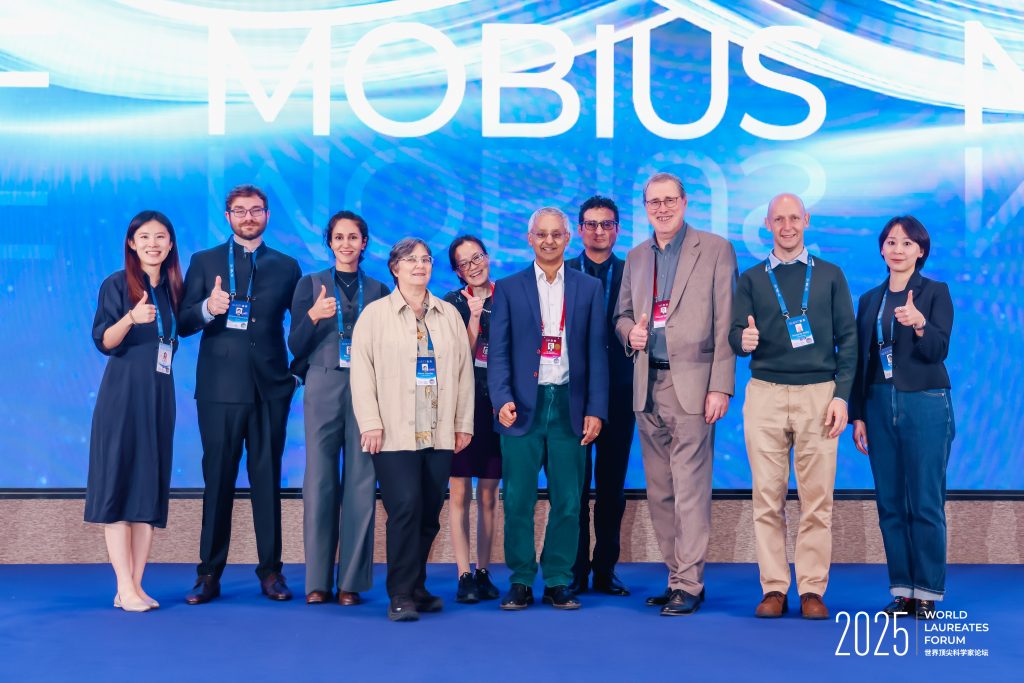
WLF Möbius Night at the 2025 World Laureates Forum
A Voice in Lingang
At the Youth Scientists Conference of the 2025 World Laureates Forum, Sir Shankar joined many leading scholars in sending a clear message to young scientists around the world: support for high-risk research into the unknown remains insufficient.
We believe that truly transformative innovation often emerges from unexpected basic research. As Sir Shankar observed, “Basic research may take one hundred years, or even longer, before it has an impact on the world. To see one’s own research translated into practical use within one’s lifetime is deeply satisfying.”
Lingang is working to become such a fertile ground for innovation.
Here, we look forward to welcoming more scientists like Sir Shankar BALASUBRAMANIAN, scientists who bring curiosity, resilience, and long-term commitment, and who are ready to join China’s scientific community in writing the next chapters of discovery.

