

If listening to Bach in a Gothic church can inspire “creative tension”, what kind of inner polyphony might he have felt when standing on the stage of the 2025 World Laureates Forum?
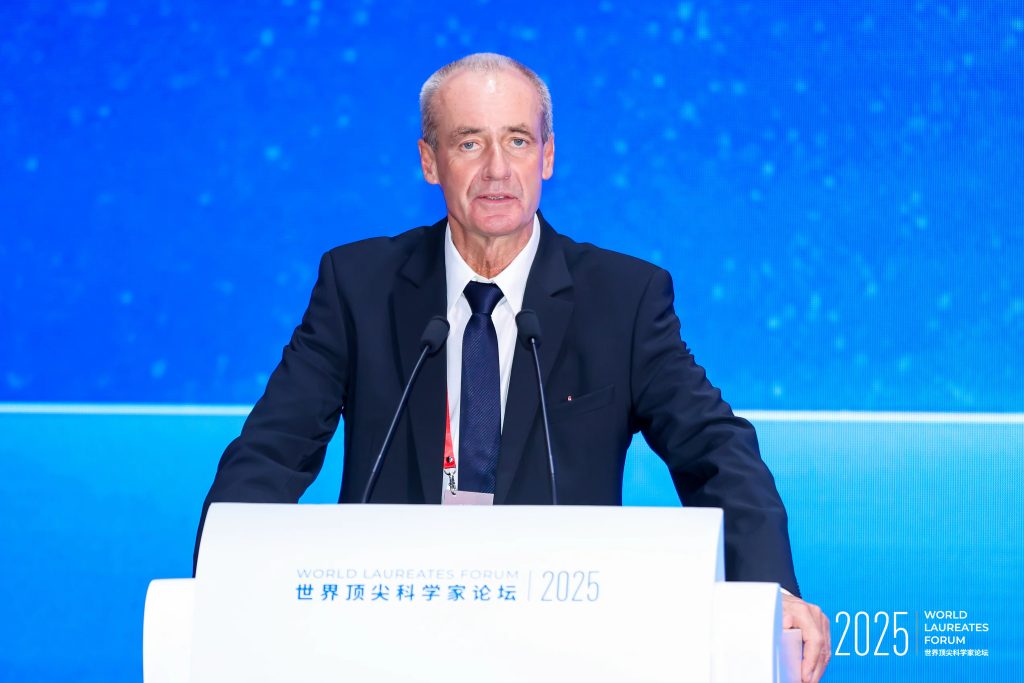
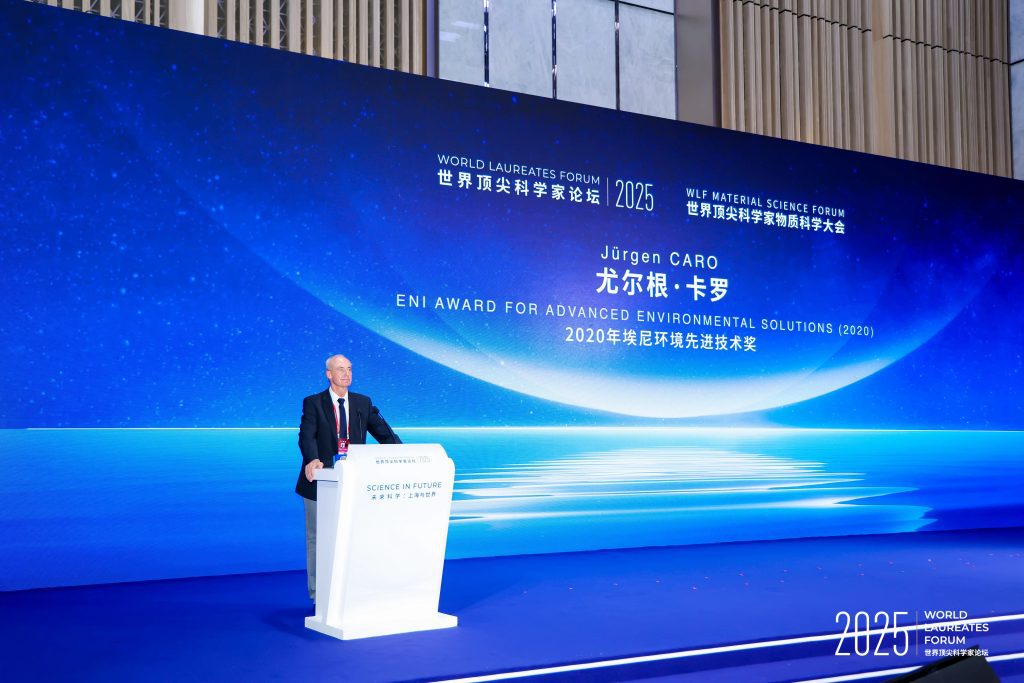
He was the German representative at this year’s Forum, and the 2020 Eni Award laureate for Advanced Environmental Solutions: Jürgen CARO. When he spoke about the connection between Nobel laureate Gerhard ERTL and Leibniz University Hannover, his tone was as calm as if he were describing an ordinary diffusion experiment. Yet his life has been far from calm. The Academy of Sciences of the German Democratic Republic was closed. A start-up company went bankrupt. Research institutes were dissolved twice. Over half a lifetime, he has answered one question: how many times must a scientist fall before standing firm?
A Life of Ups and Downs
During the 2025 World Laureates Forum, Professor CARO was interviewed by several Chinese media outlets, including People’s Daily. The related report appeared on the front page of the Sunday edition, and within only a few days, it had been read more than two million times.
What kind of story could move so many readers?
Professor CARO told his life story with remarkable calm. After the dissolution of the German Democratic Republic, the Academy of Sciences of the GDR, where he worked, was closed, and he became unemployed for the first time. He then tried to start a company developing synthetic zeolite adsorbents and catalysts, hoping to begin again from the ground up. The company eventually went bankrupt. Later, the local Institute of Applied Chemistry was rebuilt, but it was again closed when funding could not be sustained, and he lost his job for a second time. A newly established Institute of Applied Catalysis later took root in Berlin, but under the combined pressure of resource imbalances within the West German research system and intense funding competition, it also struggled to survive. The team eventually moved as a whole to Rostock.
In the end, CARO found a new and lasting scientific home at Leibniz University Hannover, where he would spend the next twenty years.
There is no sentimentality in this account, only quiet narration. Yet it is precisely this calm that allowed countless readers to see another quality of a scientist, not extraordinary talent alone, but the ability to rise again after repeated setbacks.
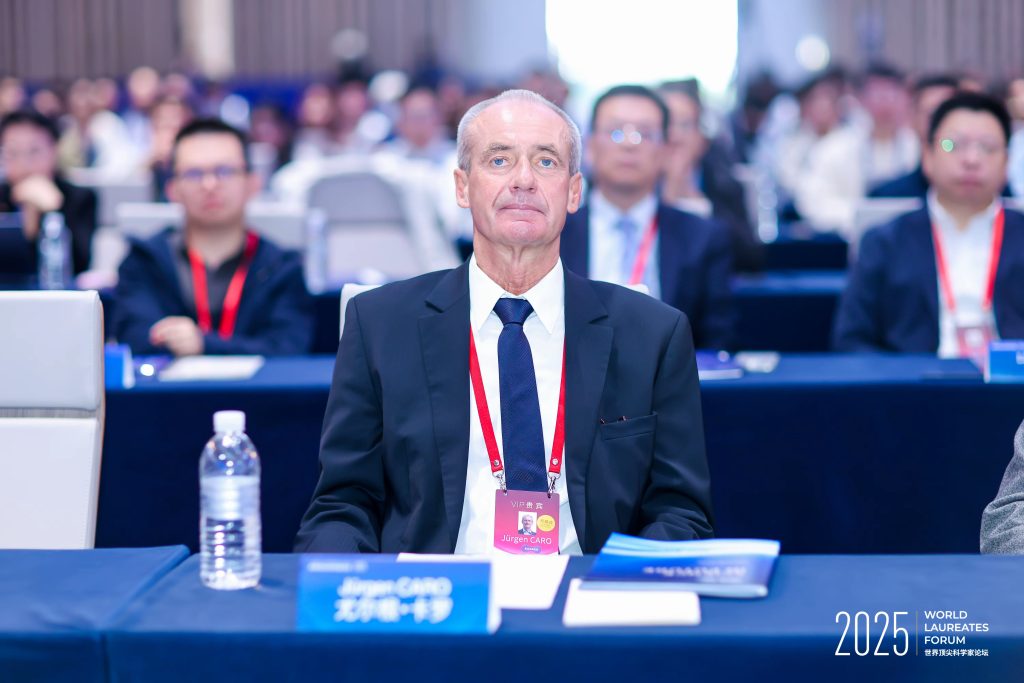
Materials Science Conference at the 2025 World Laureates Forum
From Nanopores to an Energy-Efficient Future
In the 2020 Eni Award for Advanced Environmental Solutions, presented in October 2021, CARO shared the honour with his doctoral adviser, Jörg KÄRGER. The award carried a prize of 200,000 euros, and is often described as a major international honour in energy and environmental research. It recognized their pioneering work on “mass transfer in nanoporous materials: paradigm shift and technological development for advanced environmental solutions”.
CARO’s research focuses on zeolite molecular sieves, membrane materials, and catalysts. The new membrane materials he has developed enable energy-efficient gas separation and process intensification in catalytic membrane reactors, with important implications for hydrogen energy, carbon dioxide capture, and sustainable chemical engineering. He has published hundreds of academic papers, holds dozens of granted patents, and has long maintained an h-index above 80. In 2013, he received the Breck Award from the International Zeolite Association. In 2016, he was elected a corresponding member of the Saxon Academy of Sciences and Humanities. He is also a member of the German National Academy of Sciences Leopoldina, and has served as President of the German Catalysis Society.
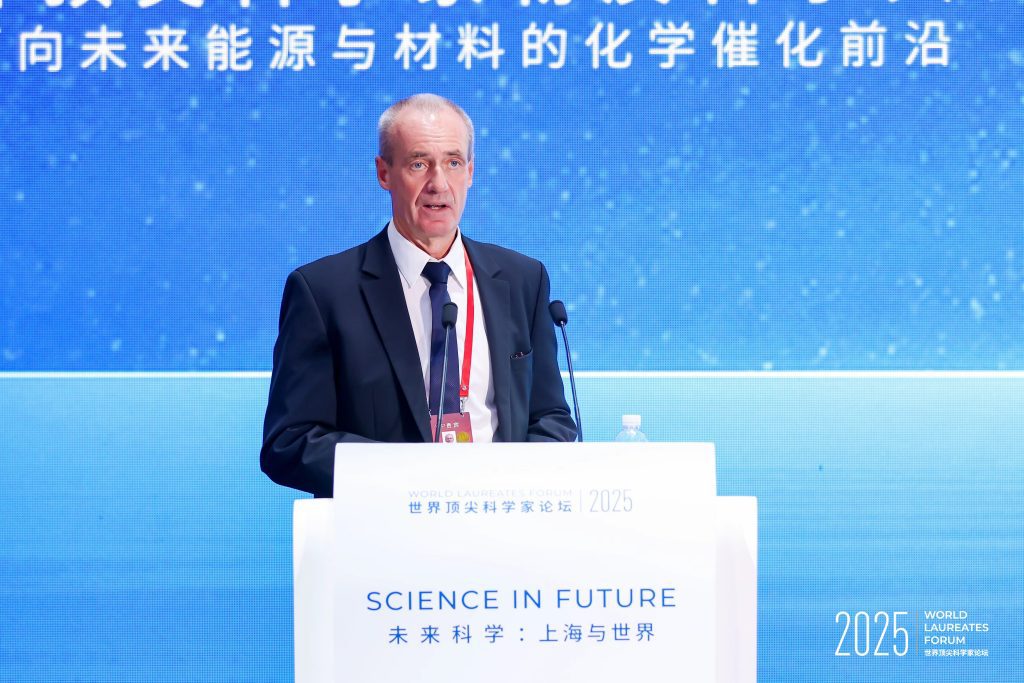
In his address at the Materials Science Conference of the 2025 World Laureates Forum, Professor CARO said, “Materials science will promote the development of efficient, harmless, and recyclable new materials. While meeting the energy needs of everyday life and production, it will also help curb environmental pollution and prevent the unnecessary waste of production resources.” Bringing scientific knowledge out of the laboratory and into industrial practice is a powerful force for moving society toward ecological sustainability.
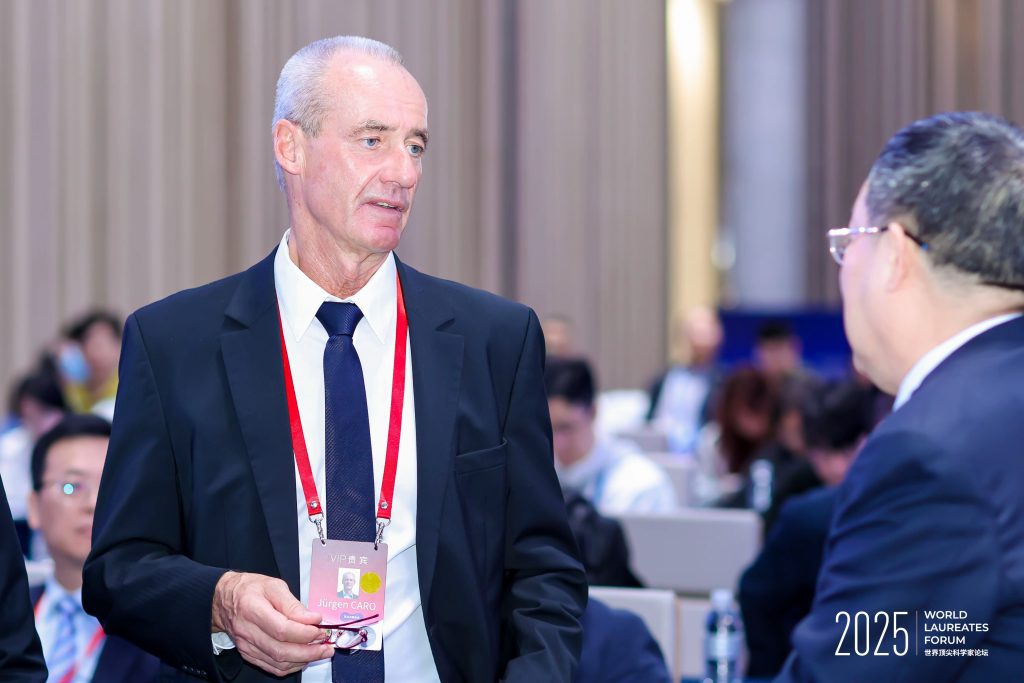
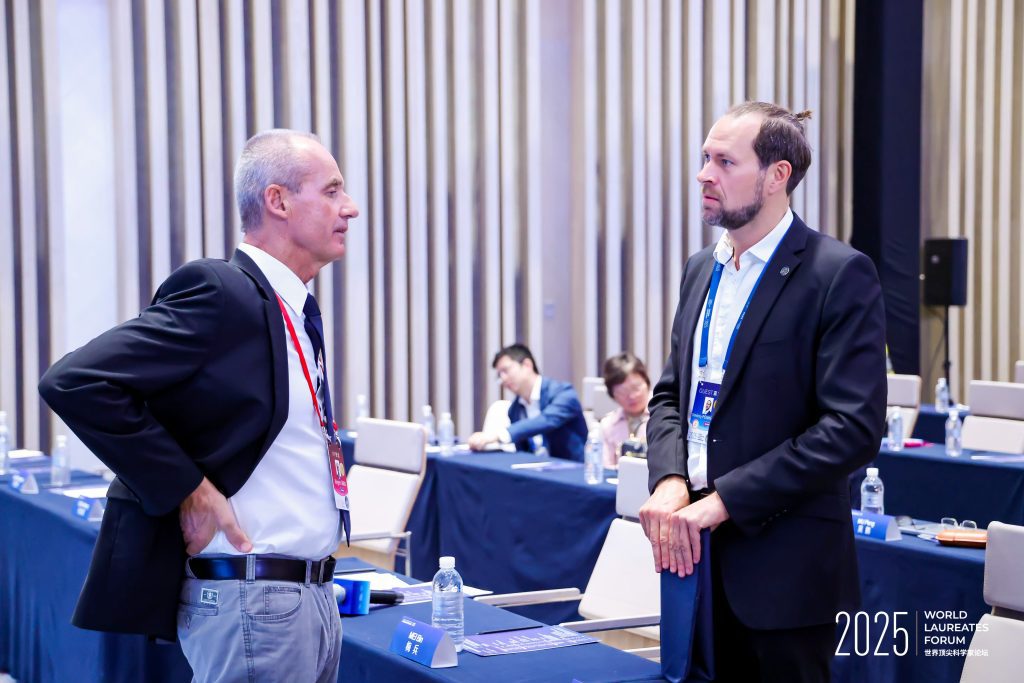
Exchange at the Materials Science Conference
From Hannover to China
CARO’s connection with the Chinese scientific community is deeper than many might imagine. From 2018 to 2023, he served as a full professor at both Leibniz University Hannover in Germany and South China University of Technology in Guangzhou, China. Over those five years, he trained Chinese doctoral students, co-authored a number of high-level papers with Chinese teams, and travelled frequently between China and Germany.
When speaking about his experience in China, CARO expressed strong appreciation for the country’s active research atmosphere. He believes that young Chinese scholars think energetically, dare to raise questions, and are willing to explore interdisciplinary fields. During his years teaching in Guangzhou, he was also deeply drawn to the local food and culture. Even while travelling regularly between China and Germany, he maintained one habit: returning to Berlin on weekends to spend time with his family.
His trip to Shanghai Lingang in 2025 marked his first participation in the World Laureates Forum. He not only delivered a keynote speech, but also took part in several dialogues with young scientists. When a Chinese doctoral student asked how to view experimental failure, he drew on decades of scientific experience and offered a simple reflection: a research career is naturally accompanied by repeated failures. What matters is the ability to regain composure after falling, and to continue moving forward.
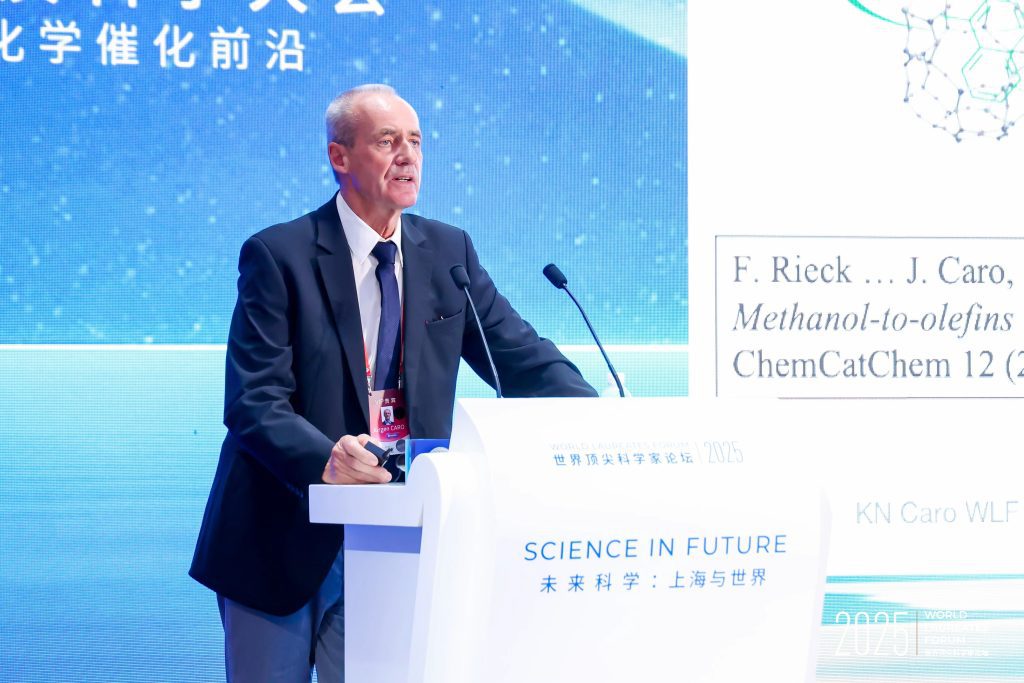
Keynote speech at the Materials Science Conference of the 2025 World Laureates Forum
A Complex and Authentic Scientist
In an interview in 2003, CARO was once asked how his family and friends would describe him. His answer was both candid and amusing: “The descriptions vary widely. Some say I am easy-going; some say he listens well. Some say I am patient; others say impulsive. Some say honest; others say too polite. Some say I love sport; others say lazy.” This self-portrait reveals a genuine, multidimensional, and unconventional mind.
He enjoys listening to Bach in the atmosphere of Gothic churches. He likes detective novels, and exploring abandoned silver mines. Had he not become a scientist, he would have wanted to be a doctor, “because this profession perfectly combines scientific knowledge, human interaction, and altruism.” The scientist he most admires is Leibniz, “one of the last truly universal scholars”.
This curiosity across disciplines is also present in his scientific philosophy. He once said, “When I attend conferences that are not exactly in my current field, but not too far from it either, the best ideas often appear in my mind.”
A Voice in Lingang
In Lingang, Professor CARO drew on his own experience to speak to young scientists in the audience. They should not be troubled by a single failure, or even by a series of failures. The path of research depends on long-term persistence. It is a long-distance run that requires endurance, not a sprint measured by short-term speed.
This may be the spirit for which Jürgen CARO is most worth remembering. A chemist who emerged from the ruins of East Germany, he experienced two periods of unemployment and one bankruptcy, yet never gave up his exploration of the molecular world inside nanopores. Through half a lifetime of work, he has shown that true scientific breakthroughs require not only intelligence, but also a resilience that is almost stubborn.
As symbolized by his favourite image, the Vitruvian Man, he once wished he had four arms, four legs, and two heads, so that he could realize all his dreams. We believe that even with one body and one mind, he has already done so.

