


Under the spotlight of the 2025 World Laureates Forum, a silver-haired scholar drew on more than half a century of insight to reveal a deeper truth: the essence of technology lies not only in the elegance of algorithms, but in the choices humanity makes. He is Martin HELLMAN, Turing Award laureate, pioneer of public-key cryptography, and a “rebel” who journeyed from the world of cryptography toward the pursuit of peace.
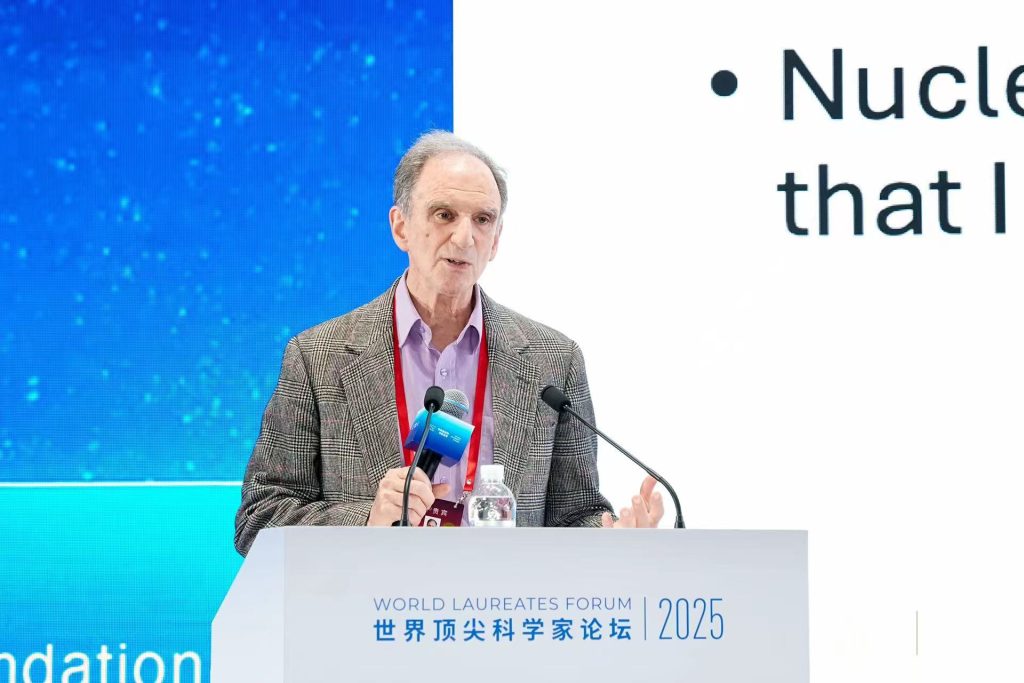
If the internet is a great vessel sailing toward the future, then Martin HELLMAN is the one who forged its “vault” amid turbulent seas.
This Emeritus Professor of Electrical Engineering at Stanford University is best known for co-inventing public-key cryptography together with Whitfield DIFFIE and Ralph Charles MERKLE. Every time you complete a mobile payment, send an email through the cloud, or rely on the secure flow of trillions of dollars in global financial transactions each day, this technology is at work behind the scenes. As HELLMAN himself once put it, they solved one of the oldest and most fundamental problems in cryptography: how to securely transmit the key that unlocks a secret over an insecure channel visible to all.
In 2015, he was awarded the ACM A.M. Turing Award, widely regarded as the “Nobel Prize of Computer Science”, in recognition of this revolutionary contribution.
Yet at the 2025 World Laureates Forum, Professor HELLMAN brought not only the legacy of technological achievement, but also a profound reflection on a deeper question on how humanity should coexist with the technologies it creates.
A Journey from “Saving a Marriage” to “Saving the World”
Few people know that Professor HELLMAN’s shift in focus, from cybersecurity to international security and nuclear threats, did not begin with an ambition to “save the world,” but rather with a deeply personal goal which is to save his marriage.
In 1980, HELLMAN’s marriage to his wife, Dorothea, was on the verge of collapse. In the course of trying to repair their relationship, he watched the documentary The Day After Trinity. In the film, scientists who had participated in the Manhattan Project were asked why they continued to develop the atomic bomb even after Nazi Germany had been defeated, and they fell into silence.
At that moment, HELLMAN recognized a subtle yet powerful weakness in human nature: people are remarkably adept at justifying their actions with seemingly legitimate reasons, concealing their true motivations, even from themselves.
This insight into self-deception led him to reflect on an earlier episode in his own life.
He recalled his confrontation with the U.S. National Security Agency (NSA) in 1976. At the time, he and his collaborators had discovered that the government was deliberately weakening encryption standards to retain the ability to break them. He believed he had taken a principled stand. Yet five years later, he came to realize that his actions had also been shaped by a desire for recognition, rationalized under the guise of doing what was “right.”
“People often do not begin by deciding what is right or wrong,” he reflected. “They first decide what they want to do, and then construct justifications, whether right or wrong.”
This period of reflection not only helped save his marriage, he and Dorothea have now spent more than half a century together and co-authored A New Map for Relationships: Creating True Love at Home and Peace on the Planet, but also led him to a deeper realization: the crisis of technological ethics shares the same roots as the dilemmas of personal life. Humanity, he observed, now possesses god-like physical power, in the form of nuclear weapons, genetic engineering, and artificial intelligence, yet continues to operate with the moral maturity of “irresponsible adolescents.”
Breaking Through “Impossible Boundaries”: The Path from the Cold War to Peace
HELLMAN’s vision extends far beyond cryptography. In the 1980s, he worked to foster dialogue between American and Soviet scientific communities on a fundamental question: how human thinking must evolve to survive in the nuclear age. This effort culminated in his collaboration with Professor Anatoly GROMYKO of Moscow, with whom he co-edited Breakthrough: Emerging New Thinking. Published simultaneously in Russian and English in 1987, at a moment of profound transformation in U.S.–Soviet relations. The book stands as a remarkable testament to intellectual exchange in the final years of the Cold War.
HELLMAN maintains that nuclear risks remain very real today. He points to a number of historical “near misses.” One such moment occurred during the 1999 ceasefire in Kosovo, when a tactical disagreement between a U.S. general and a British general nearly escalated into a confrontation with Russian forces, potentially triggering a much larger conflict. “If the probability of success is 90 percent,” HELLMAN noted, “that still means there is a 10 percent chance the world could be destroyed.” When technology gives humanity the power to annihilate its own civilization, probability is no longer merely a mathematical concept, it becomes an ethical one.
In the face of emerging challenges such as artificial intelligence and climate change, HELLMAN remains cautiously optimistic. “Our moral values are not fixed,” he observed. “Ten thousand years ago, killing members of a neighboring tribe was considered acceptable. Today, we condemn injustices such as the persecution of Alan Turing. If humanity is capable of change, then we have a chance to survive. I choose to believe in that ‘nobler hypothesis.’”
Advice to Young Researchers: Don’t Be Afraid of Being Foolish
Professor HELLMAN offers a simple yet powerful piece of advice to early-career researchers: “Don’t be afraid of being foolish.”
This was also the central theme of his 2013 lecture at the Stanford University School of Engineering, titled “The Wisdom of Being Foolish.” He once asked six Nobel laureates whether their prize-winning research had initially been encouraged or regarded as foolish. Five of them clearly belonged to the latter category.
From becoming an amateur radio enthusiast in high school and thus entering the field of electrical engineering, to encountering Claude SHANNON’s work at MIT and connecting information theory with cryptography; from his prolonged confrontation with the NSA to ultimately receiving the Turing Award, HELLMAN’s academic journey stands as a powerful testament to the value of daring to make mistakes and challenging established authority.
Rethinking Technology Ethics: A Nobler Hypothesis
Professor HELLMAN’s current research focuses on what he calls “rethinking national security.” This perspective has been endorsed by a number of prominent figures, including former U.S. Secretary of Defense Leon Edward PANETTA and Stanford University President Emeritus John LeRoy HENNESSY.
He argues that powerful technologies such as nuclear weapons and genetic engineering are merely symptoms of a deeper problem. “We need to become responsible adults,” he states candidly, “yet society, at best, resembles a group of irresponsible adolescents.” He cautions against romanticizing a so-called “better past”, an era marked by public executions, the persecution of Alan Turing, and far lower standards of healthcare. True progress, he emphasizes, lies in the evolution of ethics.
“Either humanity can change and survive, or it is destined to destroy itself. If we believe we cannot change, then failure is certain. If we believe we can, the worst outcome is still failure, but the best is success. So why not choose the nobler hypothesis?”
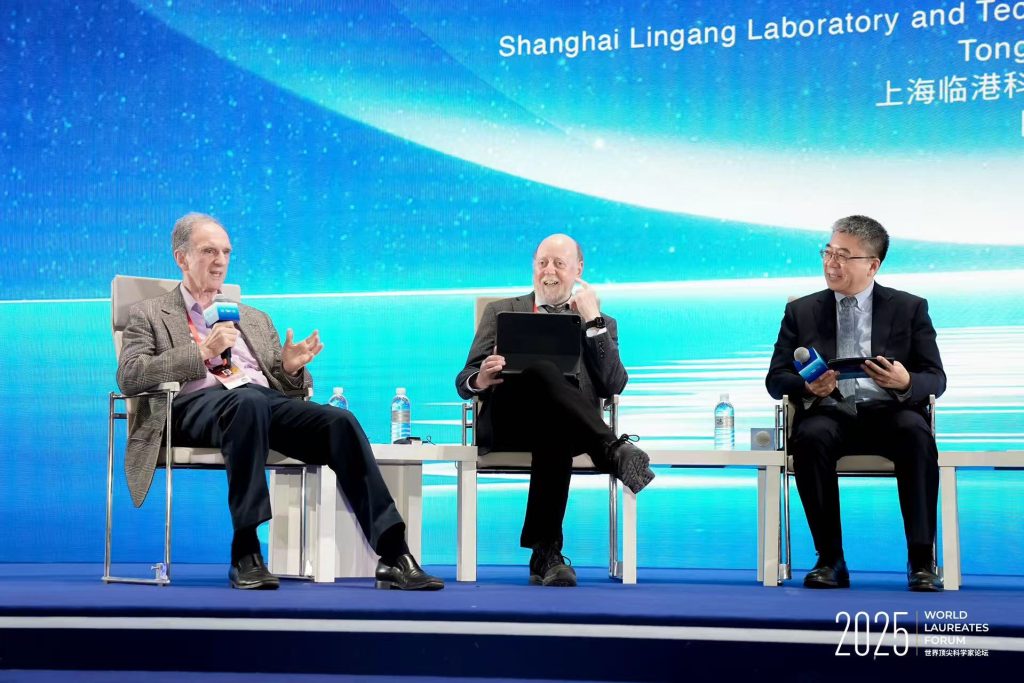
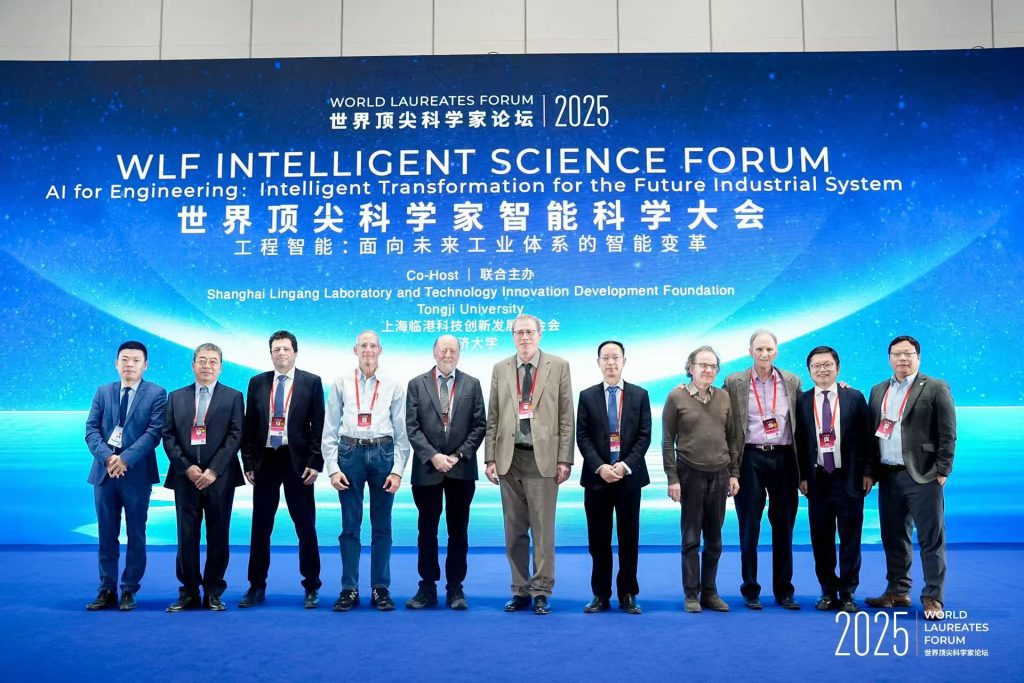
The 2025 World Laureates Forum
At the 2025 World Laureates Forum, Martin HELLMAN leaves us not only with the legacy of a technological pioneer, but with the enduring image of a thinker, one who continues to question, to reflect, and to challenge himself. His life’s journey suggests that the most powerful form of “encryption” may not reside in machines, but within the human mind, where we learn to confront ourselves with honesty, to seek peace amid disagreement, and to embrace a potentially better world through what he calls the “nobler hypothesis.”
As he and his wife, Dorothea, wrote in their book, building a strong family and building a peaceful world require the same kind of transformation. This, perhaps, is the most valuable “public key” that this Turing Award laureate offers to our time.

