


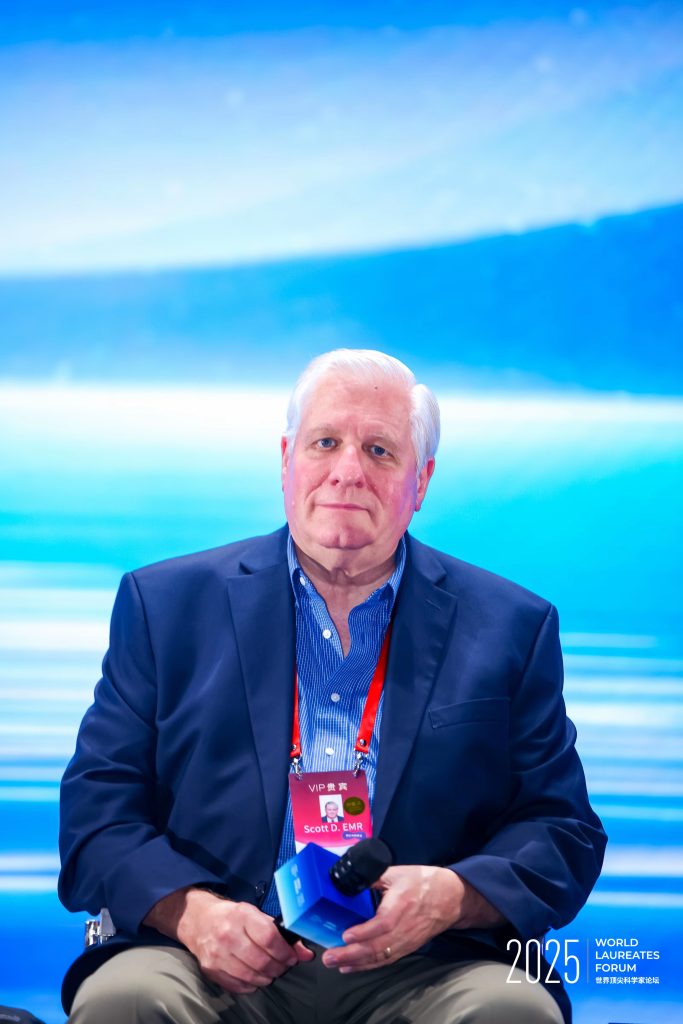
At the venue of the 2025 World Laureates Forum, we met a scientist attending the Forum for the first time. He spoke with measured calm, and his eyes carried a quiet strength.
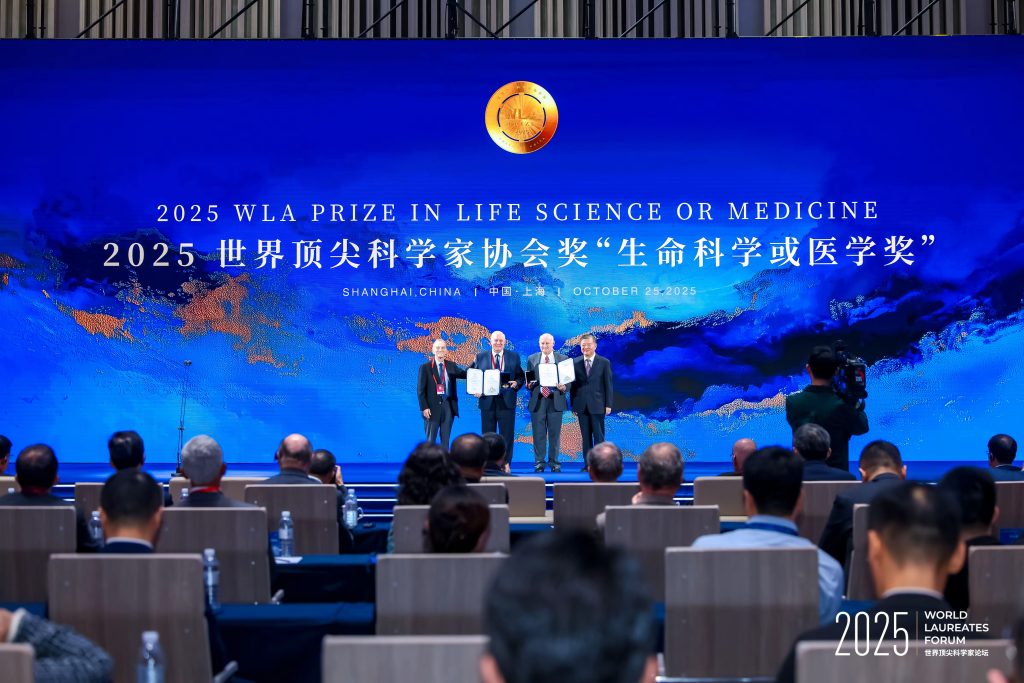
At the WLA Prize Ceremony, Scott D. EMR, Professor Emeritus of Cell and Molecular Biology in the Department of Molecular Biology and Genetics at Cornell University, and Wesley SUNDQUIST, Professor of Biochemistry at the University of Utah, were jointly awarded the World Laureates Association Prize in Life Science or Medicine. With a single-prize award of RMB 10 million, it is among the most substantial scientific prizes in the world.
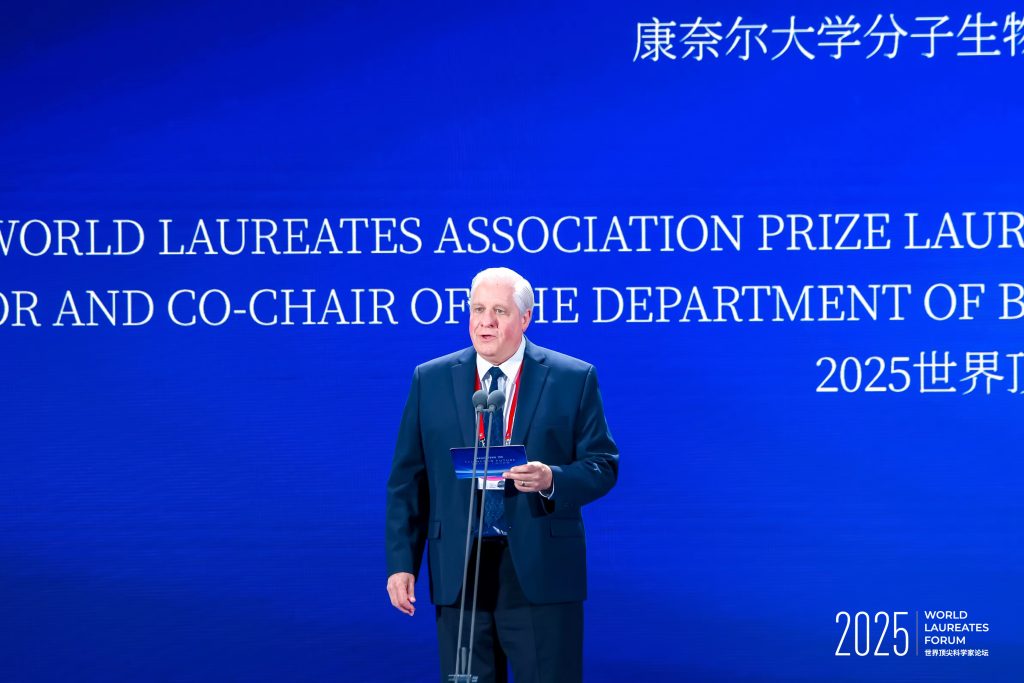
“When I received the phone call informing me of the award, I was deeply excited,” EMR said in his acceptance remarks. “To receive such high recognition from my peers means a great deal to me. At the same time, to join the distinguished group of previous laureates is both an honour and a humbling experience.”
He spoke in particular of his 25-year collaboration with SUNDQUIST. “Over the past 25 years, our two laboratories have worked closely together, openly sharing data and ideas. This spirit of collaboration, grounded in mutual trust and candid scientific exchange, greatly accelerated our progress and enabled us to solve complex scientific problems more efficiently than either of us could have done alone.” He also expressed deep gratitude to two mentors from his formative years: Tom SILHAVY, his graduate adviser at Harvard University, and Randy SCHEKMAN, his postdoctoral adviser at the University of California, Berkeley.
Where a Boy’s Scientific Dream Began
EMR grew up in Fort Lee, New Jersey, close to the George Washington Bridge and just across the river from New York City. Every Christmas, his parents found a way to buy him the microscope, chemistry set, or telescope he had hoped for. In the late 1960s, the television series The Undersea World of Jacques Cousteau made a lasting impression on him. He decided to apply to universities with strong programs in oceanography. In 1972, he entered the University of Rhode Island to study biology.
After he had the opportunity to sail into the Atlantic on a research vessel, he soon realized that the oceanographic research being conducted at the time was not quite as exciting as it had appeared on television. In his third year, a genetics course and a microbiology laboratory course introduced him to the power of genetics. He applied to the graduate program in microbiology and molecular genetics at Harvard University. Those four years became among the most exciting of his life. “It was a time before the internet and personal computers,” he recalled. “I was absorbed in my own research, and fascinated by the excitement of new discoveries.”
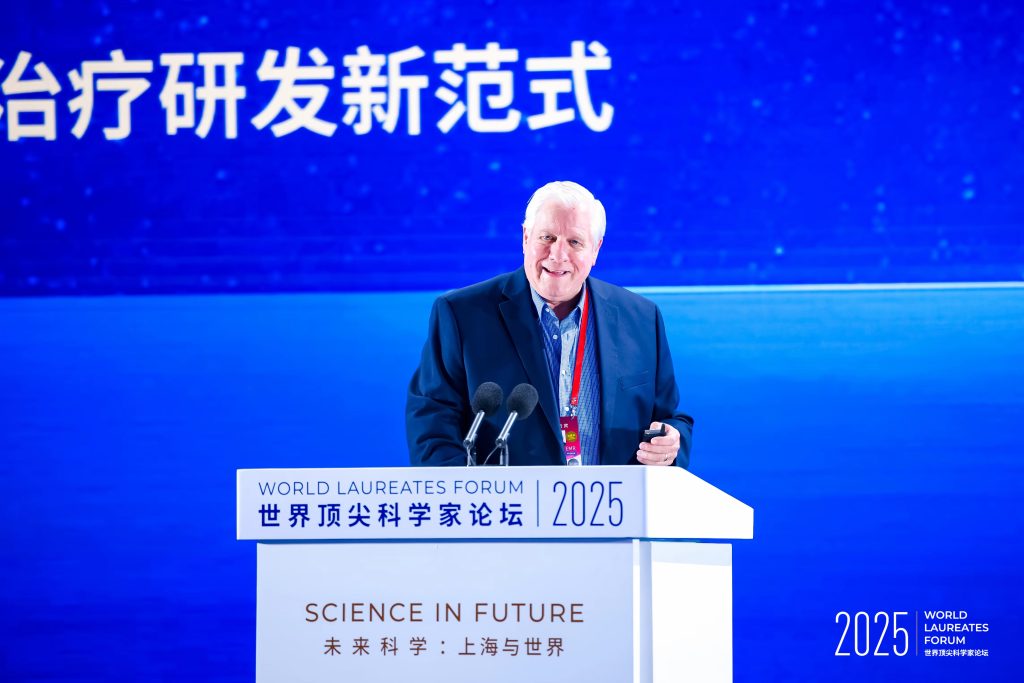
WLF Life Science Forum at the 2025 World Laureates Forum
A Breakthrough Born from Failure
In 1980, EMR applied for a postdoctoral position in Randy SCHEKMAN’s laboratory at the University of California, Berkeley, expanding his research from E. coli to yeast. At first, the project he pursued in SCHEKMAN’s laboratory did not succeed. “Yet I was not discouraged,” he later recalled. “Instead, I worked harder, and returned to what I had learned during graduate school.” Within only a few weeks, he successfully developed several useful gene fusion methods in yeast.
A year later, the California Institute of Technology offered him a faculty position. He designed a genetic strategy based on gene fusion to identify the genes in yeast that encoded the cellular machinery required to build the vacuole. Within a few years, his group had identified mutations in 33 genes, which they named VPS, for vacuolar protein sorting. At the same time, the laboratory of Tom STEVENS at the University of Oregon independently isolated similar yeast mutants. Together, the two groups identified more than 40 VPS genes.
“At that time, we could not predict where studies of these genes would lead,” EMR said. “But the team continued to analyse the biochemical functions of the VPS-encoded proteins.” These studies would sustain his laboratory for nearly four decades, and laid an essential foundation for the discovery of the ESCRT complexes.
WLF Life Science Forum at the 2025 World Laureates Forum
ESCRT: The Cell’s Gatekeeper
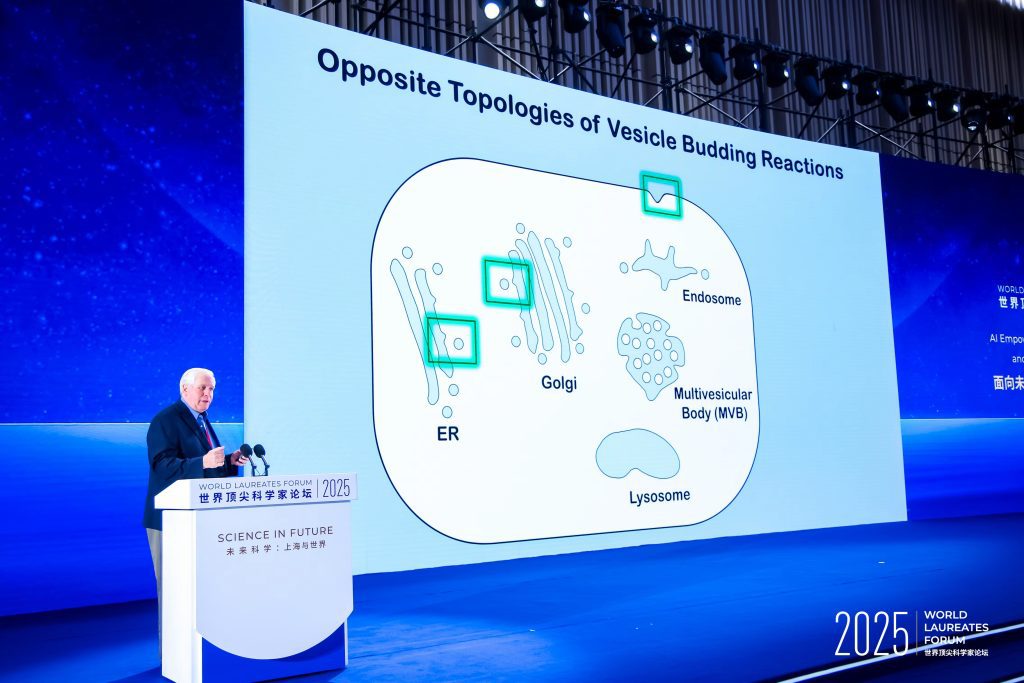
ESCRT stands for Endosomal Sorting Complex Required for Transport, and is pronounced much like “escort”. This family of protein complexes can reshape cellular membranes, driving local membrane structures to bend inward toward the cytoplasm. In doing so, ESCRT supports many core physiological activities of the cell: sorting and transporting biomolecules, clearing cellular metabolic waste, and regulating key processes such as cell division, neuronal remodelling, and immune responses.
When ESCRT function is disrupted, cells may lose control over proliferation, contributing to tumours, cancers, and neurodegenerative diseases such as Parkinson’s disease and Alzheimer’s disease. A number of viruses, including HIV, can also hijack the ESCRT machinery to escape from host cells. EMR’s team identified more than a dozen ESCRT proteins in yeast, and clarified their mechanisms in lipid phosphorylation recognition, cargo sorting, and membrane remodelling.
“Based on the work of our laboratory and colleagues around the world,” EMR said, “there are now several new drug development pipelines that may offer new therapeutic approaches for certain cancers and neurodegenerative diseases.”
 2025 World Laureates Forum
Four Decades of Academic Footprints
EMR has held faculty positions at the California Institute of Technology and the University of California, San Diego. In 2007, he joined Cornell University, where he became the founding director of the Weill Institute for Cell and Molecular Biology. He is a member of the United States National Academy of Sciences, the American Academy of Arts and Sciences, and the American Academy of Microbiology.
EMR has received many major international academic honours:
2021
Awarded the Shaw Prize in Life Science and Medicine
2022
Received a Lifetime Achievement Award at the ESCRT Biology Meeting of the American Society for Biochemistry and Molecular Biology, in recognition of his status as a founding figure in the field
2024
Awarded the Louisa Gross Horwitz Prize
A Voice in Lingang
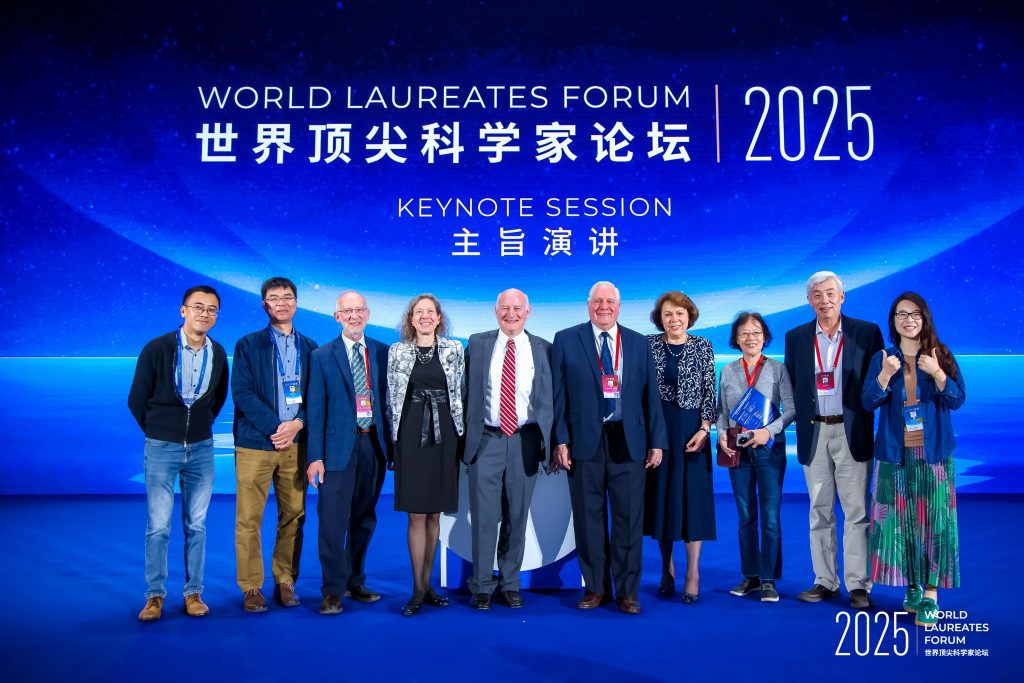
At the 2025 World Laureates Forum, EMR delivered a keynote speech. Peter John LOEWEN, Dean of the College of Arts and Sciences at Cornell University, has said, “Scott EMR’s pioneering leadership in revealing the ESCRT pathway powerfully demonstrates why basic research is essential to advances in health care. Thanks to his research, our deeper understanding of healthy cellular function will help treat some of the most serious and widespread diseases we face today.”
When asked what message he would offer to the younger generation, EMR referred to the unsuccessful early period of his postdoctoral work. “In the face of failure, do not be discouraged. Work harder, return to the fundamentals, and learn again.” This may be the lesson he leaves to young scholars at the World Laureates Forum: the resilience of a scientist who moved from being the son of a button-factory family to becoming a “gatekeeper” of the cell, and the conviction that basic research can, in time, change the world.
“I am deeply grateful to my family, who have brought endless love and joy into my life.” That warmth from family has supported a scientist through four decades of exploration.

