


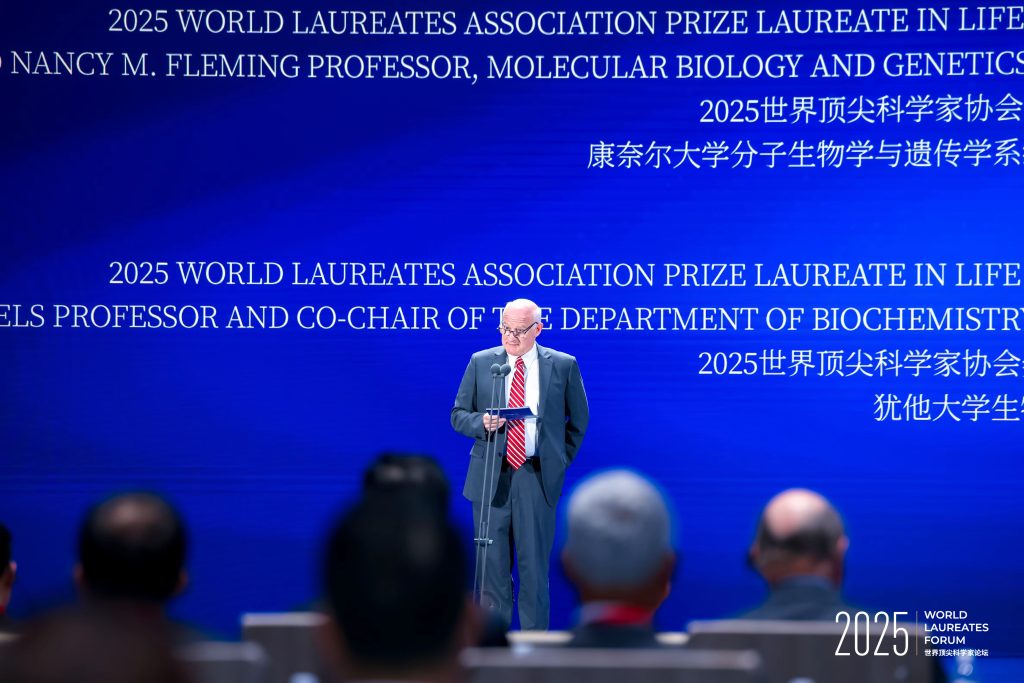
When Wesley I. SUNDQUIST stepped onto the stage of the WLA Prize Ceremony, the biochemist from the University of Utah was also beginning his first formal encounter with Shanghai.
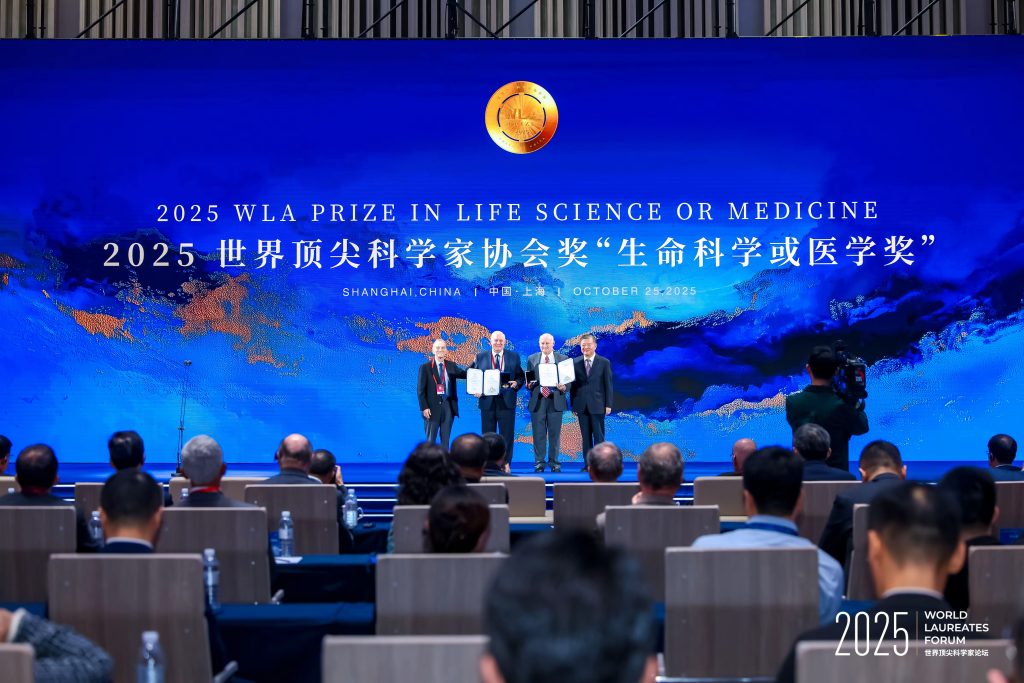
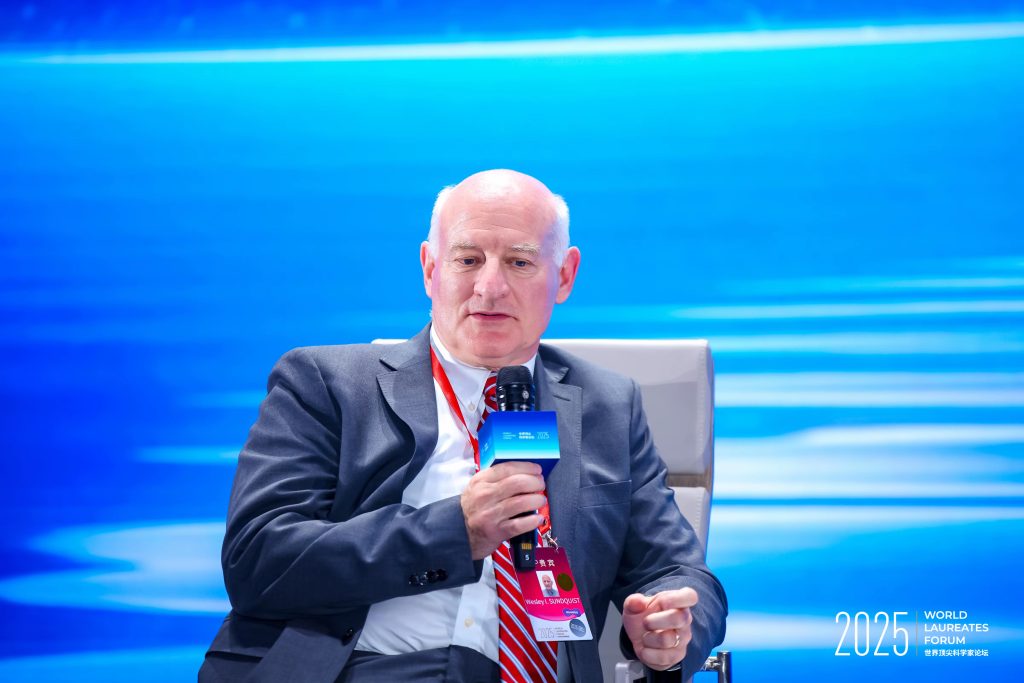
Not long before the ceremony, he took a night cruise along the Huangpu River. The illuminated skyline, with Shanghai’s three landmark towers outlined against the night, left a strong impression on him. That journey on the river also marked the beginning of his first visit to China. Together with Scott D. EMR, Professor Emeritus at Cornell University, SUNDQUIST received the 2025 World Laureates Association Prize in Life Science or Medicine. The two scientists have known each other for twenty-five years, and have long been research partners in a shared scientific exploration.
A Lifelong Pursuit
SUNDQUIST became fascinated by the molecular structures of chemistry at a young age. He grew up first in St. Paul, Minnesota, and later in Washington, D.C. As an undergraduate, he received his bachelor’s degree in chemistry from Carleton College, before pursuing a PhD in chemistry at the Massachusetts Institute of Technology. After completing his doctorate, he travelled to the United Kingdom for postdoctoral research at the MRC Laboratory of Molecular Biology in Cambridge. He also carried out a period of research at the University of Wisconsin.
In 1992, SUNDQUIST joined the Department of Biochemistry at the University of Utah. He is now Samuels Professor and Distinguished Professor, and Chair of the Department of Biochemistry. Through his influential research on viral mechanisms and cellular pathways, he has been elected to the United States National Academy of Sciences and the American Academy of Arts and Sciences. For many years, he has pursued two closely connected lines of research: the mechanisms of HIV assembly and the ESCRT pathway in cellular sorting.
2025 World Laureates Forum
The Viral Science Code Inside an “Ice Cream Cone”
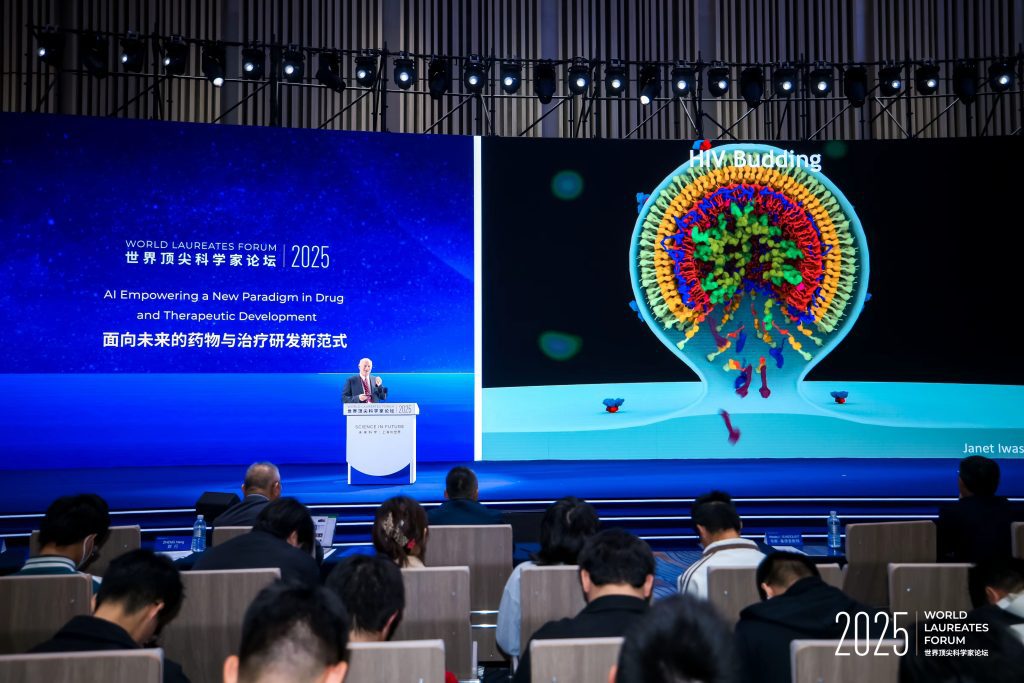
On October 23, shortly before the opening of the Forum, SUNDQUIST entered a lecture hall at a Shanghai university and used animated demonstrations to explain molecular microbiological mechanisms. Green ESCRT-III proteins formed a dome-like structure. VPS4 proteins wrapped around and pulled on the tail of ESCRT-III. Multiple molecules worked together to complete the process of HIV budding.
As a leading authority in global HIV research, he admitted in an interview, with a slightly shy smile, that he had once compared the conical HIV capsid to an ice cream cone, a comparison that drew teasing from his laboratory colleagues. Behind this vivid analogy lies decades of sustained work by his team. “In the laboratory, we have always focused on two central questions,” SUNDQUIST said. “First, what is the essential role of the viral capsid in viral replication? Second, how does the virus use the capsid to complete proliferation and transmission?” His team found that even a slight change in capsid structure can cause the virus to lose its infectivity.
“No one expected that such a small capsid could determine the life or death of a virus,” SUNDQUIST said. “That is precisely the beauty of basic research. You can never predict the final answer.”
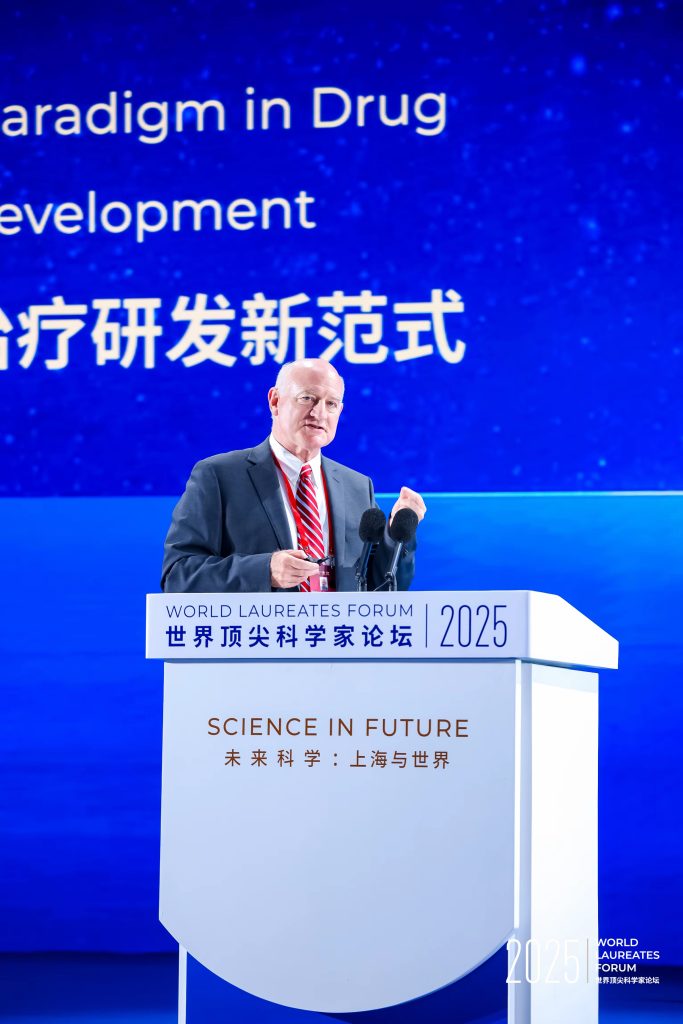
WLF Life Science Forum at the 2025 World Laureates Forum
Curiosity: The Inexhaustible Driving Force of Basic Research
For SUNDQUIST, every scientific exploration begins with pure curiosity. “Curiosity drives us to take apart unknown things. It is no different from the force that leads mountaineers to challenge high peaks. It pushes us to keep exploring how molecular machines work.”
In his acceptance remarks, he emphasized, “Most of the research recognized by this award was completed twenty-five to thirty years ago. When we began exploring the fundamental mechanisms of viruses and cells, we had no idea that the work would eventually lead to drugs capable of changing the course of an epidemic. This is powerful evidence that basic research is the foundation of biomedical development.”
Twenty years ago, SUNDQUIST’s team began studying how the conical viral capsid assembles, driven at first simply by curiosity about the beauty of molecular structure. Yet this pure basic exploration ultimately helped lead to a new long-acting HIV prevention drug. Today, around 1.3 million people worldwide are still newly infected with HIV each year. Wider access to lenacapavir is expected to substantially reduce new infections.
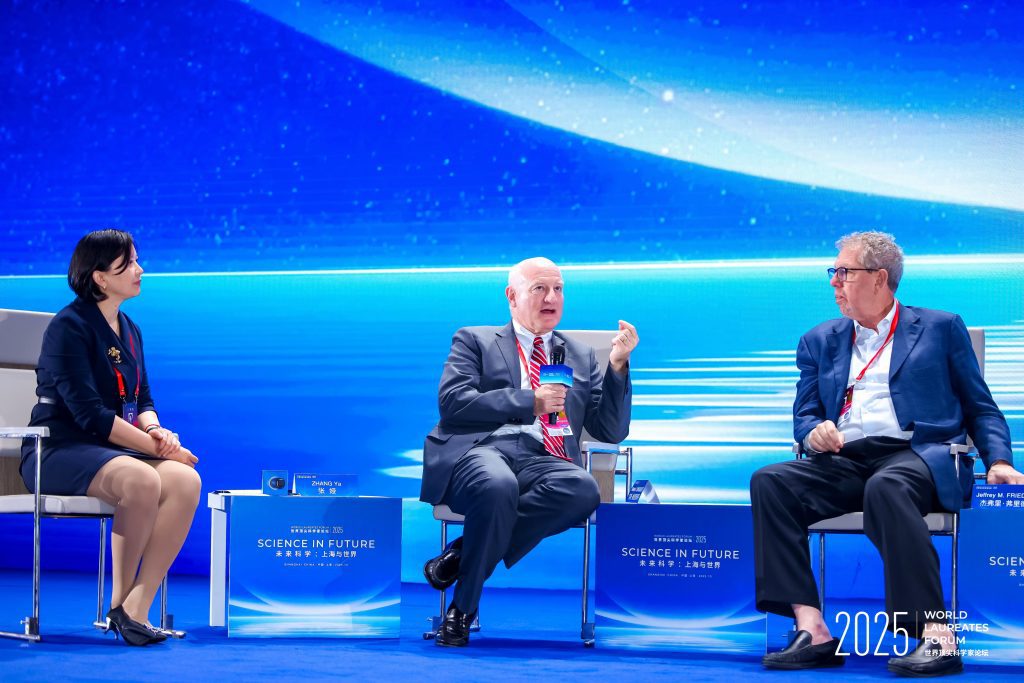
A Voice in Lingang
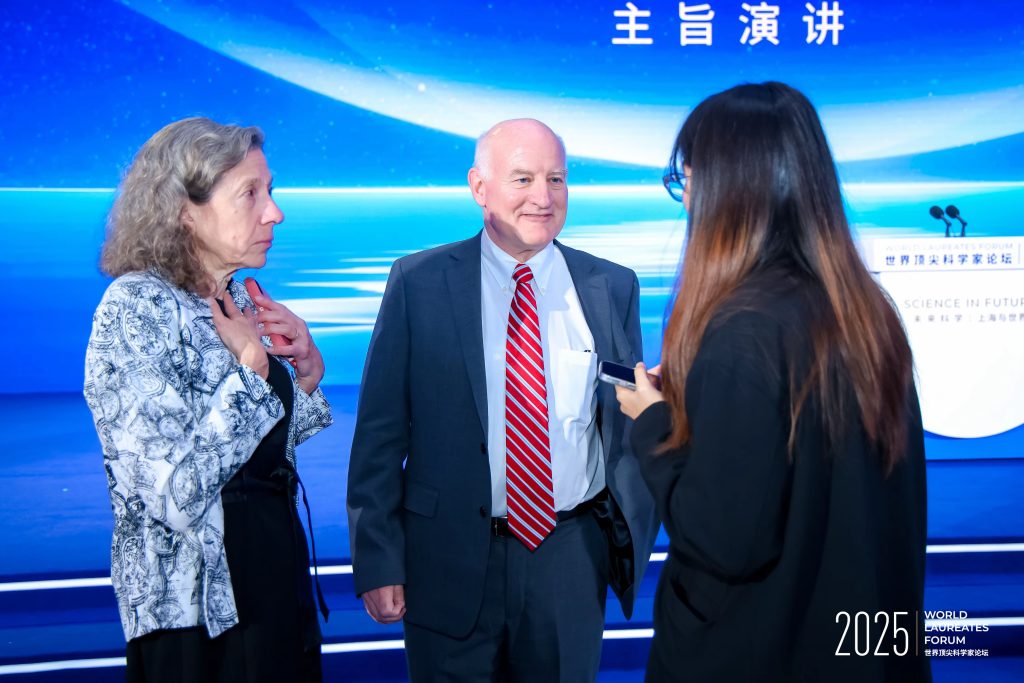
All three laureates of this year’s WLA Prize were participating in the World Laureates Forum for the first time. For SUNDQUIST, the Forum’s rich and diverse academic agenda, together with high-quality interdisciplinary exchange, proved deeply rewarding.
“When I walk out of the laboratory, I can see the Rocky Mountains stretching into the distance. From my office, it takes only fifteen minutes to walk to the University of Utah. The mountains have always provided a continuous source of inspiration for my research,” SUNDQUIST said.
Surrounded day after day by mountains, his scientific gaze has remained fixed on the microscopic structures of life at the nanoscale. From the Rocky Mountains to Dishui Lake, from the fundamental mechanisms of the cell to the structure of the HIV capsid, from curiosity-driven basic research to innovative medicines that protect life, the scientific journey of Wesley I. SUNDQUIST is a vivid expression of how basic science can change the course of human life.
Lingang witnessed this scientific dialogue across mountains and oceans. Receiving the prize was only one part of SUNDQUIST’s journey to Shanghai. What he brought with him was a moving reflection on the original spirit of research, the value of basic science, and the future of global public health.

