


When everyone asked, “Are you serious?”, he answered with half a century of persistence.
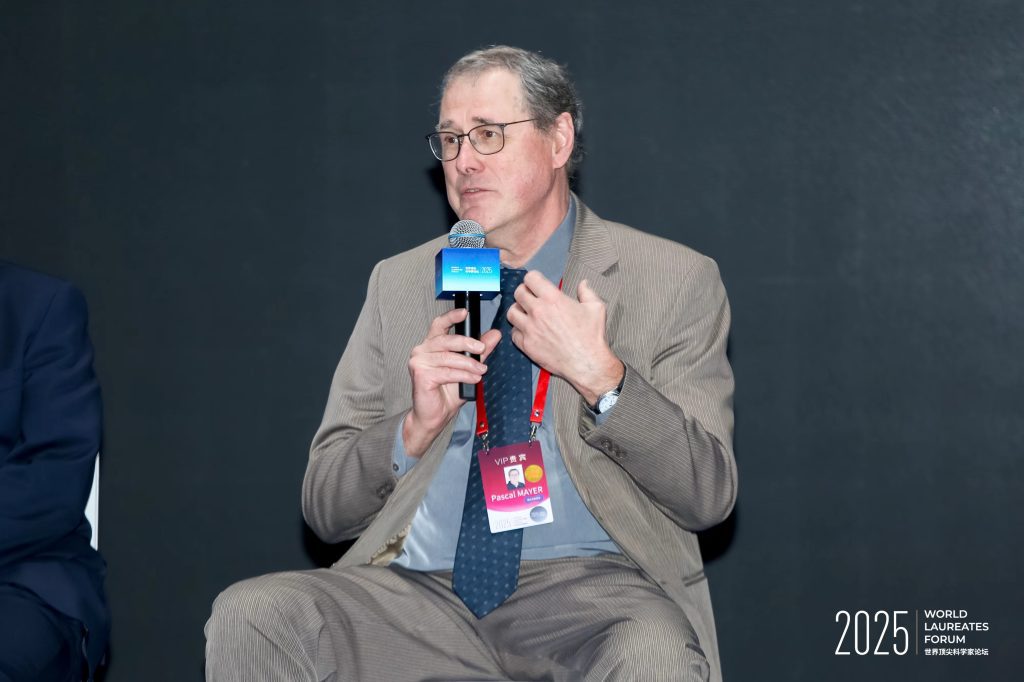
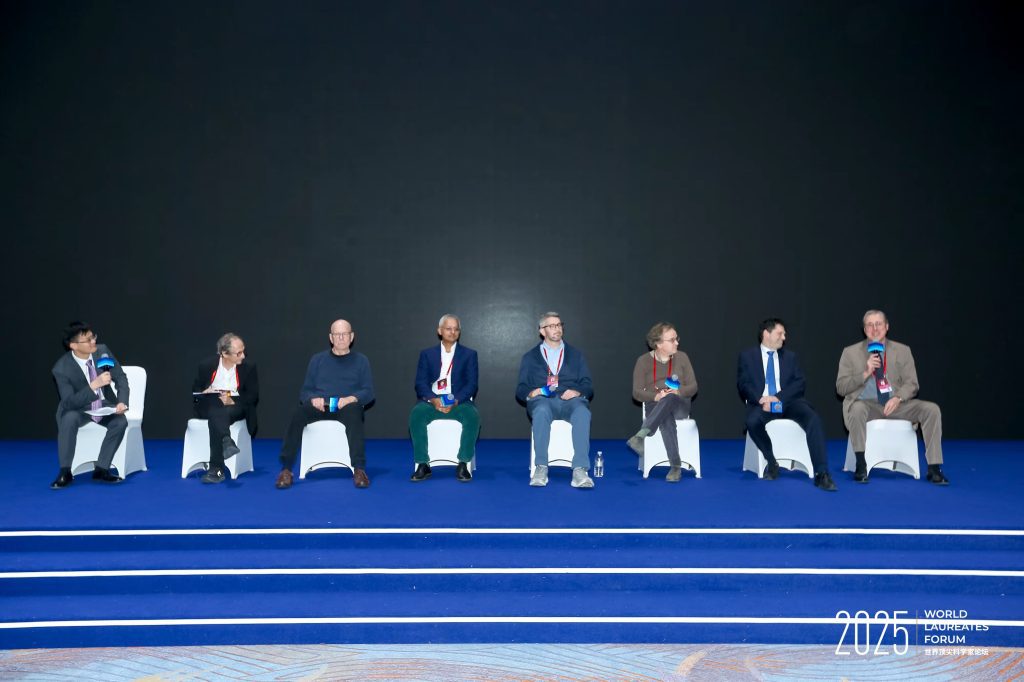
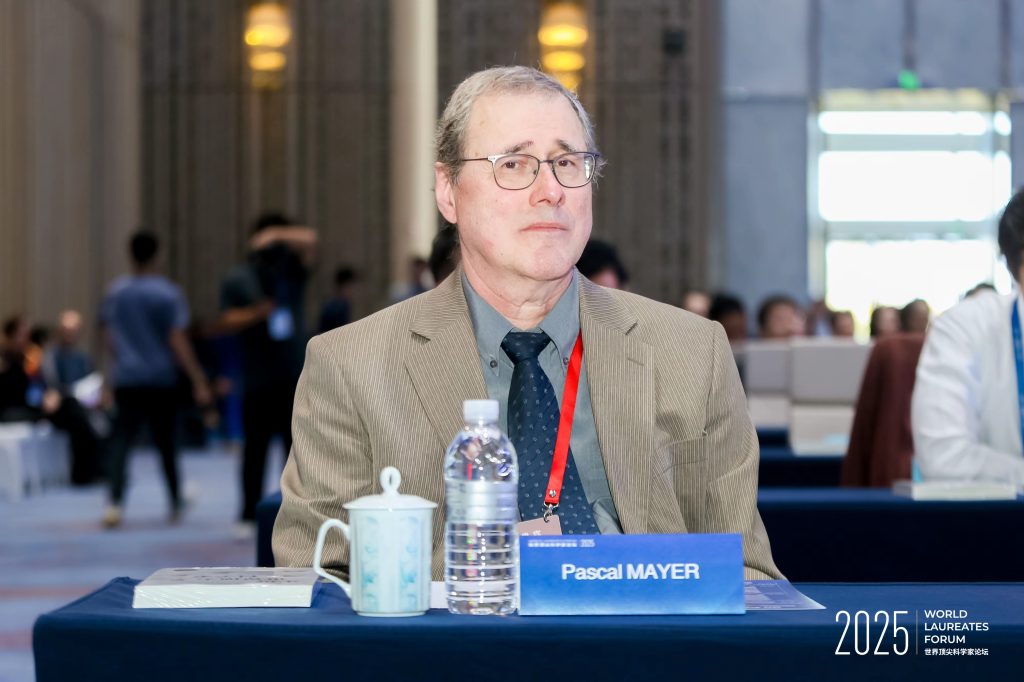
In October 2025, in Shanghai Lingang, French biophysicist and entrepreneur Pascal MAYER stood on the stage of the World Laureates Forum. His expression was gentle, yet assured. The unconventional idea once questioned by his peers has now become a core technology in global genome sequencing. The young man once regarded as “unrealistic” is now a recipient of both the 2022 Breakthrough Prize in Life Sciences and the 2024 Canada Gairdner International Award.
“This is my first time in China. Everything here feels new to me,” he said.
More than half a year later, in May 2026, MAYER, together with British chemists Sir David KLENERMAN and Sir Shankar BALASUBRAMANIAN, received the Princess of Asturias Award for Technical and Scientific Research, in recognition of their development of today’s most widely used next-generation DNA sequencing technology.
From a Mining Town Boy to a Sequencing Pioneer
MAYER’s scientific journey began with an almost instinctive longing.
He was born in Moselle, in northeastern France, a region known for mining. Many young people of his generation hoped to find stable work in the mines. MAYER, however, was drawn to molecules, life, and the unknown.
At the age of seven, he took apart the transformer of a toy train. In primary school, he solved a mathematics problem that no one else in his class could answer. In high school, he persuaded his father to buy him a programmable calculator, and used it to write a primitive neural network. At a time when personal computers were not yet common, this was already an unusually forward-looking experiment.
After graduating from high school, he entered the University of Strasbourg, becoming the first university student in his family. Over the following decades, his path would take him through research institutions in France, Canada, and Switzerland. His work crossed biology, computer programming, and instrument engineering.
“Many mentors and colleagues taught me to think across disciplines, and to solve problems in different ways,” he said. “This shaped my career.”
Challenging the Impossible
In 1996, near Lake Geneva in Switzerland, MAYER drew a sketch in his notebook that would help change the history of science. The idea was to cut DNA molecules into small fragments, attach them all to a solid surface, and read their sequences simultaneously under a microscope. At the time, the Human Genome Project had only recently begun. DNA sequencing still relied on the Sanger method, which read and verified DNA strand by strand. It was expensive and slow. Sequencing a complete human genome could take months and cost millions of euros. When MAYER proposed a new method based on simultaneous reading, his peers found it difficult to believe. “Are you serious?” they asked.
Faced with doubt, he did not retreat. He focused instead on three simple things: an ordinary optical microscope, inexpensive glass slides, and experiments repeated until they could be trusted. He often compared his pursuit to taking attendance in a classroom. “Traditional sequencing is like a teacher asking one by one: Is John here? Is Amy here?” he explained. “My new method was like taking attendance all at once, completing the process quickly and at low cost.”
In 2004, Manteia, the company co-founded by MAYER, transferred the core intellectual property of this technology to Solexa. Built upon this foundation, the platform later developed by Solexa became a central part of Illumina’s high-throughput sequencing system. This original design, known as bridge PCR amplification, or DNA cluster technology, overcame key engineering obstacles in second-generation sequencing, also known as next-generation sequencing, or NGS. It addressed the need for chemical signal amplification and high read density. Before the technology emerged, resequencing a complete human genome could take months and cost millions of dollars. Today, a whole genome can be sequenced in a single day, at a cost of about 600 US dollars. NGS has transformed the life sciences. It is now widely used in clinical screening for cancer biomarkers, genetic tracing of rare diseases, forensic identification, and many other fields. During the COVID-19 pandemic, it also provided essential support for the rapid identification and continuous monitoring of viral variants. It has become one of the foundational technologies of modern life science.
In 2022, MAYER, Sir David KLENERMAN, and Sir Shankar BALASUBRAMANIAN received the Breakthrough Prize in Life Sciences for developing a low-cost, robust method for large-scale DNA sequencing that transformed scientific and medical practice. In 2024, the three scientists received the Canada Gairdner International Award, often regarded as a significant indicator of future Nobel recognition. Ninety-eight Gairdner laureates have later received the Nobel Prize. In 2026, they were further honoured with the Princess of Asturias Award for Technical and Scientific Research.
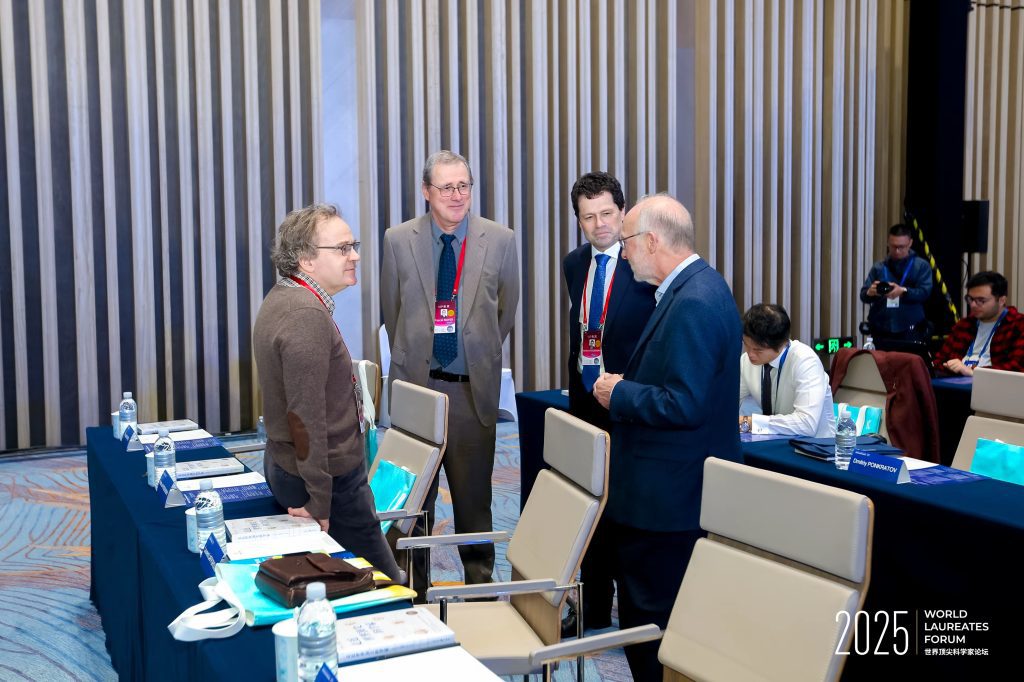
Youth Scientists Conference
When Science Meets Artificial Intelligence
Guided by a belief in simplifying complexity, the scientist who once helped advance a revolution in second-generation DNA sequencing with a microscope continues to challenge what appears impossible.
In 2014, MAYER founded the biotechnology company Alphanosos and became its CEO. He led his team in applying artificial intelligence algorithms to combine natural edible plant extracts into safe, compliant, and independently patented compound formulations, with directions including antibacterial, antiviral, and antitumour applications. After the outbreak of COVID-19, amid the continuous emergence of viral variants, the formulation maintained promising efficacy. It also revealed the value and advantages of multi-target therapeutic strategies.
When asked whether priority should be given to compound medicines or single-molecule drugs, MAYER offered a practical reflection. An engineer who builds a bridge may not need to investigate every detail of structural mechanics. A scientist may be skilled at analysing why a bridge collapses. But for patients suffering from disease, what matters most is whether the bridge allows them to cross.
For MAYER, solving the problem first, and then exploring the underlying principle, is also a rigorous and committed form of scientific pursuit.
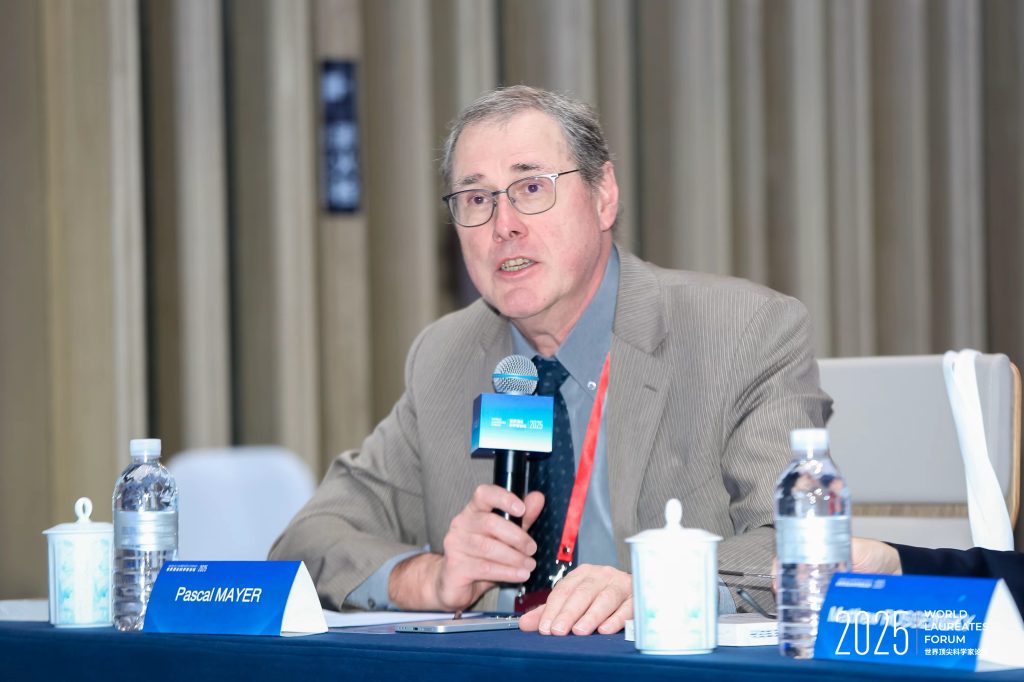
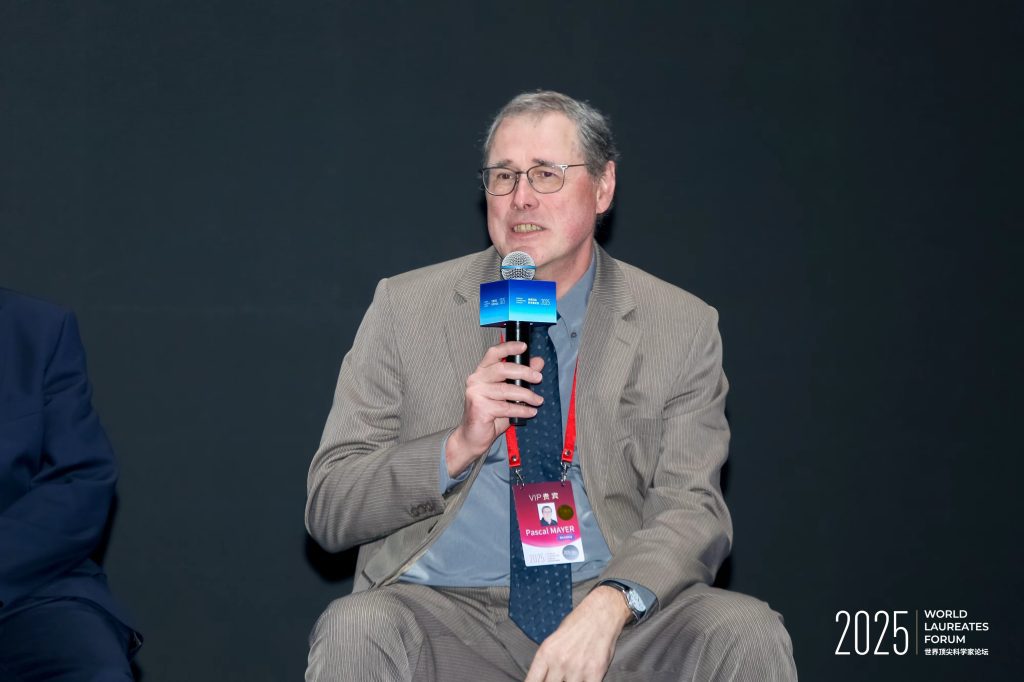
Youth Scientists Conference at the 2025 World Laureates Forum
Hoping to Inspire the Younger Generation to Explore the Intersections of Disciplines
In May 2026, after receiving the Princess of Asturias Award for Technical and Scientific Research, MAYER said that the emergence of next-generation sequencing was the result of curiosity-driven scientific research, interdisciplinary thinking, and outstanding collaboration across institutions and national borders. He hoped that the award would encourage the younger generation to continue exploring the fertile intersections between scientific disciplines, and to help build a better world for future generations.
This is Pascal MAYER, a child from a mining region in France who crossed physics, biology, and computing with an uncommon courage. With the wisdom of simplifying complexity, he helped reshape genome sequencing. As both a CEO and a scholar, he has brought artificial intelligence together with natural medicines, and continues to move toward the unknown. At the World Laureates Forum, he remained active in the same pursuit that has defined his life: challenging what others regard as impossible.
From a mining town in Moselle, to a notebook by Lake Geneva that was once met with laughter, and then to the stage of the World Laureates Forum beside Dishui Lake, Pascal MAYER’s life offers a quiet lesson: true scientific breakthroughs often begin with an unconventional idea, and with a mind unwilling to give up.
He does not confine himself to disciplinary boundaries, nor does he follow prevailing assumptions without question. Faced with patients in need, he chooses first to build a bridge that can be crossed. Faced with the unknown, he chooses to work at the fertile intersections of disciplines. He is still building companies, still teaching, and still challenging the impossible.
The Shanghai Lingang Science and Technology Innovation Development Foundation was honoured to meet this sequencing pioneer at the 2025 World Laureates Forum. His story reminds us that the future of science belongs to those who dare to build bridges across unfamiliar ground. Lingang, too, seeks to become such a bridge, a place where ideas, disciplines, and people can meet, and where the next possibilities of science may begin to take form.

