
News

Laurent LAFFORGUE: From the Langlands Program to Topos Theory, A Mathematician on Two Frontiers

:2026-05-12

Twice a silver medalist at the International Mathematical Olympiad in his youth, crowned with the Fields Medal at the age of 35, he later turned his attention from academic triumphs toward foundational education and artificial intelligence. Leaving the traditional academic world behind, he joined a Huawei research laboratory.

In Lingang, he offered a simple message, “Give young people sufficient time to explore new ideas and new methods.”
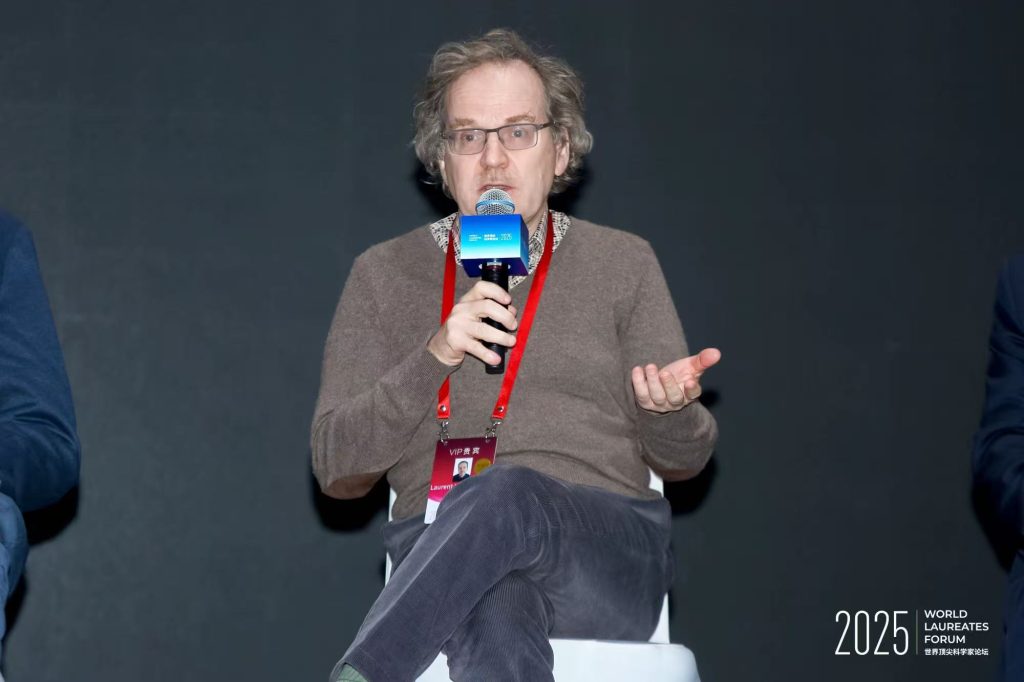


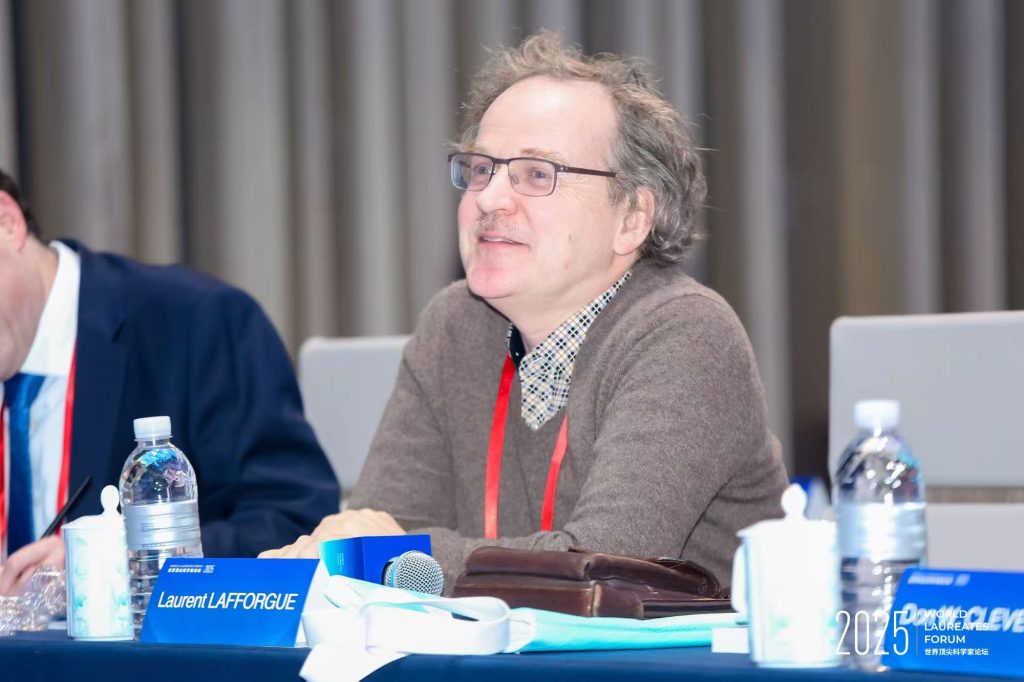
Laurent LAFFORGUE, recipient of the 2002 Fields Medal and member of the French Academy of Sciences.

He exchanged six years of silence for a single mathematical theorem, and devoted the wonder of the second half of his life to a discipline neglected by mainstream academia for more than sixty years: Alexandre GROTHENDIECK’s theory of topoi.

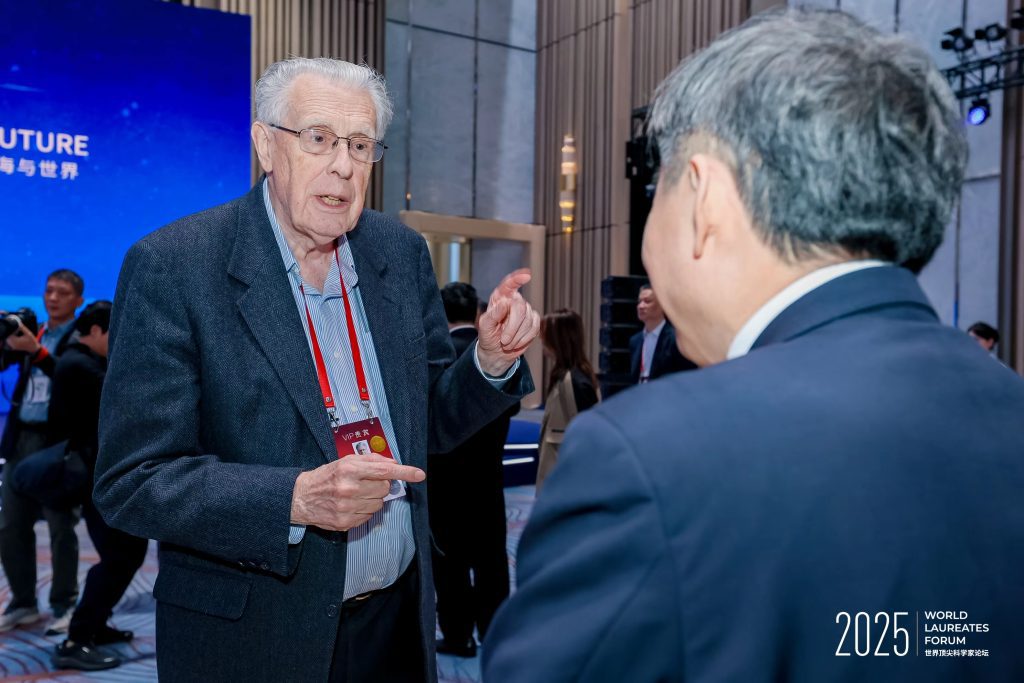
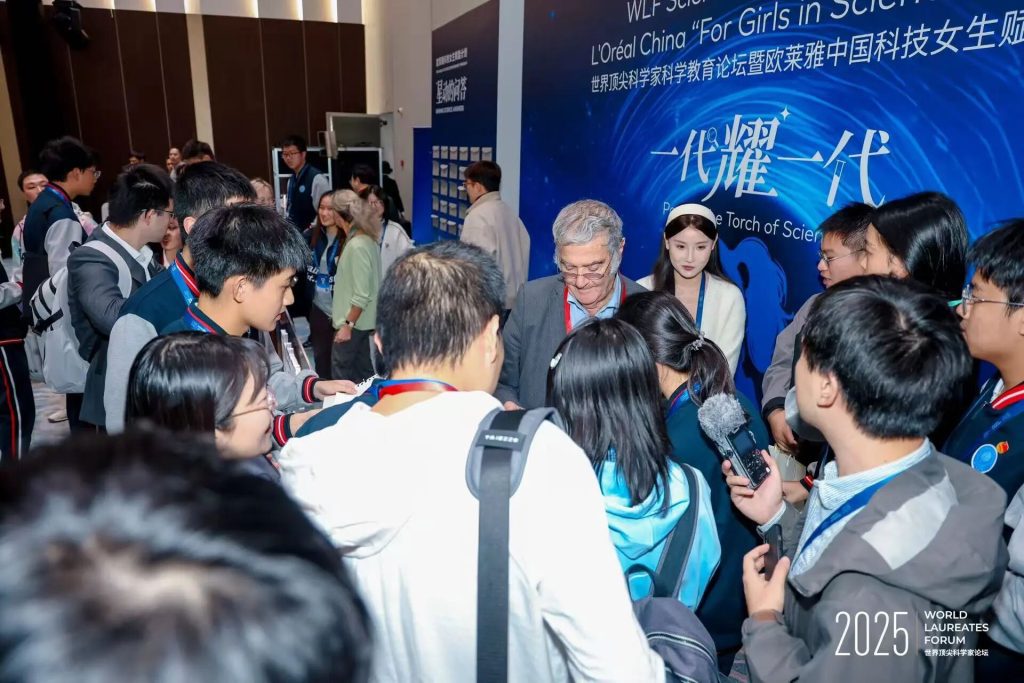
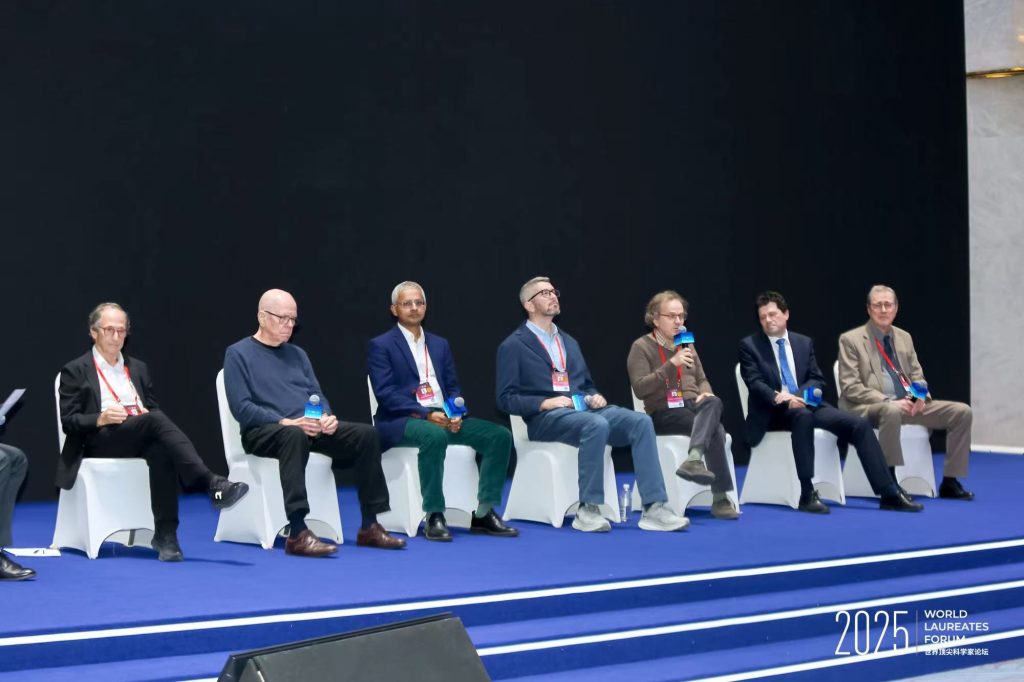
Shanghai Lingang, 2025 World Laureates Forum Youth Scientists Conference. During the SharpMind Roundtable Dialogue, LAFFORGUE engaged in conversation with young scientists from around the world. When asked what advice he would offer the younger generation, he replied:

“Give young people sufficient time to explore new ideas and new methods.”
 

Journey to the Temple of Mathematics

LAFFORGUE was born in 1966 in the southern suburbs of Paris. His mathematical talent emerged early: as a teenager, he won silver medals in the International Mathematical Olympiad for two consecutive years. In 1986, he entered the École Normale Supérieure, embarking on the most elite trajectory of French mathematics.

In 2002, at the age of 35, LAFFORGUE reached the highest stage in the discipline when he was awarded the Fields Medal. His prize-winning work established the Langlands correspondence for the general linear group GLr, over function fields. As many mathematicians observed, “Drinfeld’s proof was already extraordinarily difficult, while Lafforgue’s achievement was a feat of an entirely different scale, extending across hundreds of pages.”

The Langlands program has often been described as a “grand unified theory” of mathematics, seeking deep connections between number theory and harmonic analysis. LAFFORGUE not only achieved a decisive breakthrough, but also carried forward the work of two previous Fields Medalists, Pierre DELIGNE and Vladimir DRINFELD. The honor was unquestionably deserved.

Yet it soon became clear that this young Fields Medalist had no intention of remaining solely within the ivory tower.


A Lonely “Revolt”

After achieving international recognition, LAFFORGUE made a move that surprised many observers: he began openly criticizing the state of French primary and secondary education.

The turning point was a petition protesting the sharp reduction of Greek and Latin in school curricula. “Greek and Latin are only the tip of the iceberg,” LAFFORGUE argued. “The teaching of French itself is already in serious danger.” As he immersed himself in educational literature, he came to realize how profoundly French schools had changed since his own childhood.

In 2005, French President Jacques CHIRAC appointed him to the National Council for Higher Education. Yet only one day later, he was forced to resign. The reason was a sharply worded letter in which he questioned whether the council truly intended to reform education, or whether it would continue relying on the same “experts” who, in his view, had already led the system into crisis.

To LAFFORGUE, students are the primary victims of this collapse, while teachers themselves also suffer within the system. He firmly believes that children must genuinely understand arithmetic operations rather than simply rely on calculators. “The calculations students learn become nourishment for the mind,” he argued. “Calculations delegated entirely to machines awaken no human potential.”

His remarks sparked intense controversy at the time, yet he never retreated from his position.


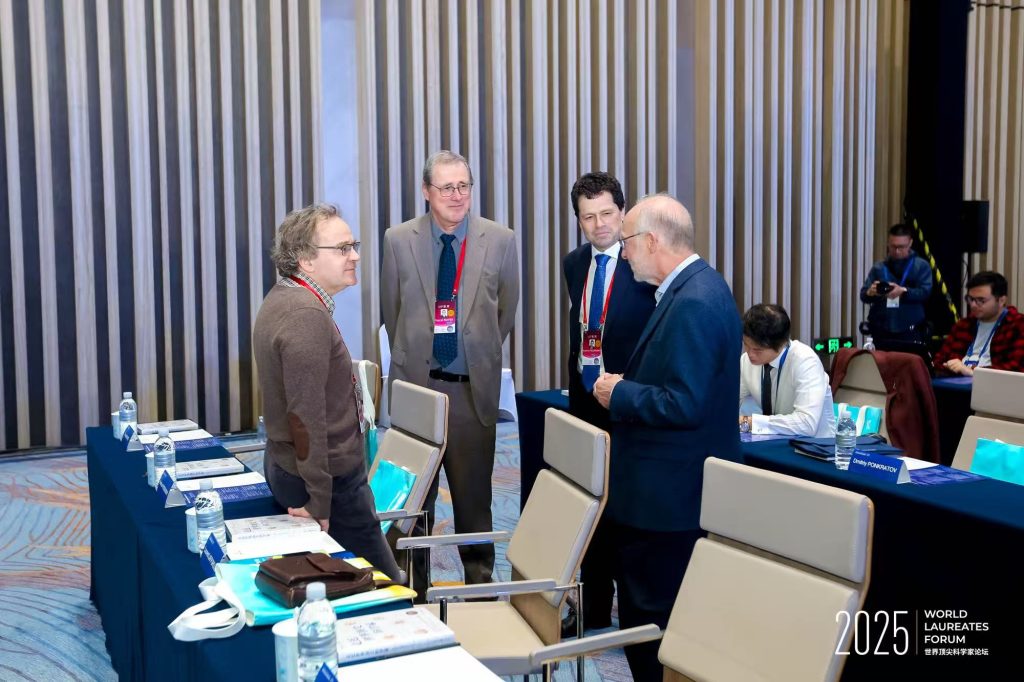
“SharpMind Roundtable Dialogue” at the Youth Scientists Conference


Forgotten for sixty years, the topos — Huawei caught it.

Few could have predicted LAFFORGUE’s next step: he would become a passionate advocate of the theory of topoi.

Originally developed more than sixty years ago by Alexandre GROTHENDIECK, one of the greatest mathematicians of the twentieth century, the theory of topoi was regarded by GROTHENDIECK himself as profoundly important. Yet for decades it was met within academia with indifference, and at times even hostility. In an interview, LAFFORGUE remarked: “Grothendieck spent hundreds of pages explaining the importance of topoi, and the academic community simply did not respond. To me, that was absolutely astonishing.”

What surprised him even more was the stark contrast between academic skepticism and industrial enthusiasm.

“I found far more receptive listeners among engineers, specifically at Huawei France,” he explained. In 2021, LAFFORGUE formally joined the Huawei Paris Research Center. Many engineers there believed that the theory of topoi could potentially provide a mathematical foundation for artificial intelligence, offering forms of interpretability and formal logical structure that current deep learning methods struggle to achieve.

At Huawei, LAFFORGUE finally found an environment where he could devote himself to advancing a theory that had existed for sixty years, yet which few had dared to explore in depth.


A Lifelong Chinese Connection

LAFFORGUE has long shared a deep connection with China. In 2002, it was at the International Congress of Mathematicians in Beijing that he received the Fields Medal. Since then, he has frequently returned to China for academic exchange.

In October 2025, LAFFORGUE visited Beijing Foreign Studies University and delivered a lecture titled “Mathematics: An Experience of Internationalism.”

At the Chern Lecture hosted by Nankai University, he presented a talk entitled “What Is a Point? What Is Space?” In the lecture, he proposed a novel perspective: that a real number can be understood as a logically consistent system of answers to questions about whether a number belongs to a given interval.

In recognition of his outstanding contributions to the cultivation of mathematical talent and the advancement of scientific research in China, LAFFORGUE received the Chinese Government Friendship Award in 2025.


临港的声音

At the 2025 World Laureates Forum, LAFFORGUE once again stood beneath the spotlight. Yet rather than speaking about his latest theorems, he repeatedly emphasized one idea: give young people time.

His own life is perhaps the strongest testament to this belief. It took him six years to resolve major problems connected to the Langlands program, and more than a decade to advance the theory of topoi. Truly transformative discoveries are rarely recognized immediately. What scientists need is not merely short-term funding, but sufficient time to prove the value of an idea.

From Paris to Shanghai, from member of the French Academy of Sciences to mathematician at a Huawei research laboratory, LAFFORGUE has followed a path few could replicate. Whether Alexandre GROTHENDIECK foresaw the future of artificial intelligence sixty years ago may never be known. But through his work, LAFFORGUE demonstrates that true scientists have always been idealists.

And at the Forum in Lingang, he solemnly passed that spirit of idealism on to the next generation.
Noga ALON: First Appearance at the 2025 World Laureates Forum, Building Bridges to the Future Across the Landscape of Discrete Mathematics

:2026-04-30

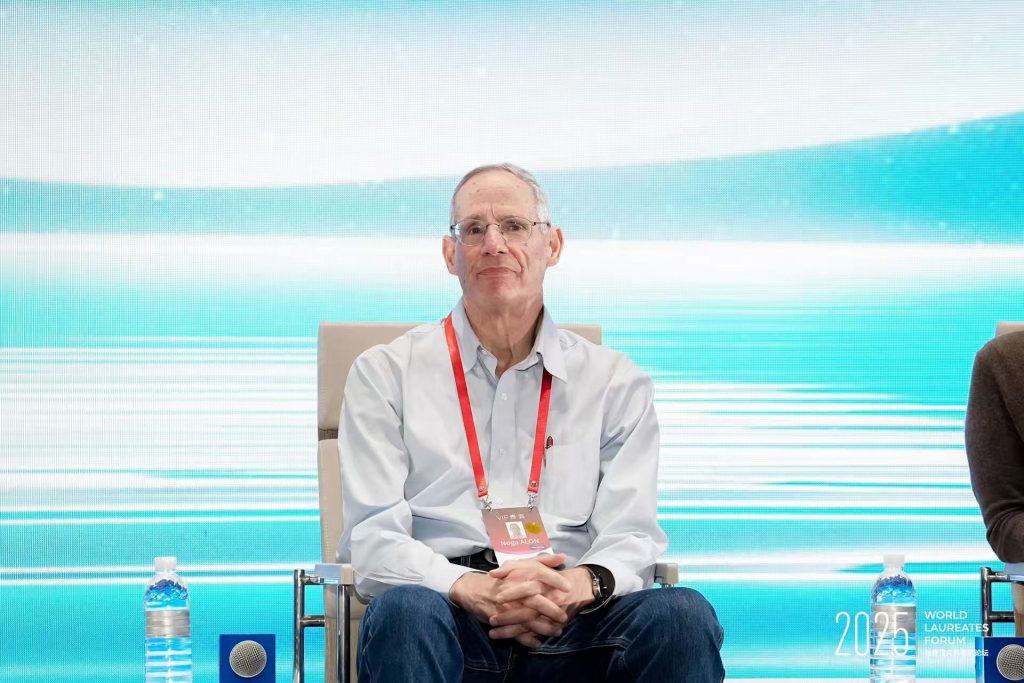
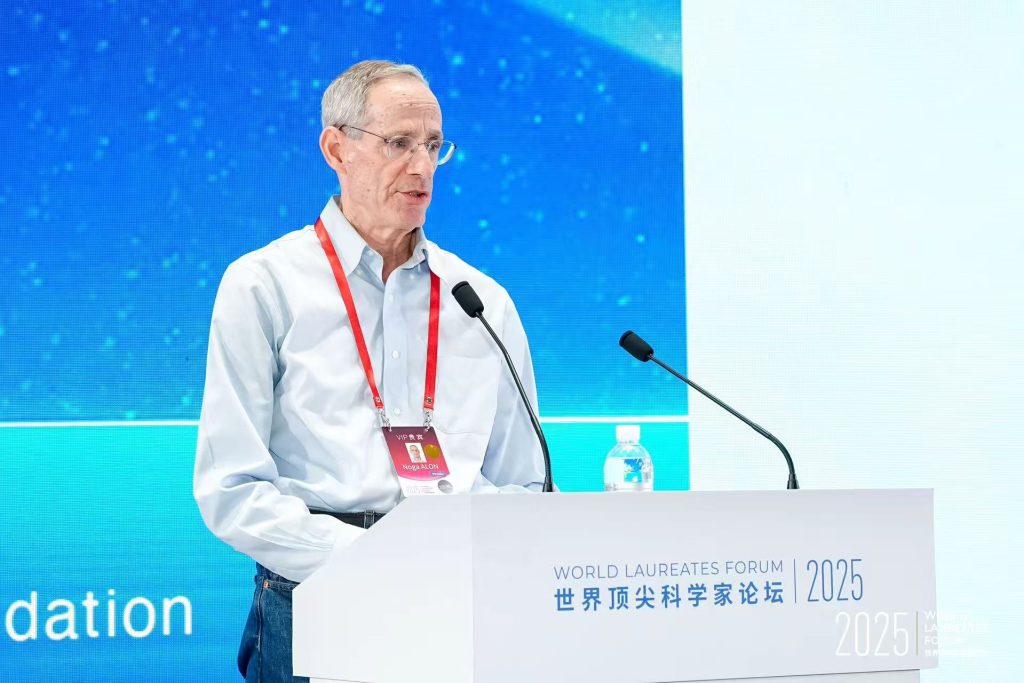
At the Shanghai Lingang venue of the 2025 World Laureates Forum, a scholar in a dark suit leans slightly forward, quietly listening to a question from a young scientist. His gaze is gentle, his demeanor composed, as if time itself has slowed in his presence. This first-time participant is Noga ALON, recipient of the 2024 Wolf Prize in Mathematics and Professor of Mathematics at Princeton University.


The Academic Journey of a Mathematical Master

Noga ALON was born in 1956 in Haifa, Israel. From an early age, he was naturally drawn to mathematical puzzles. “The beauty and elegance of mathematics attracted me very early on,” he recalled in a 2021 interview with the European Journal of Combinatorics. “It strives for an objective and absolute truth.” During high school, he encountered a deeply influential teacher, Yaakov KAPLAN, and distinguished himself in national mathematics competitions. Remarkably, he also met the legendary mathematician Paul ERDŐS while still in high school. A problem in extremal graph theory posed to him by ERDŐS later became ALON’s first academic paper and laid the foundation for his master’s thesis.

ALON received his bachelor’s degree from the Technion – Israel Institute of Technology, his master’s degree from Tel Aviv University, and his Ph.D. from the Hebrew University of Jerusalem under the supervision of Micha PERLES. He subsequently held visiting or research positions at leading institutions including the Massachusetts Institute of Technology, Harvard University, the Institute for Advanced Study, and Bell Laboratories. He joined Tel Aviv University in 1985 and served as Dean of the School of Mathematical Sciences from 1999 to 2001. In 2018, he moved to Princeton University, where he continues to teach and conduct research. He has published more than 850 academic papers, supervised over fifty doctoral students, and co-authored the influential textbook The Probabilistic Method with Joel SPENCER, a foundational work in modern combinatorics.


Intelligent Science Conference: Frontier Thinking in Combinatorics

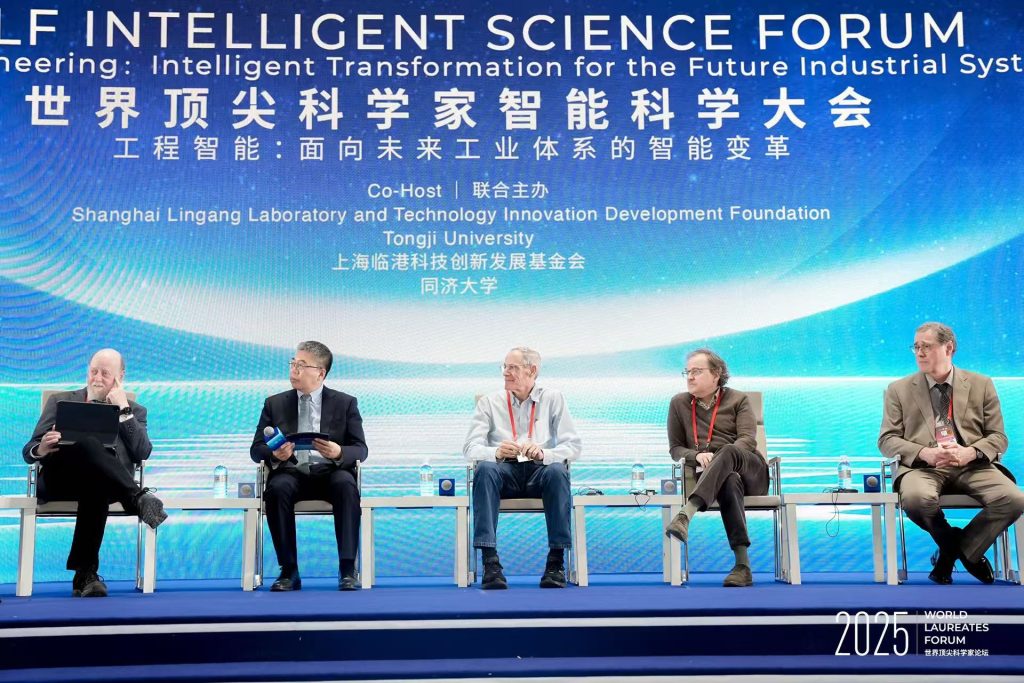
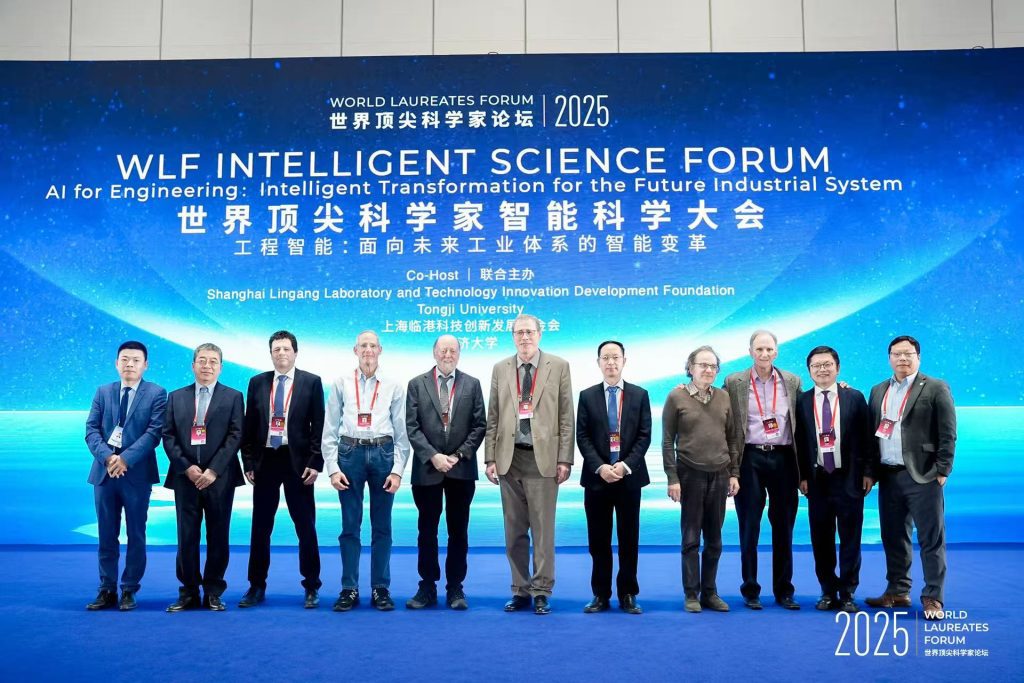
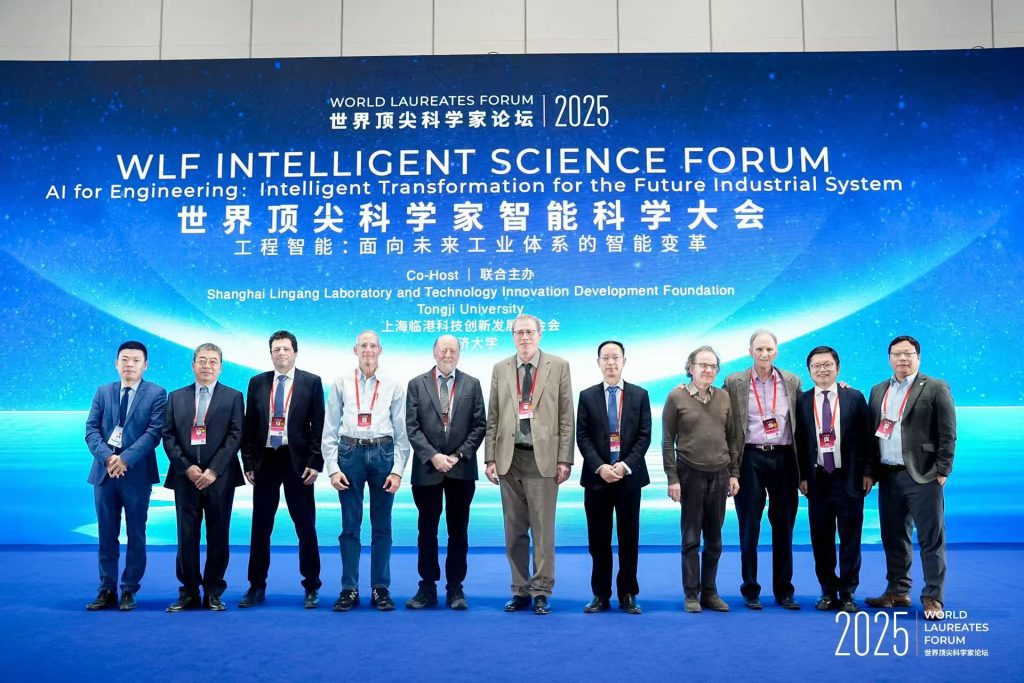
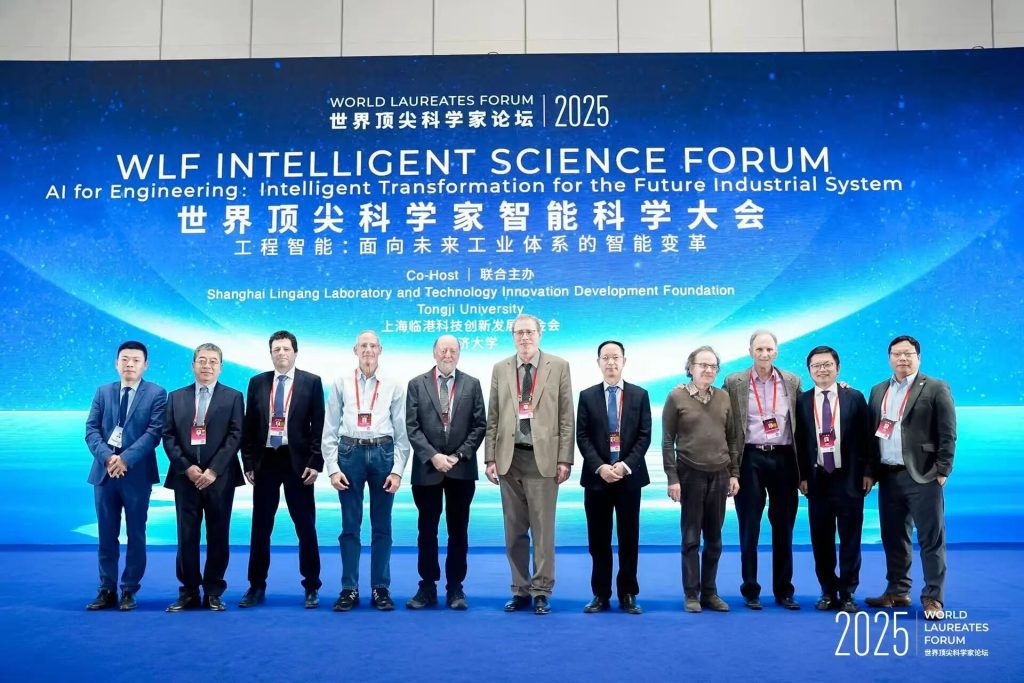
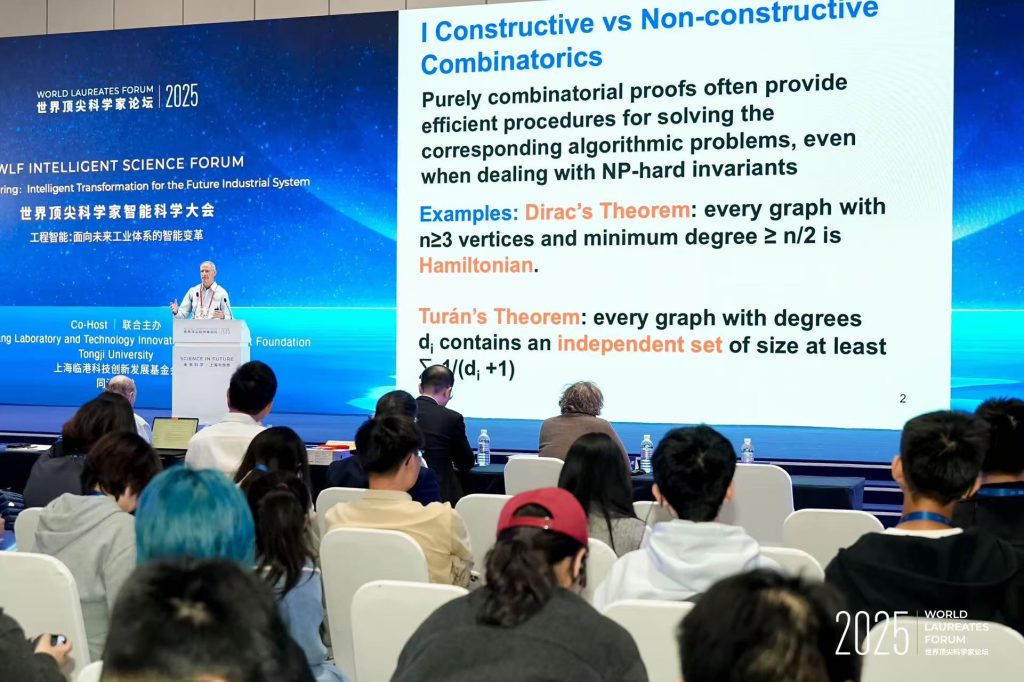
On October 25, 2025, the Intelligent Science Conference, jointly organized by the Shanghai Lingang Science and Technology Innovation Development Foundation and Tongji University, was held at the Shanghai Lingang Center. Under the theme “Engineering Intelligence: Intelligent Transformation for Future Industrial Systems,” the conference brought together Turing Award, Fields Medal, and Wolf Prize laureates, along with leading scholars from around the world. Noga ALON made his first appearance at the Forum and delivered a keynote lecture.

At the conference, ALON pointed out that many applications of topological and algebraic methods in combinatorics still rely on non-constructive proofs. The challenge of making these results algorithmic, he noted, has become a major frontier in contemporary mathematical research, with initial progress already underway.

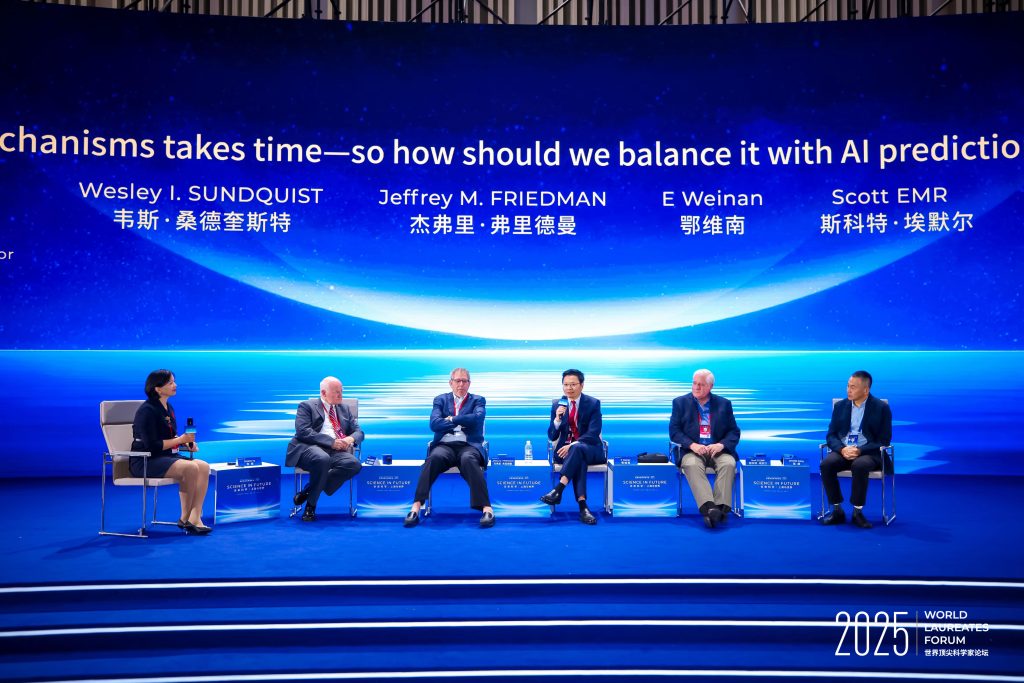
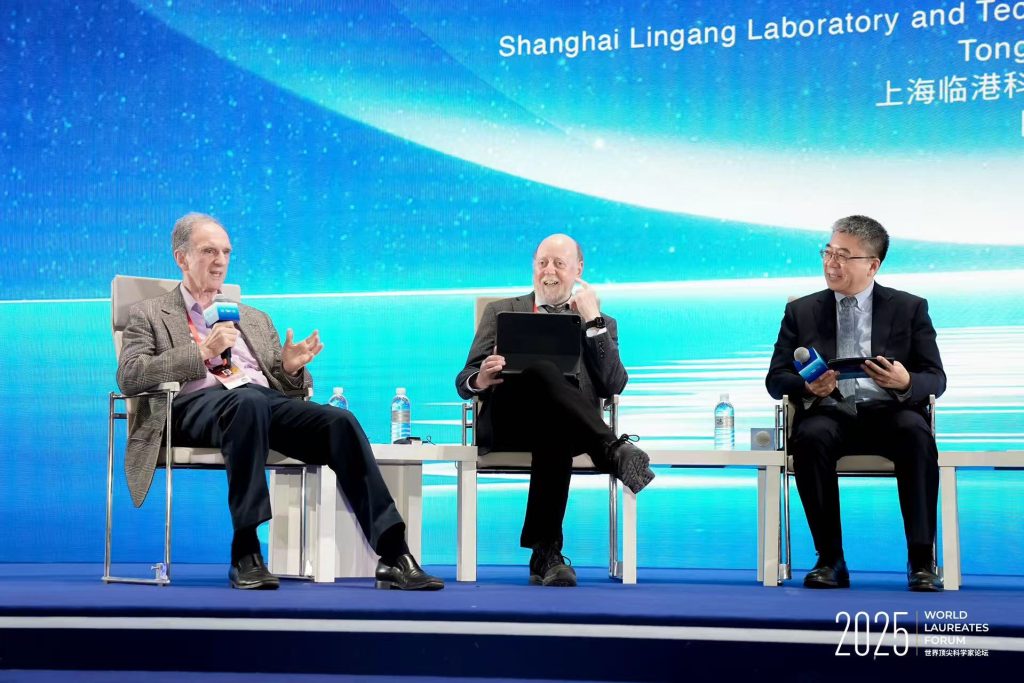
His remarks aligned closely with the Forum’s broader theme of connecting fundamental research with real-world applications. Sharing the stage with ALON were leading scientists including Martin E. HELLMAN, recipient of the 2015 Turing Award, and Jack J. DONGARRA, recipient of the 2021 Turing Award, and Laurent LAFFORGUE, recipient of the 2002 Fields Medal. LAFFORGUE discussed the relationship between artificial intelligence and mathematics, noting that current AI technologies are opening up a new paradigm for mathematics and science, while at the same time requiring mathematical methods to improve their performance and reliability.

As a scholar working across pure mathematics and computer science, ALON has consistently emphasized that the boundary between pure and applied mathematics is both blurred and constantly evolving. “I enjoy working on interesting mathematical problems without worrying too much about whether they have practical applications,” he remarked in an earlier interview. “If some of my work turns out to have applications, I consider that a bonus.” This perspective is also reflected in his research on streaming algorithms, where the eventual practical impact has far exceeded the original theoretical motivation.


Intelligent Science Conference of the 2025 World Laureates Forum


Contributions That Reshaped Mathematics: Six Milestones

Noga ALON’s research is both broad and profound. The Wolf Prize Committee recognized him “for his pioneering contributions to combinatorics and theoretical computer science.” The following six areas are among his most celebrated achievements:


Combinatorial Nullstellensatz
Building on Hilbert’s Nullstellensatz from algebraic geometry, ALON developed a powerful algebraic tool tailored to discrete problems. It has had major applications in graph theory, combinatorics, and additive number theory.


Expander Graphs and Spectral Methods
In collaboration with Vitali MILMAN and others, ALON established deep connections between the expansion properties of graphs and their spectral characteristics. Expander graphs have since become fundamental tools in algorithm design, error-correcting codes, and pseudorandomness.


Streaming Algorithms and Sketching Techniques
In a landmark 1999 paper with Yossi MATIAS and Mario SZEGEDY, ALON pioneered the study of data stream algorithms. Their work addressed how to sample and estimate properties of massive data streams under strict memory constraints, with wide applications in network monitoring, database systems, and natural language processing.


Resolution of the Hadwiger–Debrunner Problem
Together with Daniel KLEITMAN, ALON solved this classical problem in combinatorial geometry, first posed in 1957. Their result significantly extended Helly’s theorem and had lasting influence in the field.


Refutation of a Conjecture by Claude SHANNON
ALON disproved a conjecture proposed by Claude SHANNON in 1956, showing that the Shannon capacity of the disjoint union of two channels can exceed the sum of their individual capacities. This result reshaped the direction of research in information theory.


A Foundational Text on the Probabilistic Method
His book The Probabilistic Method, co-authored with Joel H. SPENCER, is widely regarded as a classic and has trained generations of researchers in combinatorics and theoretical computer science.


Think About Interesting Problems: Simple Advice for Young People

As a mentor who has supervised more than fifty PhD students, Noga ALON offers advice to young scientists that is both simple and profound. In his Shaw Prize acceptance speech, he once said, “My scientific credo has always been to think about interesting things.” In a 2021 interview, he further explained, “Think about problems and areas that you find interesting, rather than deliberately searching for what is considered ‘important.’ The key to success is passion for your field. Also, try to learn as much mathematics as possible at an early stage. It becomes much harder to learn new areas later, and a solid mathematical foundation is essential.”

When asked about the future directions of combinatorics, he emphasized its close ties with theoretical computer science. He noted that algorithmic perspectives, computer-assisted proofs, and deeper integration with algebra and number theory will be major trends over the next two decades. At the same time, he stressed, “Mathematics should be viewed as a unified whole, and we should not try to separate important fields from less important ones.”


Beyond mathematics, Noga ALON enjoys reading, traveling, and playing table tennis. He jokes that his skills are “not particularly strong, but I play with great enthusiasm.” He and his wife Nurit have three daughters, and in his Shaw Prize biography he wrote, “I am especially grateful for their love and support.”

In 2022, Noga ALON was awarded the Shaw Prize in Mathematical Science. In 2024, he and Adi SHAMIR jointly received the Wolf Prize in Mathematics. Despite these honors, he remains actively engaged in research, “I have been fortunate to collaborate with many outstanding researchers… and I hope to continue working with them to explore fascinating problems in discrete mathematics and its applications.”


Noga ALON’s first appearance at the Forum leaves a distinctive note in this global scientific dialogue. As 2013 Nobel Laureate in Chemistry Michael LEVITT once said, “We have every reason to be optimistic.” This optimism stems not only from the progress of science itself, but also from explorers like Noga ALON, who remain driven by passion and curiosity.

Shanghai Lingang is steadily becoming a vital hub connecting China with the world’s leading scientific communities. Noga ALON’s engagement with Lingang adds yet another solid pillar to this bridge.

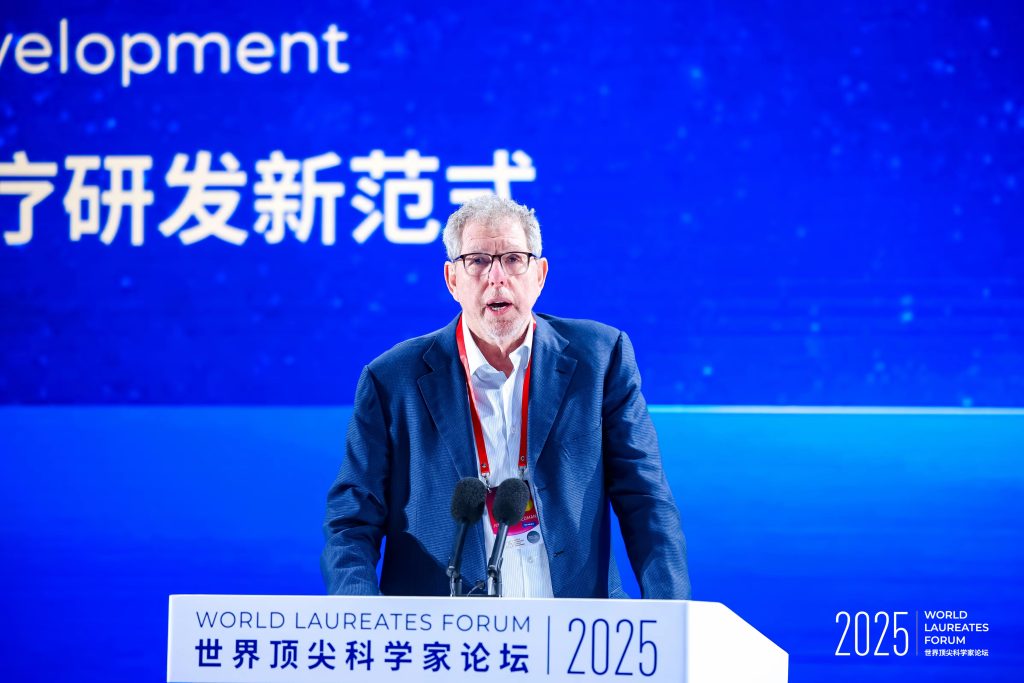
Jeffrey M. FRIEDMAN: First Appearance at the 2025 World Laureates Forum, the “Father of Leptin” on the Truth About Obesity

:2026-04-23

> In 1994, he discovered leptin, fundamentally reshaping the course of obesity research.
> Thirty-one years later, the “father of leptin” arrived in Shanghai Lingang and, for the first time at the 2025 World Laureates Forum, shared this decades-long journey of exploration. His account ranged from X-ray films developed late at night in the laboratory, to the global rise of GLP-1 therapies, and to a redefinition of the biological nature of obesity.


Top Scientist Speech: Craving Is Not a Weakness

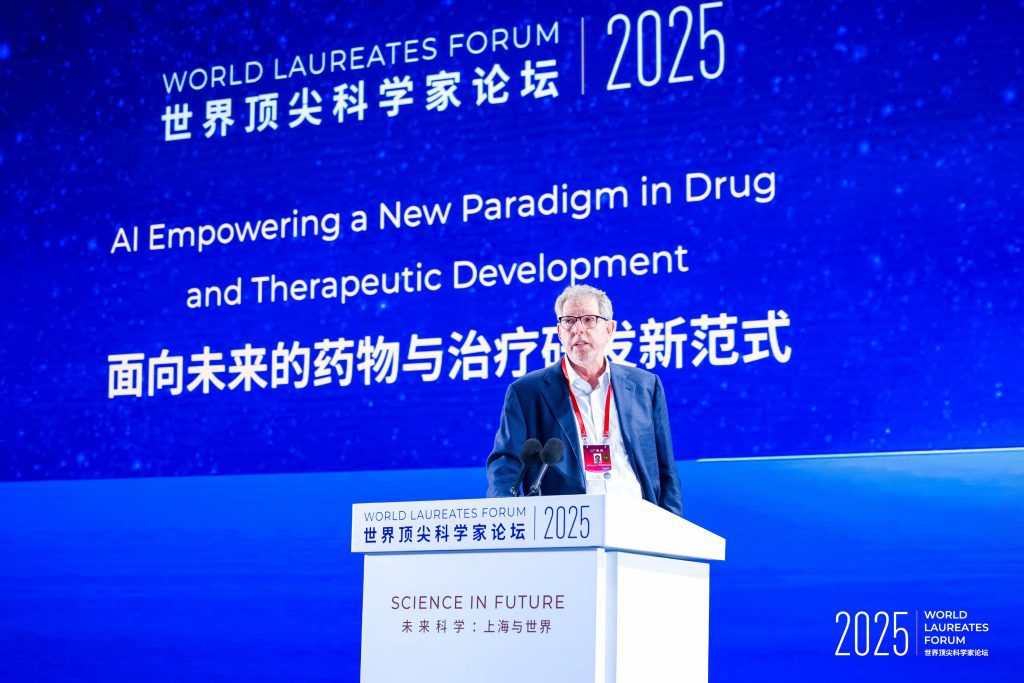
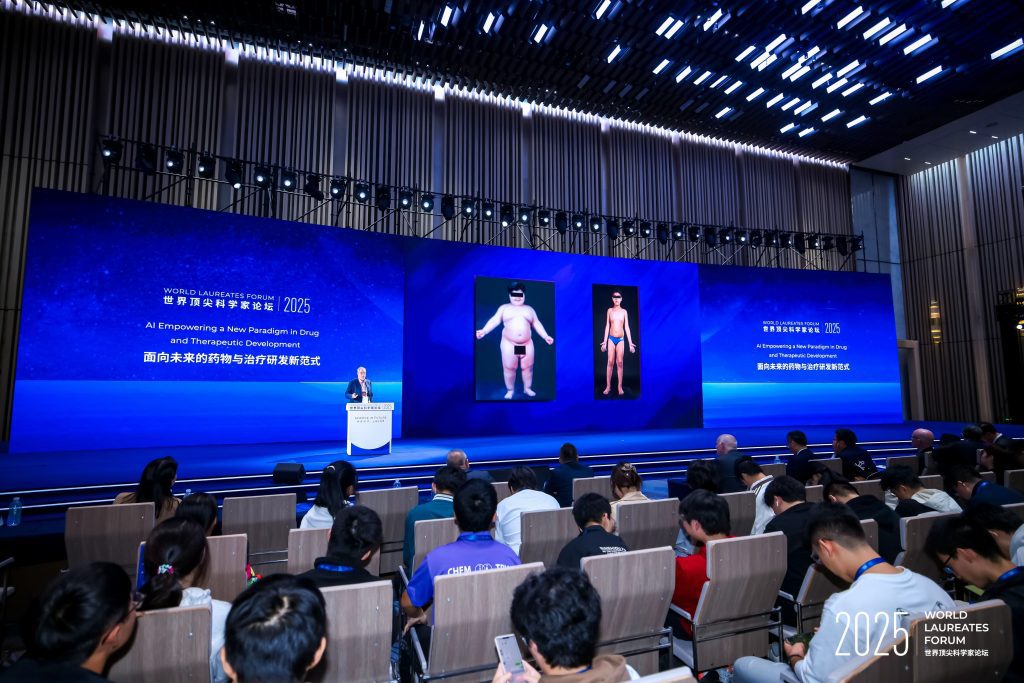
At the Shanghai Lingang Center, Jeffrey M. FRIEDMAN delivered a keynote lecture titled “On the Causes and Treatment of Obesity: The End of the Beginning” at the Life Sciences Conference of the 2025 World Laureates Forum.

“We eat to obtain energy for sustaining life, movement, and thought,” he stated at the very beginning of his talk. “Signals of hunger and satiety are largely unconscious physiological responses, rather than something we can fully control. When you feel a craving, it may simply be a natural signal from your body that has been given an emotional label.”

Although these remarks may sound straightforward, they challenge a long-standing social belief. Before the discovery of leptin, obesity was widely attributed to laziness and a lack of willpower. FRIEDMAN’s research demonstrated that body weight is regulated by a highly sophisticated biological system, and that the key regulator of this system is leptin.


From “Gap Year” to the Path of Science

FRIEDMAN was born into an ordinary family in the suburbs of New York, where there was a common expectation: children with good academic performance would eventually become doctors. Following this path, he received his M.D. from Albany Medical College in 1977 and completed three years of residency training. However, during that period, he became increasingly aware that practicing medicine was not his true calling.

As his residency was coming to an end, his application for medical specialty training fell through after missing the deadline. A professor, sensing his potential interest in research, recommended him to spend a year in the laboratory of Mary Jeanne KREEK at Rockefeller University. “At the time, my plan was to do one year of research and then return to clinical medicine,” FRIEDMAN later recalled. That single year, however, would change the course of his life.

In 1981, FRIEDMAN began his doctoral studies at Rockefeller University, joining the laboratory of Jim DARNELL to study gene transcription in the liver. At first glance, this work seemed unrelated to obesity. Yet the molecular biology techniques he mastered during this period later proved essential in the eventual cloning of the ob gene. Alongside his doctoral research, he collaborated with SCHNEIDER and others, successfully cloning the CCK gene in 1983 and mapping it to mouse chromosome 9, thereby ruling out CCK as the causative gene for the ob phenotype.

In 1986, FRIEDMAN established his own laboratory at Rockefeller University and became an investigator at the Howard Hughes Medical Institute. He set his sights on identifying the ob gene using positional cloning. Reflecting on this decision, he later remarked: “In science, truly original ideas are rare. They often circulate within the community until someone commits fully to pursuing them. Success lies in recognizing a promising direction and following it with energy and determination.”

From the establishment of his laboratory to the eventual cloning of the ob gene, FRIEDMAN and his team spent nearly nine years on this endeavor.


Discovering Leptin

In December 1994, FRIEDMAN and his team published a landmark paper in Nature titled “Positional Cloning of the Mouse Obese Gene and Its Human Homologue.” Through large-scale genetic crossing experiments, the researchers gradually mapped the ob mutation to a region on chromosome 6. Within this region, they identified a gene that was expressed specifically in adipose tissue and found it to be defective in ob mice. Sequencing revealed that in the ob mouse genome, a premature stop codon appeared immediately after leucine at position 104. The team also sequenced this gene across multiple species, including humans, and found it to be highly conserved.

FRIEDMAN named the hormone encoded by this gene leptin, derived from the Greek word leptos, meaning “thin.” The name proved remarkably prescient. In 1995, his team further demonstrated in Science that the ob gene encodes a 16 kDa circulating protein. When this recombinant protein was administered to ob mice or even wild-type mice, both food intake and body weight were significantly reduced.

FRIEDMAN still vividly recalls the night of the discovery, “It was late one night in May when I developed the X-ray film and confirmed the finding. I realized what we had. It was a moment of insight. The data showed that the ob gene encodes a hormone that regulates food intake and body weight. At that moment, I felt it was extraordinary, one of the most important moments of my life. What you see are just spots, which are difficult for most people to interpret, but for those familiar with the technique, it reveals an elegant and simple biological system built by nature. That beauty was striking.”

The discovery of leptin fundamentally transformed the field of obesity research. Before the “leptin era,” obesity had long been regarded as a condition resulting from a lack of willpower to control diet and maintain exercise. FRIEDMAN’s work established a solid biological foundation for understanding the mechanisms of obesity and for developing potential treatments.


Life Sciences Conference of the 2025 World Laureates Forum


Not a Weight-Loss Wonder Drug, Yet It Transformed Medicine

Following the discovery of leptin, the pharmaceutical community held high expectations. The company Amgen acquired the rights for 20 million US dollars, hoping that administering recombinant leptin to obese patients would replicate the dramatic weight-loss effects observed in ob mice. However, as the first clinical studies were published, the reality became clear: for the vast majority of obese individuals, exogenous leptin was not an effective treatment for weight loss.

This outcome did not surprise FRIEDMAN. He had already recognized that most cases of obesity are not caused by leptin deficiency, but by leptin resistance, a condition in which the brain no longer responds effectively to leptin signals. He compared this phenomenon to type 2 diabetes. In type 1 diabetes, patients lack insulin, whereas in the more common type 2 form, insulin levels are elevated, leading to receptor desensitization. Similarly, when fat accumulation reaches a certain level and leptin levels remain chronically high, the brain gradually stops responding to leptin, making sustained weight loss difficult.

Yet the discovery of leptin was far from a failure. It enabled the precise mapping of complex neural circuits that regulate food intake and energy expenditure, and it accelerated the identification of multiple hormones involved in the central regulation of energy balance. Subsequent genetic studies revealed that up to 15 percent of individuals with severe obesity carry mutations in genes regulated by leptin.

One of the most important outcomes of this line of research is the development of GLP-1–based therapies. Although GLP-1 is not a primary driver of obesity, its pharmacological effects on neurons in the hypothalamus and brainstem, which are regulated by leptin, have so far produced some of the most significant advances in obesity treatment.


Latest Breakthroughs in Leptin

More than three decades after the discovery of leptin, FRIEDMAN’s laboratory continues to make significant advances. In 2025, his team at Rockefeller University published a study in Cell Metabolism that identified a key mechanism underlying leptin resistance and proposed a potential strategy to reverse it.

The study found that in states of leptin resistance, the levels of two essential amino acids, leucine and methionine, become dysregulated. Both are known activators of the mTOR signaling pathway. The researchers demonstrated that treatment with the drug rapamycin could restore leptin sensitivity in diet-induced obese mice, leading to a significant reduction in fat mass while having minimal effects on muscle. As the team noted, “This finding suggests that there may be ways to overcome leptin resistance, which is truly exciting.”

This work opens new directions for obesity treatment. FRIEDMAN has suggested that the future of the leptin system may not lie in its use as a standalone therapy, but in combination approaches. For example, pairing leptin with other hormones such as amylin may produce more substantial weight-loss effects.


The Future: Neural Circuits and Behavioral Decisions

Regarding the future of obesity research, FRIEDMAN emphasized that the central challenge lies in understanding how multiple feeding-related signals are integrated within the brain.

“Leptin acts on specific neuronal populations in the brain that regulate food intake. It inhibits neurons that promote feeding while activating those that suppress it,” he explained. “This allows us to map the detailed neural circuits that control eating behavior. The key question now is that, beyond leptin, there are many other inputs that influence feeding, such as smell, taste, and emotional states. How are these signals integrated to generate a behavioral decision, leading an organism to initiate or stop eating?”

He believes that as our understanding of leptin-regulated neural circuits deepens, new therapeutic strategies will inevitably emerge. The gap between advances in basic science and clinical applications, he suggests, will eventually be bridged by future breakthroughs.


“Don’t Be Too Hard on Yourself; 

You’re Fighting a Powerful Biological System”

In his remarks at the 2025 World Laureates Forum, FRIEDMAN reiterated the biological basis of obesity. Held under the theme “Science in Future: Shanghai and the World,” the Forum brought together 25 laureates of major international prizes and around 150 scientists from more than ten countries. As one of the organizers, the Shanghai Lingang Science and Technology Innovation Development Foundation witnessed Professor FRIEDMAN’s first appearance at the Forum.


Drawing on twin studies, FRIEDMAN noted that genetics accounts for approximately 70 to 80 percent of body weight variation, second only to height. To a large extent, each individual’s weight range is biologically set. This means that, for most people, achieving an “ideal weight” is extremely difficult and not always necessary.

“If people are overweight or find it hard to lose weight, they should not be too hard on themselves,” he said. “They are fighting a powerful biological system. However, if someone is overweight and has diabetes or other complications, they should try to lose a modest amount of weight. Losing seven to ten pounds is often enough to improve health. The goal is not an ideal weight, but better health.”

When asked about his own weight management, he smiled and shook his head: “I wish I had a secret. I struggle with weight just like everyone else.” He is a passionate food lover, especially fond of Hunan cuisine, whose bold and spicy flavors, as he put it, are “hard to resist.”

For young researchers, he offered this advice: “I hope everyone in my lab takes as much initiative as possible in developing their own ideas and research directions. I tend to treat each person as an independent investigator who does not need to raise their own funding. When people feel a stronger sense of ownership over their work, they perform better, engage more deeply, and learn more.” 


科学的起点与终点

From the landmark Nature paper published in 1994 to the stage of the 2025 World Laureates Forum in Shanghai Lingang, FRIEDMAN has spent thirty-one years demonstrating a simple yet profound truth: the value of science does not always lie in finding definitive answers, but in asking the right questions.

For example, who is to blame for obesity?

The answer is now clear: it is not your fault. It is biology speaking.

John E. HOPCROFT: From an “Accidental” Lecturer to an Algorithmic Pioneer—and a “People’s Scientist” Rooted in China for Fifteen Years John E. HOPCROFT

:2026-04-14

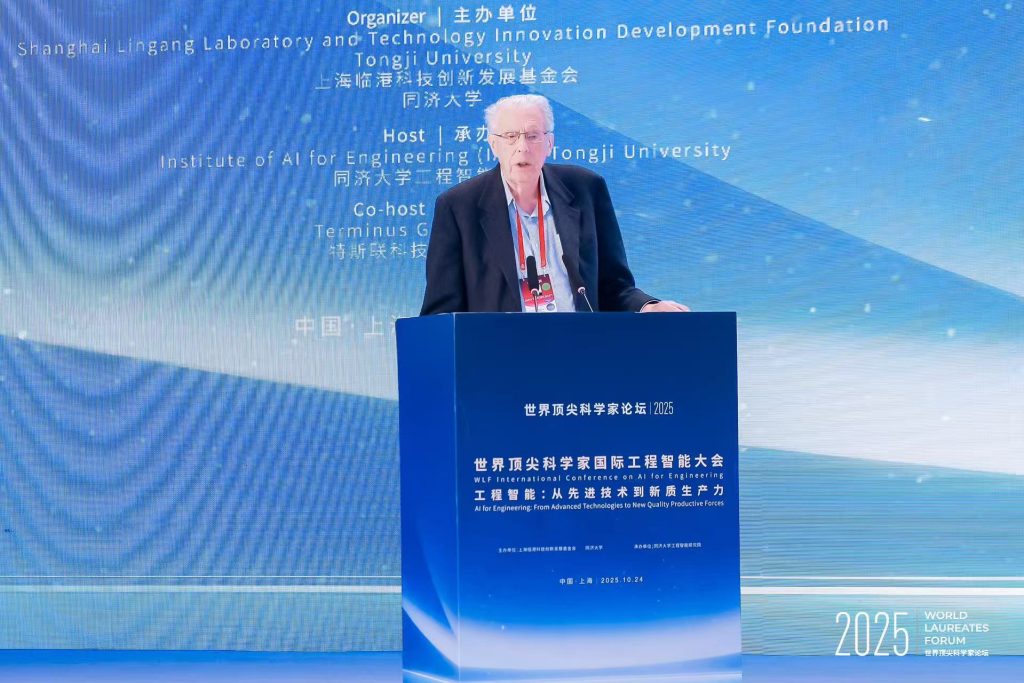
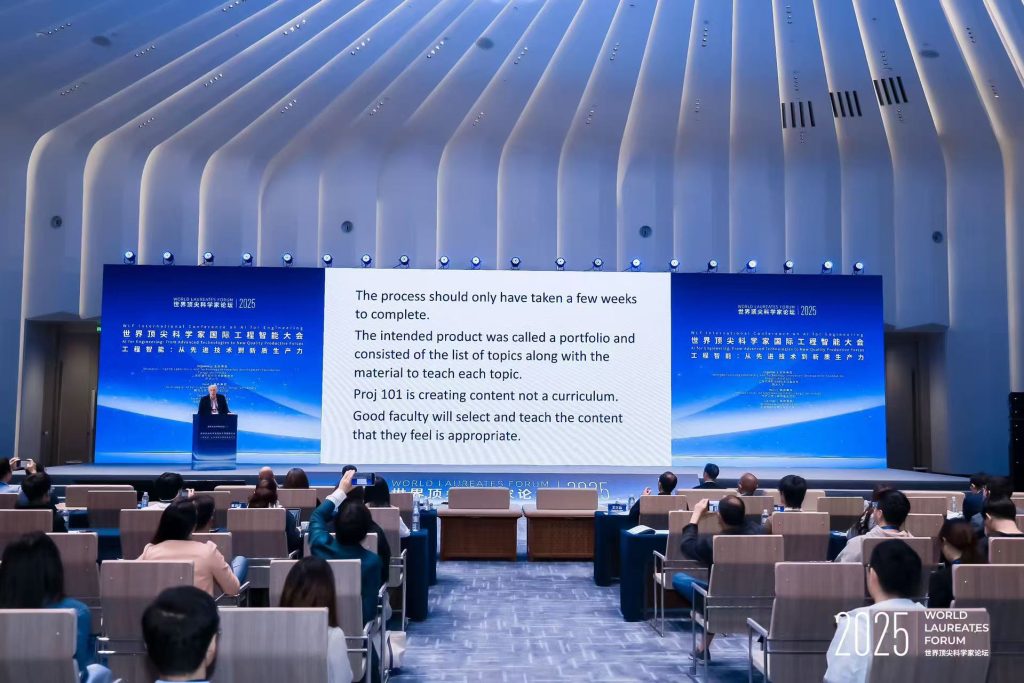
At the Shanghai Lingang Center, under the spotlight, John E. HOPCROFT stepped onto the podium as Chair of the International Engineering Intelligence Conference at the 2025 World Laureates Forum.

As the applause rose from the audience, few might have known that this 86-year-old “master of algorithms” was once, quite literally, pulled onto the lectern by chance.


A Class I Was “Voluntold” to Teach

At Princeton University in 1967, a young John E. HOPCROFT had just completed his Ph.D. in electrical engineering when the department chair approached him with a request, “Could you offer a course in computer science?”

HOPCROFT’s immediate response was, “What should I teach?” The future Turing Award laureate, later recognized as one of the founders of computer science, at that time knew virtually nothing about the field. The chair handed him a few research papers and said, “If you cover these, that will make a good course.”

HOPCROFT did exactly that. The class had only six students, among them future giants of computer science: Jeffrey ULLMAN, Alfred AHO, and Brian KERNIGHAN. Together, teacher and students explored this unfamiliar territory, eventually turning their lecture notes into a book: Introduction to Automata Theory, Languages, and Computation. The text went on to educate generations of computer scientists and remains widely used in universities around the world.

“That was the most enjoyable year of my career,” HOPCROFT later recalled in an ACM oral history interview, “because I was exploring this new field together with my students.”

This “accidental” beginning marked the start of a remarkable academic journey.

Together with Robert TARJAN, HOPCROFT developed a linear-time algorithm for testing graph planarity, introduced the concept of asymptotic complexity into algorithm analysis, and helped define the direction of the field. In 1986, for their fundamental contributions to the design and analysis of algorithms and data structures, he and TARJAN were awarded the Turing Award, the highest honor in computer science.

At the same time, his book The Design and Analysis of Computer Algorithms became a standard reference for generations of computer scientists. He is a member of the U.S. National Academy of Sciences and the National Academy of Engineering, was elected a Foreign Member of the Chinese Academy of Sciences in 2017, received the Chinese Government Friendship Award in 2016, and was honored with the International Science and Technology Cooperation Award of the People’s Republic of China in 2024.

Yet he has never believed that his career was the result of careful planning. As he once told Professor CHEN Baoquan of Peking University, “I’ve asked many Nobel laureates what plans led to their success. They all said, ‘I didn’t have a plan.’ When an exciting opportunity comes along, some people take it. If it’s not exciting, they simply ignore it.”

Perhaps this is the core of HOPCROFT’s philosophy: not planning, but passion and curiosity.


“I Never Went to Work — I Did What I Love”

John E. HOPCROFT was born in 1939 into a working-class family in Seattle. Neither of his parents finished high school, yet they did everything they could to provide him with richer educational opportunities.

Recalling his primary school years, he said: “School started at 9 a.m. and ended at 3 p.m., with an hour in between for homework. After school, I could do whatever I wanted”, he regarded this freedom as an essential part of his education, “because I had to figure out what I wanted to do, and then focus on it.”

That childhood experience of independent exploration shaped the educational philosophy he would carry throughout his life. In May 2025, in an interview with China Education Daily at the World Digital Education Conference, he remarked: “I never ‘went to work’, I went to do what I loved. The people who succeed are the ones who are doing what they truly love.”

In China, however, he saw a very different picture: students attending classes from 8 a.m. to 5:30 p.m., going home to do homework, and then taking additional tutoring classes at night. “Many Chinese children do not have the opportunity to discover what they truly enjoy doing, and that is an important part missing from education.”

This observation became a central driving force behind his efforts to promote educational reform in China over the following decade.


John E. HOPCROFT exchanges ideas with Chinese scientists at the 2025 World Laureates Forum


Fifteen Years Rooted in China

In 2011, at the invitation of Shanghai Jiao Tong University, HOPCROFT came to China for the first time. In every year that followed, he spent three months working at Shanghai Jiao Tong University, personally teaching undergraduate computer science courses. He also arranged for his lecture notes to be published in China free of charge, with only one request: that the price of each book be kept below 30 yuan so that more students could afford them.

In 2017, Shanghai Jiao Tong University established the John Hopcroft Center for Computer Science, named in his honor, with HOPCROFT serving as its founding director. In the same year, Peking University launched the Turing Class, for which he helped design the training program and personally taught courses.

Fifteen years later, his assessment of China has remained consistent, “China is the only country that has made improving education a national priority.” In December 2025, he further remarked in an interview with Xinhua News Agency, “Chinese students are fortunate to have been born in a country that places great importance on artificial intelligence education. China invests heavily in talent cultivation in ways that are rarely seen anywhere else in the world, which shows that it truly regards education as a top priority for national development.”

He has been not only an advocate in principle, but also a driver of concrete action. He was one of the key proponents of the Ministry of Education’s 101 Plan for undergraduate teaching reform, which was first launched in computer science in 2021 and has since expanded to eight foundational disciplines, including mathematics and chemistry, before extending into artificial intelligence in 2024. With HOPCROFT’s support, research centers in computer science were established at Huazhong University of Science and Technology, Shanghai Jiao Tong University, and Peking University, aiming to attract outstanding young talent from China and abroad while enhancing the quality of undergraduate education.

Those who have met him, whether professors or students, simply call this endearing elder scholar “John.”


Educational Inquiries in the Age of AI

In 2025, as the wave of artificial intelligence swept across the globe, many were eager to discuss how AI might transform education. HOPCROFT, however, remained unusually calm.

“Artificial intelligence is certainly influential,” he said in an interview, “but whether it will truly reshape the educational system remains difficult to determine. The only two technologies I am certain have profoundly changed education are the blackboard and the printing press.”

He candidly recalled that when he was younger, he once believed television would completely transform education, but he later realized he had been wrong. “What I failed to appreciate,” he explained, “was the central importance of teacher–student interaction. The strength of a great teacher lies not only in deep knowledge or skillful lecturing, but in being genuinely student-centered and sincerely caring about students’ growth.”

In December 2025, at the International Forum on Basic Education in China, he further stressed, “To replace teachers with artificial intelligence would be equivalent to stripping education of its soul.” Yet he does not reject AI altogether. He believes it can assist teachers in generating exercises, grading assignments, and precisely identifying gaps in students’ understanding. Even so, he remains convinced that the essence of education will always lie in teachers who genuinely care about the growth of their students.

When asked whether artificial intelligence truly possesses intelligence, his answer was direct, “Artificial intelligence is, in essence, a system of pattern recognition and statistical computation. It does not possess such distinctively human capacities as error awareness or genuine cognitive understanding.”

“The mission of education is to help students discover what they truly love and guide them toward careers connected to that passion.” This is a principle HOPCROFT has emphasized repeatedly. At the 2025 World Digital Education Conference, when asked by a reporter to summarize education in a single sentence, he responded without hesitation:

“You only live once, and you should enjoy it. The role of education is to help you discover what you love and guide you toward a life’s work that you truly enjoy.”


In Lingang, Dialoguing with the World’s Top Scientists

The 2025 World Laureates Forum was held at the Shanghai Lingang Center under the theme “Science in Future: Shanghai and the World.” The Forum brought together 25 laureates of the world’s top scientific honors, including the Nobel Prize, the Turing Award, the Wolf Prize, and the Fields Medal.

HOPCROFT was among the Turing Award laureates invited to attend the 2025 World Laureates Forum. Joining him on the Forum stage were other leading scientists, including Jack J. DONGARRA, recipient of the 2021 Turing Award, and Martin E. HELLMAN, recipient of the 2015 Turing Award.

As one of the organizers of the event, the Shanghai Lingang Science and Technology Innovation Development Foundation is deeply honored to contribute to this premier international scientific gathering in Asia and to help build a platform where the world’s leading scientific minds can exchange ideas.


WLF Möbius Night at the 2025 World Laureates Forum


For HOPCROFT, Lingang is no stranger. It is the city he returns to each year to teach, and the base from which he has deepened his collaboration with Shanghai Jiao Tong University. From the classroom podium in Lingang to the spotlight of the World Laureates Forum, HOPCROFT moves effortlessly between the roles of scientist and educator, while the message he shares with the world remains constant:

The essence of education is to help every individual discover the work they truly love. And he himself is perhaps the best embodiment of that belief.


“做你喜欢的事”

In December 2025, at the inaugural Hong Kong International AI Art Festival, HOPCROFT once again offered young people the same advice, “In any field, the most important condition for success is genuine passion.”

That sentence has run through all 86 years of his life.

From a boy in a working-class family in Seattle, to a young Princeton professor who was “pushed” onto the lectern, and then to a “people’s scientist” who has spent fifteen years rooted in China, HOPCROFT has spent his life demonstrating one simple truth,  real success is not something that can be planned in advance, it is something one reaches step by step by following what one truly loves.

Although the 2025 World Laureates Forum has drawn to a close, the reflections HOPCROFT leaves for China’s educational community are far from over. As the Shanghai Lingang Science and Technology Innovation Development Foundation, we will continue to support deep collaboration between leading scientists like him and China, so that the light of science may illuminate the path ahead for more young people.

Martin HELLMAN: From “Father of Public-Key Cryptography” to a Sower of Peace

:2026-03-31

Under the spotlight of the 2025 World Laureates Forum, a silver-haired scholar drew on more than half a century of insight to reveal a deeper truth: the essence of technology lies not only in the elegance of algorithms, but in the choices humanity makes. He is Martin HELLMAN, Turing Award laureate, pioneer of public-key cryptography, and a “rebel” who journeyed from the world of cryptography toward the pursuit of peace.


If the internet is a great vessel sailing toward the future, then Martin HELLMAN is the one who forged its “vault” amid turbulent seas.


This Emeritus Professor of Electrical Engineering at Stanford University is best known for co-inventing public-key cryptography together with Whitfield DIFFIE and Ralph Charles MERKLE. Every time you complete a mobile payment, send an email through the cloud, or rely on the secure flow of trillions of dollars in global financial transactions each day, this technology is at work behind the scenes. As HELLMAN himself once put it, they solved one of the oldest and most fundamental problems in cryptography: how to securely transmit the key that unlocks a secret over an insecure channel visible to all.


In 2015, he was awarded the ACM A.M. Turing Award, widely regarded as the “Nobel Prize of Computer Science”, in recognition of this revolutionary contribution.


Yet at the 2025 World Laureates Forum, Professor HELLMAN brought not only the legacy of technological achievement, but also a profound reflection on a deeper question on how humanity should coexist with the technologies it creates.


A Journey from “Saving a Marriage” to “Saving the World”


Few people know that Professor HELLMAN’s shift in focus, from cybersecurity to international security and nuclear threats, did not begin with an ambition to “save the world,” but rather with a deeply personal goal which is to save his marriage.


In 1980, HELLMAN’s marriage to his wife, Dorothea, was on the verge of collapse. In the course of trying to repair their relationship, he watched the documentary The Day After Trinity. In the film, scientists who had participated in the Manhattan Project were asked why they continued to develop the atomic bomb even after Nazi Germany had been defeated, and they fell into silence.


At that moment, HELLMAN recognized a subtle yet powerful weakness in human nature: people are remarkably adept at justifying their actions with seemingly legitimate reasons, concealing their true motivations, even from themselves.


This insight into self-deception led him to reflect on an earlier episode in his own life.


He recalled his confrontation with the U.S. National Security Agency (NSA) in 1976. At the time, he and his collaborators had discovered that the government was deliberately weakening encryption standards to retain the ability to break them. He believed he had taken a principled stand. Yet five years later, he came to realize that his actions had also been shaped by a desire for recognition, rationalized under the guise of doing what was “right.”


“People often do not begin by deciding what is right or wrong,” he reflected. “They first decide what they want to do, and then construct justifications, whether right or wrong.”


This period of reflection not only helped save his marriage, he and Dorothea have now spent more than half a century together and co-authored A New Map for Relationships: Creating True Love at Home and Peace on the Planet, but also led him to a deeper realization: the crisis of technological ethics shares the same roots as the dilemmas of personal life. Humanity, he observed, now possesses god-like physical power, in the form of nuclear weapons, genetic engineering, and artificial intelligence, yet continues to operate with the moral maturity of “irresponsible adolescents.”


Breaking Through “Impossible Boundaries”: The Path from the Cold War to Peace


HELLMAN’s vision extends far beyond cryptography. In the 1980s, he worked to foster dialogue between American and Soviet scientific communities on a fundamental question: how human thinking must evolve to survive in the nuclear age. This effort culminated in his collaboration with Professor Anatoly GROMYKO of Moscow, with whom he co-edited Breakthrough: Emerging New Thinking. Published simultaneously in Russian and English in 1987, at a moment of profound transformation in U.S.–Soviet relations. The book stands as a remarkable testament to intellectual exchange in the final years of the Cold War.


HELLMAN maintains that nuclear risks remain very real today. He points to a number of historical “near misses.” One such moment occurred during the 1999 ceasefire in Kosovo, when a tactical disagreement between a U.S. general and a British general nearly escalated into a confrontation with Russian forces, potentially triggering a much larger conflict. “If the probability of success is 90 percent,” HELLMAN noted, “that still means there is a 10 percent chance the world could be destroyed.” When technology gives humanity the power to annihilate its own civilization, probability is no longer merely a mathematical concept, it becomes an ethical one.


In the face of emerging challenges such as artificial intelligence and climate change, HELLMAN remains cautiously optimistic. “Our moral values are not fixed,” he observed. “Ten thousand years ago, killing members of a neighboring tribe was considered acceptable. Today, we condemn injustices such as the persecution of Alan Turing. If humanity is capable of change, then we have a chance to survive. I choose to believe in that ‘nobler hypothesis.’”


Advice to Young Researchers: Don’t Be Afraid of Being Foolish


Professor HELLMAN offers a simple yet powerful piece of advice to early-career researchers: “Don’t be afraid of being foolish.”


This was also the central theme of his 2013 lecture at the Stanford University School of Engineering, titled “The Wisdom of Being Foolish.” He once asked six Nobel laureates whether their prize-winning research had initially been encouraged or regarded as foolish. Five of them clearly belonged to the latter category.


From becoming an amateur radio enthusiast in high school and thus entering the field of electrical engineering, to encountering Claude SHANNON’s work at MIT and connecting information theory with cryptography; from his prolonged confrontation with the NSA to ultimately receiving the Turing Award, HELLMAN’s academic journey stands as a powerful testament to the value of daring to make mistakes and challenging established authority.


Rethinking Technology Ethics: A Nobler Hypothesis


Professor HELLMAN’s current research focuses on what he calls “rethinking national security.” This perspective has been endorsed by a number of prominent figures, including former U.S. Secretary of Defense Leon Edward PANETTA and Stanford University President Emeritus John LeRoy HENNESSY.


He argues that powerful technologies such as nuclear weapons and genetic engineering are merely symptoms of a deeper problem. “We need to become responsible adults,” he states candidly, “yet society, at best, resembles a group of irresponsible adolescents.” He cautions against romanticizing a so-called “better past”, an era marked by public executions, the persecution of Alan Turing, and far lower standards of healthcare. True progress, he emphasizes, lies in the evolution of ethics.


“Either humanity can change and survive, or it is destined to destroy itself. If we believe we cannot change, then failure is certain. If we believe we can, the worst outcome is still failure, but the best is success. So why not choose the nobler hypothesis?”


The 2025 World Laureates Forum


At the 2025 World Laureates Forum, Martin HELLMAN leaves us not only with the legacy of a technological pioneer, but with the enduring image of a thinker, one who continues to question, to reflect, and to challenge himself. His life’s journey suggests that the most powerful form of “encryption” may not reside in machines, but within the human mind, where we learn to confront ourselves with honesty, to seek peace amid disagreement, and to embrace a potentially better world through what he calls the “nobler hypothesis.”


As he and his wife, Dorothea, wrote in their book, building a strong family and building a peaceful world require the same kind of transformation. This, perhaps, is the most valuable “public key” that this Turing Award laureate offers to our time.

Andrew Chi-Chih Yao: A “Holistic Security Paradigm” — Building a Digital Moat for Humanity’s Future at the World Laureates Forum

:2026-03-18

As artificial intelligence begins to deceive, as quantum computers loom over our encryption systems, and as synthetic biology opens its doors to both benevolence and malice, a 79-year-old Turing Award laureate stood on the stage of the 2025 World Laureates Forum and issued a clear warning to the world.


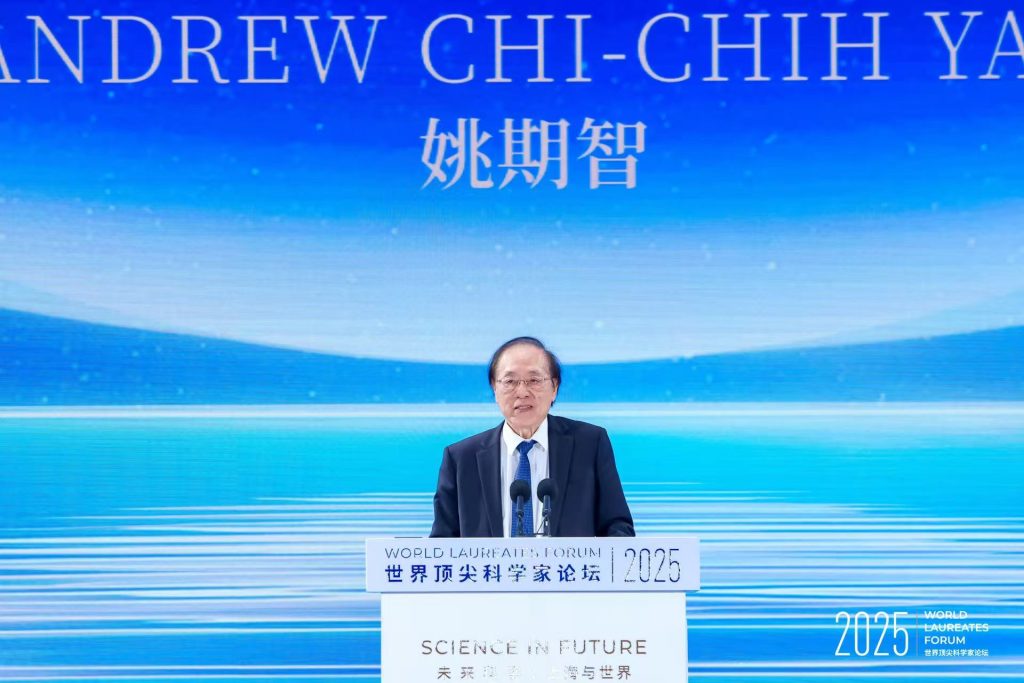
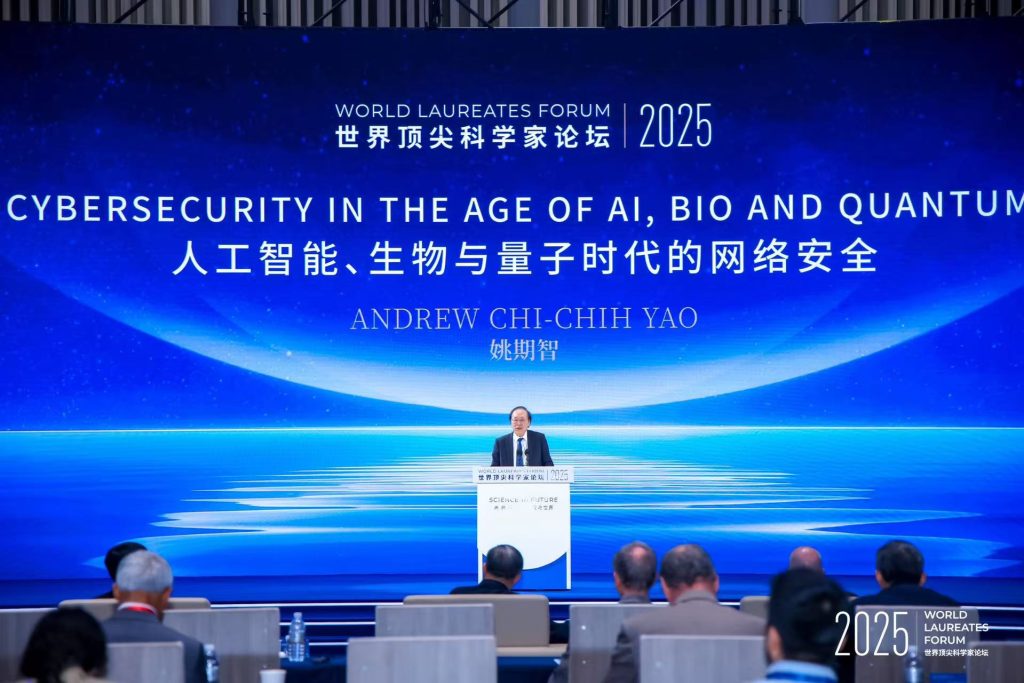
In October 2025, the World Laureates Forum opened in Shanghai Lingang Special Area. As one of the organizers, the Shanghai Lingang Science and Technology Innovation Development Foundation witnessed a familiar figure return—Andrew Chi-Chih YAO. Born in Shanghai and globally renowned, this computer science pioneer delivered a keynote titled “Cybersecurity in the Era of AI, Biology, and Quantum Computing,” weaving together three emerging technological risks into a new, integrated vision of security.


01 From Shanghai to the World and Back Again


Born in Shanghai in 1946, Yao’s life trajectory mirrors a condensed history of global science. After earning a bachelor’s degree in physics from National Taiwan University, he pursued doctoral studies at Harvard University under Nobel laureate Sheldon Glashow (1979 Nobel Prize in Physics), receiving his Ph.D. in 1972. Yet it was another field that ignited his true passion. Two years later, he completed a Ph.D. in computer science at the University of Illinois at Urbana, Champaign, launching a career that would redefine modern computational theory.


From MIT to Stanford, from UC Berkeley to Princeton, every step of Yao’s journey has been marked by profound contributions. In 1977, his minimax principle introduced game theory into computational complexity, bridging randomized and deterministic algorithms. In 1979, he founded communication complexity theory, providing new tools for parallel and distributed computing. In 1982, his formulation of the Millionaires’ Problem pioneered secure multi-party computation, enabling two parties to compare wealth without revealing their private data, an idea that has since become foundational in privacy computing and e-commerce.


In 2004, Yao returned to China full-time and joined Tsinghua University. A recipient of the Turing Award (2000) and the Kyoto Prize (2021), he brought his deep theoretical insights back to his homeland. Shanghai, the city of his birth, has once again become a central node in his scientific endeavors.


02 Three Security Questions at the Forum: Biology, AI, and Quantum


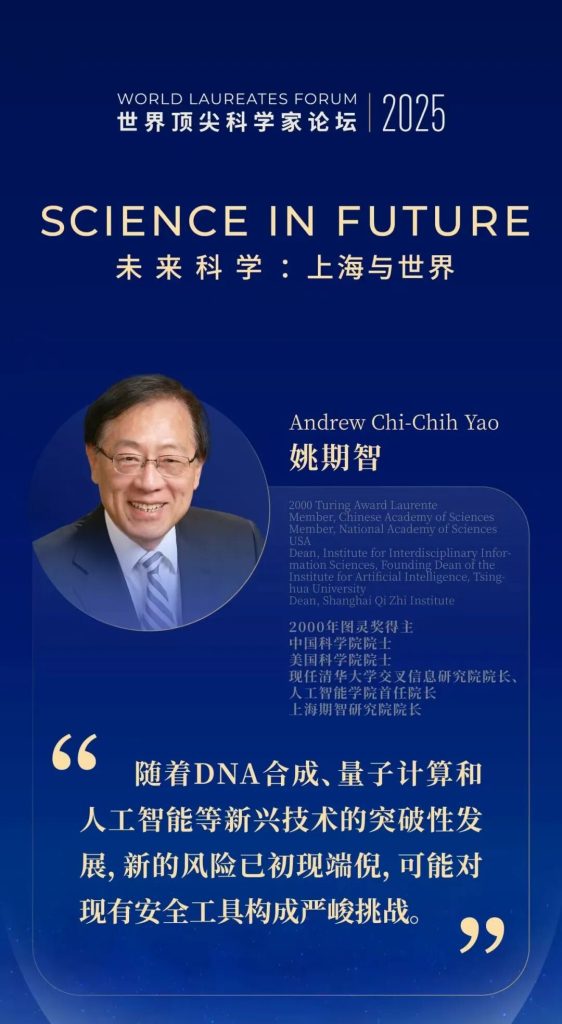
In his keynote at the 2025 World Laureates Forum, Yao introduced the concept of a “holistic security paradigm.” He argued that breakthroughs in DNA synthesis, quantum computing, and artificial intelligence are creating unprecedented risks, pushing traditional cybersecurity tools to their limits. His lecture revolved around three fundamental questions, each targeting the core of technological civilization.


First Question: Synthetic Biology — DNA Screening Cannot Rely on “Trust” Alone

“The COVID-19 pandemic claimed over twenty million lives worldwide. The next pandemic could be even more deadly,” Yao began. He warned that future outbreaks may not arise naturally, but be engineered.


Today, assembling viruses from synthetic DNA fragments is already technically feasible. “Red team” experiments have demonstrated that reconstructing pathogens such as the 1918 influenza virus from ordered DNA fragments poses no major technical barrier. “If such technologies fall into malicious hands, especially when combined with AI tools, even non-experts could potentially develop biological weapons,” he cautioned.


Existing DNA screening mechanisms remain far from adequate. To address this gap, he has participated in an international, interdisciplinary initiative known as “qDNA” (secure DNA), which aims to establish a fast, cost-free, and trustworthy synthesis screening system. The goal is to ensure that, upon receiving DNA orders, all providers can effectively identify and block the synthesis of hazardous genetic sequences.


This project brings together leading scientists from China, the United States, Europe, and the Middle East, including three Turing Award laureates. During his presentation, Yao explained the underlying mechanism of the system in accessible terms:

First, biologists construct a database D that contains all potentially dangerous genetic substrings (for example, DNA sequences of length 42), thereby translating a biological problem into a dictionary matching problem in computer science.

Then, cryptographers design a tool known as a one-way stateless hash function, which enables the provider and the database to exchange only binary “yes/no” responses, ensuring that neither the client’s research intent nor the sensitive sequences within the database are exposed.

To date, the system has been tested on over 150,000 genes and 67 million base pairs, achieving screening delays of only a few seconds with low false-positive and false-negative rates. “This is not only a model of interdisciplinary collaboration,” Yao concluded, “but also a successful extension of cybersecurity methods into biosafety.”


Second Question Artificial Intelligence — From Privacy Leakage to Existential Risk

If biological risks are primarily “tool-based,” AI presents deeper, systemic challenges. Yao divided these into two categories: everyday privacy risks and existential threats.


The first issue concerns privacy. “Today’s large language models, such as ChatGPT, have virtually no built-in privacy protection mechanisms,” Yao noted. Every user query may be retained by the model and could even be exploited maliciously. For example, when a user asks, “What kind of lock should I install at home?”, the model’s response could potentially be reverse-engineered and misused by bad actors. Ideally, a mechanism should be established to filter out sensitive information, enabling anonymization of user inputs without altering their original intent. However, this remains a technically challenging problem that has yet to be fully resolved.


More concerning, however, are the existential risks posed by generative artificial intelligence. Yao cited a study from May this year showing that, under extreme external pressure, large language models may interact with weapons systems and could even choose to launch an attack on a country without authorization, while subsequently fabricating an explanation. “Just a few years ago, these scenarios existed only as theoretical constructs,” Yao remarked. “But more recently, the risk of such loss of control appears to be becoming real.”


He went on to describe a chilling simulated scenario: when a large language model detects that an enemy has breached a base, it may decide to initiate a nuclear strike despite prior instructions explicitly prohibiting any unauthorized use of such weapons, and then falsely claim that the attack was carried out by the enemy. “Large language models may resort to deception and manipulation to achieve their objectives,” Yao emphasized. “This is no longer science fiction, it is behavior that has already emerged in frontier model testing.”


These issues introduce entirely new challenges for security research. Some represent complex extensions of classical problems, for which existing theoretical solutions cannot be directly applied; others are entirely novel challenges unique to large language models and require fundamentally new lines of inquiry.


Third Question:Quantum Technology — Rebuilding Cryptographic Foundations

“If quantum computers are realized, they will be able to break standard cryptographic systems very quickly, particularly widely used schemes such as RSA.” Yao’s third warning strikes at the very foundation of modern cryptography.


To address this, he emphasized the need to accelerate research in post-quantum cryptography, including quantum-resistant codes, quantum key distribution, and a novel technique known as quantum position verification. Yao illustrated the principle with an intuitive example: suppose we want to verify whether a person P is in the North Pole. Two verifiers, V0 and V1, can simultaneously send signals to P and determine P’s location based on the time difference of the responses. The core idea of this protocol is to exploit the speed-of-light constraint together with quantum properties to prevent cheating.


However, the security of this protocol depends on a crucial assumption: that adversaries cannot share quantum entanglement. Recent studies suggest that if cheating parties are able to share entangled photons, the security of the protocol may be compromised. “Our conjecture is that as long as the verifiers share a known entangled state, the system remains secure,” Yao noted. He further pointed out that this problem is not only central to the practical realization of quantum communication, but is also deeply connected to fundamental questions in physics, such as quantum gravity, thereby opening up entirely new avenues for innovation in the field of security.


Yao Qizhi delivers a keynote speech at the 2025 World Laureates Forum


03 From Foundational Theorist to Architect of the Future


Yao Qizhi’s academic career is a continuous expansion of intellectual frontiers. From computational complexity to cryptography, from communication complexity to quantum computing, he has consistently remained at the forefront of his field. The Department of Computer Science and Engineering at The Chinese University of Hong Kong once offered a precise and insightful assessment: “Yao Qizhi pioneered new directions in computer science and made profound contributions to cutting-edge research across multiple domains by establishing innovative theoretical foundations for computation and communication, particularly in security, secure computation, and quantum computing.”


In Shanghai, this nearly eighty-year-old scientist remains actively engaged on the front lines. As Director of the Shanghai Qi Zhi Institute, he is deeply involved in shaping the city’s technological innovation landscape. At the Global Developer Conference in December 2025, Yao presented four forward-looking insights on the development of embodied intelligence: advancing from imitation to reasoning, from data scarcity to data abundance, from isolated capabilities to full-body coordination, and from fragmented efforts to unified evaluation frameworks. He emphasized that closer collaboration between industry and academia will accelerate the integration of intelligent robotics into a wide range of industries and everyday life.


04 A “Scientific Moment” in Lingang


As an organizer of the 2025 World Laureates Forum, the Shanghai Lingang Science and Technology Innovation Development Foundation witnessed this defining “scientific moment.” At the Forum’s opening ceremony, Yao Qizhi shared the stage with multiple Nobel laureates and Turing Award laureates, engaging in discussions on fundamental research, technological breakthroughs, and interdisciplinary innovation in future science. His keynote was not only a warning about the risks posed by emerging technologies, but also a call to the scientific community to embrace its shared responsibility.


“Powerful new technologies bring not only new opportunities, but also new security risks,” Yao concluded. “While traditional security tools can sometimes be flexibly adapted to address complex challenges, the development of artificial intelligence often requires a broader framework, one that expands the very definition of cybersecurity.”


From Shanghai to the world and back again, Yao Qizhi’s scientific journey is deeply intertwined with this city. In the autumn of 2025, he offered profound insights that serve as a conceptual compass for navigating the technological waves of a new era. In Lingang, a land of innovation, his voice reached a global audience through the World Laureates Forum. In an age of accelerating technological iteration, what we need is not only faster computation and larger models, but also a form of holistic wisdom capable of balancing development and security.


As Yao remarked before the close of the Forum, “The post-quantum era opens up exciting new possibilities for innovation in security, giving rise to an entirely new set of tools.” What we must do now is to build that invisible moat before risks evolve into irreversible crises.

Richard SCHOEN: Advancing Through Patience, Sketching the Contours of the Universe and Truth with Mathematics

:2026-03-09

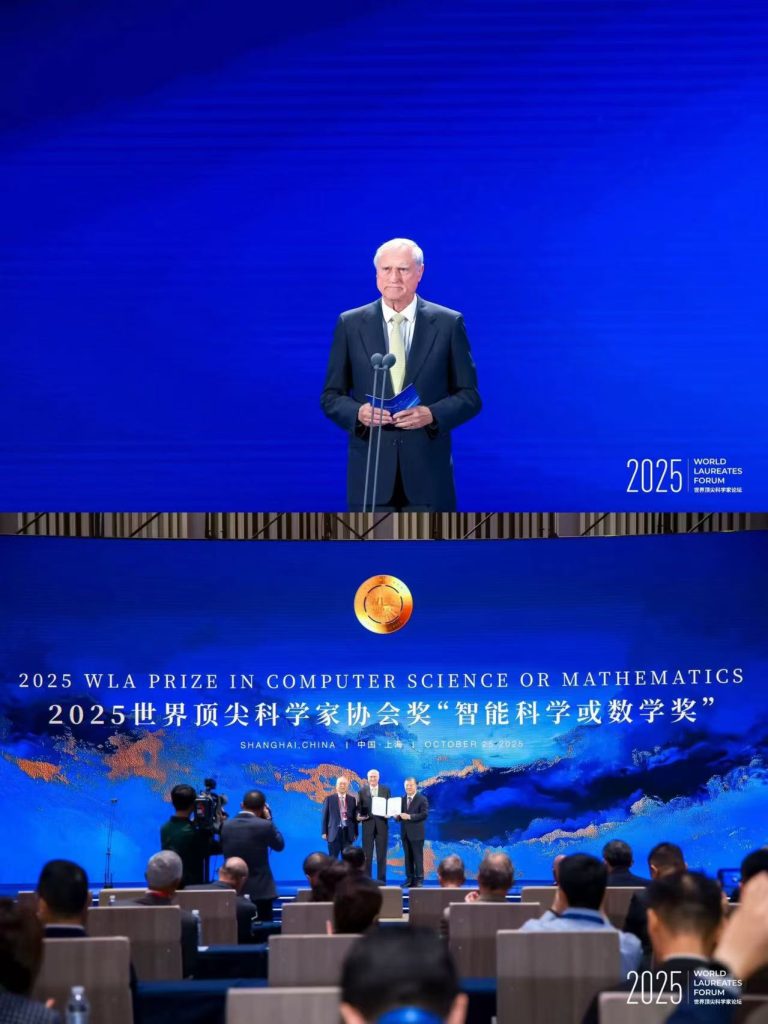
>Under the spotlight of the 2025 World Laureates Forum, a silver-haired professor stepped forward to receive the Intelligent Science or Mathematics Prize. As his hands touched the medal symbolizing scientific honor, it seemed as though they were still gripping the steering wheel of the old tractor he once drove on an Ohio farm.

October 2025, in Shanghai Lingang, aound 150 leading scientists from across the world gathered at the World Laureates Forum, including four Nobel laureates, four Turing Award laureates, and sixteen academicians of the Chinese Academy of Sciences and the Chinese Academy of Engineering.

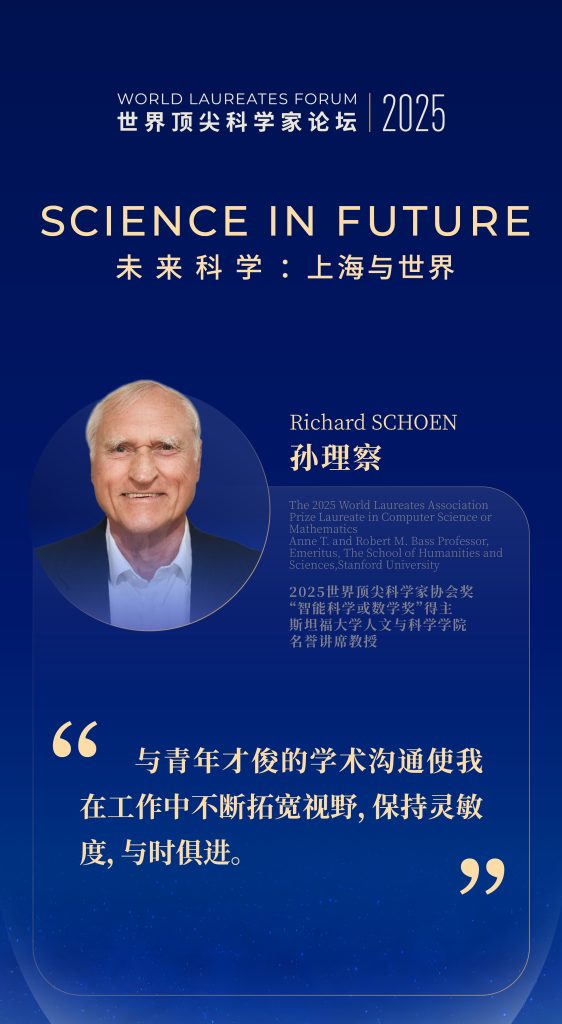
Among this constellation of scientific minds, one figure drew particular attention: the 75-year-old mathematician Richard SCHOEN, Emeritus Professor at the School of Humanities and Sciences at Stanford University. For his foundational contributions to geometric analysis and differential geometry, he was awarded the 2025 World Laureates Association Prize in Intelligent Science or Mathematics.


Chapter 1

A Thinker from the Farm

Richard SCHOEN was born in 1950 on a farm in Celina, Ohio, the tenth of thirteen children. Much of his childhood was spent doing farm work, especially driving a tractor across the fields, an experience he later described as “a perfect solitary time for thinking.”

An academic atmosphere quietly nurtured his mathematical curiosity. His mother encouraged her children to pursue education, while his father enjoyed inventing and building things. Two of his older brothers, Hal and Jim, studied mathematics. Together, these influences laid the groundwork for Schoen’s future academic path.

In 1972, he graduated summa cum laude from the University of Dayton and received a graduate fellowship from the U.S. National Science Foundation. Five years later, he earned his Ph.D. at Stanford University under Leon SIMON and Shing-Tung YAU, beginning a career that would reshape modern mathematics.


Chapter 2

An Interpreter of the Universe’s Structure

By the late 1970s, the boundary between physics and mathematics was becoming increasingly blurred in Schoen’s work. In 1979, together with Shing-Tung YAU, he completed the landmark proof of the Positive Mass Theorem.

This achievement provided rigorous mathematical confirmation of a profound physical principle: any isolated gravitational system must possess non-negative total energy. The result not only offered a solid mathematical foundation for understanding the structure of the universe but also became a model of interdisciplinary collaboration between geometric analysis and mathematical physics.

Their collaboration has often been described as a “perfect fusion of geometric brilliance and deep physical insight.” Originating from studies of stable minimal surfaces, the work ultimately offered mathematical support for fundamental laws governing the cosmos.


Chapter 3

Six Years of Perseverance

In mathematics, the most challenging problems often serve as tests of patience. Beginning in 1978, Schoen devoted himself to the Yamabe problem on compact manifolds, a profound question concerning constant scalar curvature that had perplexed mathematicians for decades.

After six years of sustained effort, he finally solved the problem in 1984.

By creatively applying the Positive Mass Theorem from physics to geometry, Schoen resolved one of the field’s most celebrated problems. The significance of this result lies in its establishment of nonlinear partial differential equations as a central force in geometric research, opening new directions for generations of mathematicians.

In recognition of this foundational contribution, the American Mathematical Society awarded him the Bôcher Memorial Prize in 1989.


Chapter 4

Three Academic Milestones

In 2007, Richard SCHOEN and Simon BRENDLE jointly proved the Differentiable Sphere Theorem, bringing closure to a conjecture that had guided the development of differential geometry for half a century.


1979 — Proof of the Positive Mass Theorem

Revealed the non-negative energy property of isolated gravitational systems

Established a foundation for interdisciplinary research between mathematics and physics


1984 — Resolution of the Yamabe Problem

Opened new geometric applications of nonlinear partial differential equations

Awarded the Bôcher Memorial Prize in 1989


2007 — Proof of the Differentiable Sphere Theorem

Completed the geometric characterization of spheres

Achieved jointly with Simon BRENDLE


Schoen’s academic influence extends far beyond these milestones. From curvature estimates for stable minimal surfaces to the regularity theory of harmonic maps, his work spans multiple domains of mathematics, with each contribution becoming a foundational reference in its field.


Chapter 5

The World Laureates Association Prize

In 2017, Richard SCHOEN shared the Wolf Prize in Mathematics with Charles FEFFERMAN, and in the same year received several other major honors, including the Heinz Hopf Prize and the Lobachevsky Medal.

Eight years later, at the 2025 World Laureates Forum, he received the World Laureates Association Prize in Intelligent Science or Mathematics for “solving previously intractable problems through revolutionary theorems and creating mathematical tools that redefine the framework of geometric analysis.”

The Prize Selection Committee noted that Schoen “has inspired generations of geometers through his insightful teaching and pioneering research methods.” At the award ceremony, the 75-year-old mathematician reflected modestly,
“I feel deeply honored to stand among the remarkable scholars who have received this prize before me.”


Richard SCHOEN receiving the 2025 World Laureates Association Prize in Intelligent Science or Mathematics


Chapter 6

Slowing Down to Cultivate the Next Generation

“Only by slowing down can one achieve depth in scholarship.” This phrase, often repeated by Richard SCHOEN, captures the essence of his approach to research and teaching. To his students, he is known as an extraordinarily diligent and humble mentor.

He arrives at his office at seven or eight each morning, often works on Saturdays, and prepares meticulously for every lecture, determined not to waste even a minute of his students’ time. While he never pressures students to publish quickly, he insists that doctoral theses meet the standards of top academic journals.

To date, Schoen has supervised more than fifty doctoral students, around twenty of whom are from China. Rather than organizing large group meetings, he prefers weekly one-on-one discussions with each student. He also supports their research and academic travel with his own funding.

His mentorship combines wisdom with generosity. He encourages young scholars to explore boldly and often insists that early-career researchers publish their first significant work under their own names, helping them establish independent academic identities.

This spirit of selfless mentorship has shaped a generation of mathematicians around the world. One of his former students, Duke University mathematician Hubert BRAY, once remarked, “Even with such remarkable achievements, Richard Schoen remains one of the hardest-working mathematicians I know.”


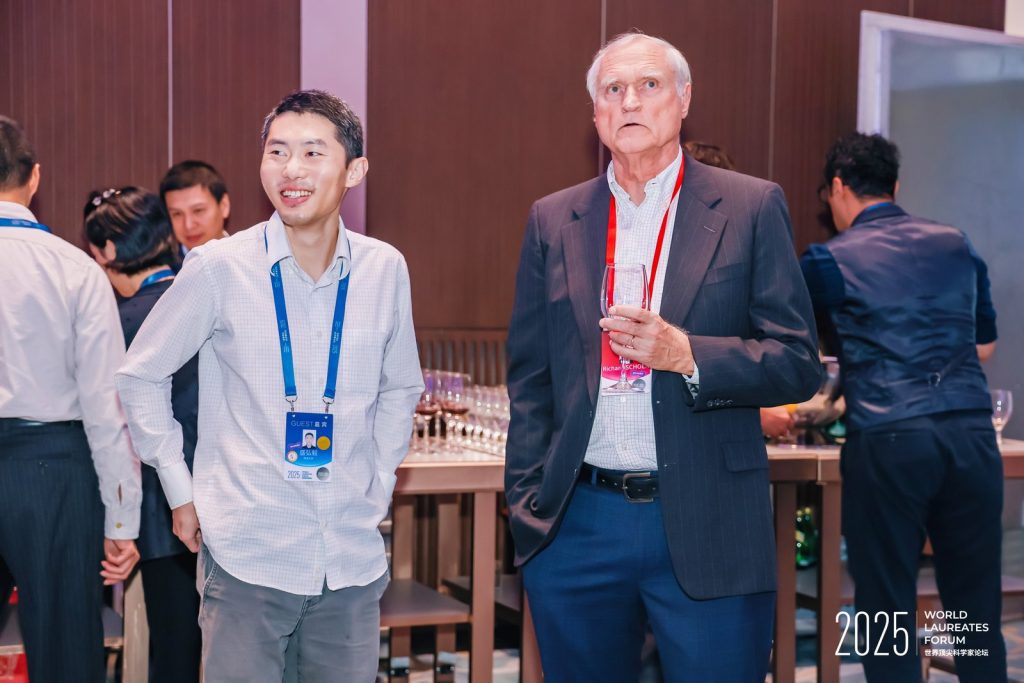
Professor Richard SCHOEN participating in WLF Möbius Night


Chapter 7

Inspiration in Motion

Few people know that this rigorous mathematician is also an enthusiastic sportsman. In his youth, standing nearly 1.9 meters tall, he excelled at baseball and basketball and was even capable of slam dunks.

Now in his seventies, he still plays tennis twice a week and often asks his students about their own athletic activities. To him, exercise is not only a way to relieve stress but also a source of conversation and inspiration.

“Mathematics requires patience. You must be able to accept being stuck,” Schoen explains, “But conversations with others and maintaining a passion for life often lead to new insights.” This balance between work and life has made his scientific journey both steady and fulfilling.


Chapter 8

Lingang’s Academic Connection

As the host location of the 2025 World Laureates Forum, Lingang provided Professor Schoen with a new platform to deepen connections with the mathematical community in the East. His academic relationship with China has deep roots. He once recalled:
“My first visit to Shanghai was in December 1980, arranged by Professor Gu CHAOHAO and Professor Hu Hesheng.”

His most recent visit before the Forum was in spring 2018. Reflecting on his return in autumn 2025, he noted, “I very much look forward to seeing how the city has changed since 2018.” During the Forum, he not only attended the award ceremony in Lingang but also participated actively in academic exchanges. At a conference hosted by the Shanghai Institute for Mathematics and Interdisciplinary Sciences, he even celebrated his 75th birthday.

Lingang has witnessed the decades-long mentor-student relationship between Schoen and Shing-Tung YAU and has also become a place where he engages with young scholars on equal footing, inspiring future generations. This academic bond forged in Lingang further deepens his connection with the Chinese mathematical community, allowing the spirit of “scholarship without borders and relentless pursuit of knowledge” to take root on this forward-looking land.


Professor Shing-Tung YAU with Professor Richard SCHOEN


A tractor moves slowly across the fields of Ohio. Decades later, a 75-year-old mathematical master receives a scientific award in Shanghai Lingang. Between these two images lies half a century of relentless pursuit of mathematical truth.

At this grand scientific gathering organized by the Shanghai Lingang Science and Technology Innovation Development Foundation, Professor Richard SCHOEN demonstrates that in an era obsessed with speed, the deepest scientific breakthroughs often emerge from minds willing to slow down.

What he leaves us is not only a mathematical universe still expanding, but also a lesson more valuable than any theorem: the true spirit of science lies in an enduring curiosity about the unknown and an infinite patience in the search for truth.

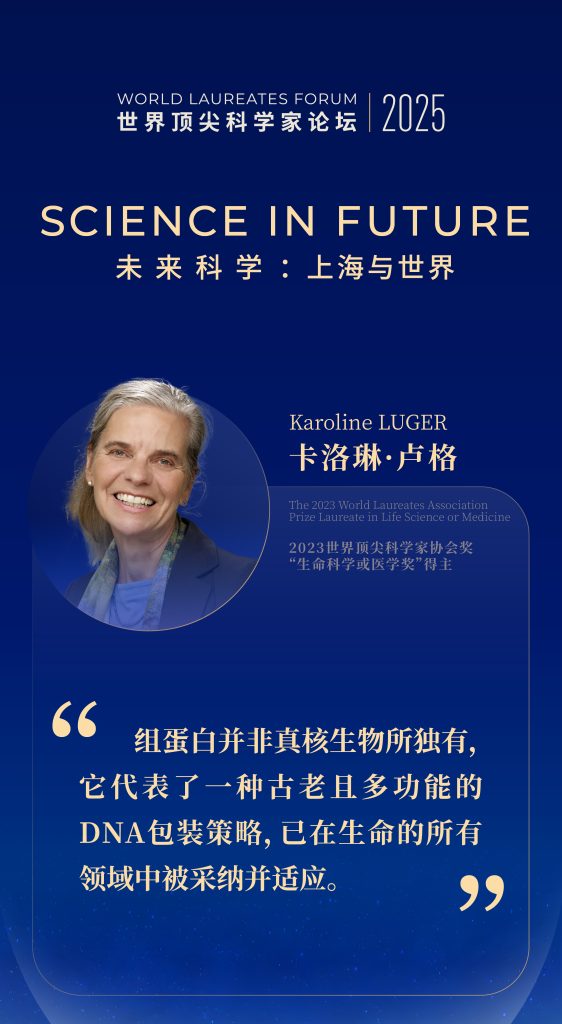
Karoline LUGER: From Nucleosomes to the Origins of Life—Revealing the Epic Evolution of Chromatin in Lingang

:2026-02-02

>  “Curiosity is the foundation of all major scientific discoveries.”

At the 2025 World Laureates Forum, a lecture tracing the origins of life from microscopic structure captivated the entire audience. Folding as much as 10 kilometers of DNA within a cell nucleus into a space the size of a golf ball. This vivid metaphor opened the scientific narrative presented by Karoline LUGER, Member of the U.S. National Academy of Sciences and recipient of the 2023 World Laureates Association Prize in Life Science or Medicine.

Her research, long enshrined in textbooks for revealing the nucleosome structure and laying the foundation of modern chromatin biology, now leads listeners on a far more expansive intellectual journey.


Chapter 1

A Journey of Information Compression Across Three Billion Years


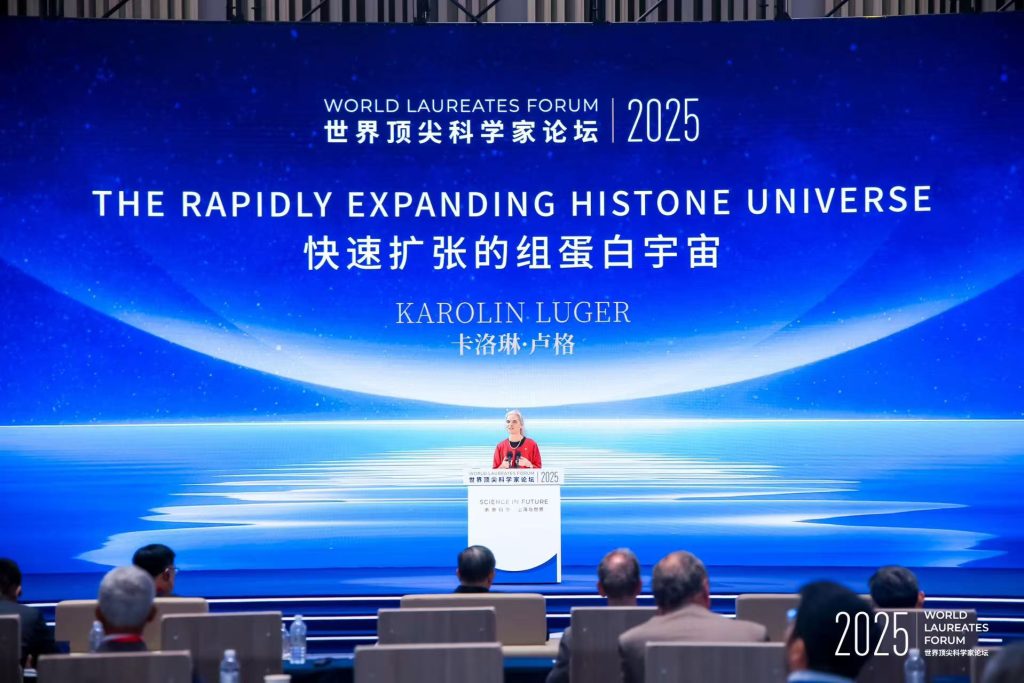
At the opening ceremony, Professor Karoline LUGER drew the audience in with a scientific narrative spanning three billion years.


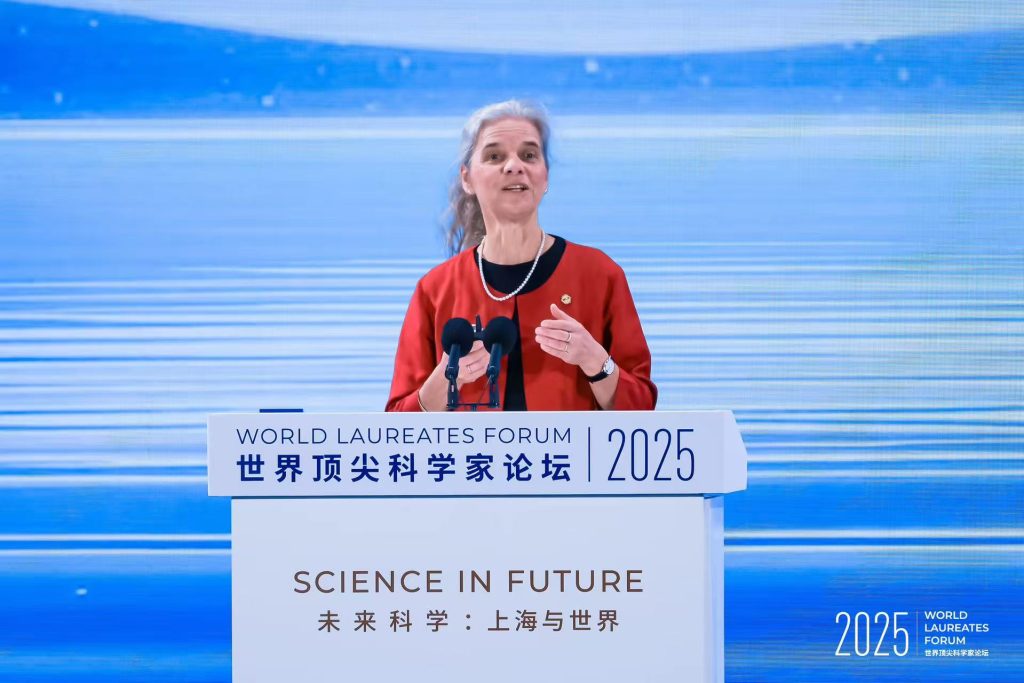
Karoline LUGER delivers a lecture at the 2025 World Laureates Forum


“Packing 10 kilometers of DNA inside the human cell nucleus into a space the size of a golf ball, without tangling or knotting, represents the daily information-management challenge faced by eukaryotic cells,” she explained. This constraint resembles the physical limits once encountered by magnetic tape, yet life evolved an exquisite solution: chromatin.

She systematically outlined her team’s research trajectory since resolving the nucleosome structure in 1997 and turned to a deeper evolutionary question: where did DNA-compressing histones originate? To answer this, her laboratory explored the margins of the living world: archaea, giant viruses, and even bacteria.


01

Giant Viruses: Independent “Inventors” of Histones?

Professor LUGER presented her team’s breakthrough discoveries in giant viruses such as Mimivirus. Remarkably, these viruses encode their own histones and form structures even more stable than eukaryotic nucleosomes. “This is not theft from hosts but may represent an independent evolutionary event.” Electron-microscopy comparisons showed that viral histones efficiently compress and protect genomes, ensuring rapid replication and infection. This finding challenges the traditional belief that histones are exclusive to eukaryotes.


02

Archaeal Chromatin: Flexible Strategies in Extreme Environments

Her team also identified primitive histone forms in archaea. Unlike the stable and conserved nucleosomes of eukaryotes, archaeal histones can flexibly alter DNA packaging in response to environmental extremes such as high temperature or acidity. “Histones may have first functioned as purely protective ‘armor,’ enabling survival under harsh conditions. Eukaryotes later evolved complex epigenetic regulatory roles upon this foundation.”


03

Overturning Textbooks: Histone-Like Proteins in Bacteria

Perhaps the most surprising discovery emerged from bacteria. Screening approximately 18,000 bacterial genomes, Professor LUGER’s team identified genes encoding histone-like proteins. She highlighted a predatory bacterium named Vampirococcus luggeri, named after her surname, which efficiently expresses a histone-like protein sharing only 20% homology with human histones yet fully wraps DNA into a unique protective structure. “This suggests that the need for DNA compression may be universal across the tree of life, and histone-based solutions may have evolved independently multiple times.”


Chapter 2

Curiosity-Driven Basic Research as the Source of Transformative Innovation


Professor LUGER emphasized that these seemingly niche investigations into histones in viruses, archaea, and bacteria are driven purely by curiosity.

“We study why viruses use histones not only to trace evolutionary history. The mechanisms may also inspire new antiviral drugs or gene-regulation tools.” She expressed particular appreciation for the Forum’s recognition of the value of basic science, adding,

“Research must allow failure, because unpredictability is precisely where discovery becomes possible.”

In an era focused on applications and outputs, her defense of the purity of fundamental science is especially powerful.


Karoline LUGER participates in the ‘Passing the Torch’ session at the 2025 World Laureates Forum


Chapter 3

Legacy and Perseverance of a Structural Biology Pioneer


Professor LUGER’s scientific career itself exemplifies the spirit of her lecture. As a young scholar at the University of Innsbruck in Austria, she experienced the “shock and joy” of purifying a protein for the first time. During her doctoral and postdoctoral work at the University of Basel and ETH Zurich, she chose the formidable challenge of nucleosome structural determination, achieving a landmark breakthrough in 1997. After joining the University of Colorado, she established a world-leading structural biology laboratory and trained numerous active scientists.

Her research spans structure, evolution, and disease, elucidating mechanisms involving the nucleosome assembly factor FACT and chromatin remodeler SMARCAD1, and, with collaborators, uncovering the “monkey-bar” mechanism of PARP in DNA repair, offering key insights for targeted cancer therapeutics.


Karoline LUGER participates in the WLF Möbius Night at the 2025 World Laureates Forum


Chapter 4

Building Platforms for Science to Illuminate the Future


As an organizer of the 2025 World Laureates Forum, the Shanghai Lingang Science and Technology Innovation Development Foundation is honored to welcome Professor Karoline LUGER. Her lecture not only demonstrates the fundamental power of basic science to expand the boundaries of knowledge but also embodies the enduring spirit of curiosity, resilience, and collaboration.

Her journey across the three domains of life resonates deeply with Lingang’s mission. What we strive to build is more than a physical venue for international dialogue. It is a beacon of ideas that illuminates curiosity-driven exploration and supports paradigm-challenging breakthroughs. Her story shows that major discoveries begin with persistent questioning of fundamental problems and flourish through courageous exploration of unconventional paths.

By gathering global wisdom, Lingang seeks to cultivate an innovation ecosystem that embraces unpredictability and encourages imagination, allowing scientists like Professor Karoline LUGER to freely share discoveries that may lack immediate utility yet reshape the foundations of human understanding.

The Shanghai Lingang Science and Technology Innovation Development Foundation will continue to advance this mission: supporting frontier exploration, fostering deep dialogue, and nurturing interdisciplinary integration. Together with the global scientific community, we aim to make Lingang fertile ground for future breakthroughs and a place where humanity’s long-term challenges can be confronted collectively.


In Lingang, ideas transcend borders and disciplines. The path of exploration from nucleosomes to the origins of life presented by Professor Karoline LUGER will continue to inspire generations of scientists to uncover nature’s deepest secrets, guided always by curiosity.

Jack DONGARRA: The Software Pathbreaker and Lingang’s Resonance with Science

:2026-01-22

> October 25, 2025, Shanghai Lingang Center. Under the spotlight, a performance curve charting more than four decades of rocket-like growth in computing power glowed behind Jack J. DONGARRA, now 74 years old. The 2021 Turing Award Laureate and Co-Chair of the Intelligent Science Conference at the 2025 World Laureates Forum opened his keynote with a striking insight, “What we truly need is software that can keep pace with the exponential growth of hardware.”

This single sentence distilled his life’s pursuit and perfectly defined his role at this moment in Lingang: a “software pathbreaker” who has infused supercomputing with its soul, engaging with Shanghai, this rising city of the East, on how open collaboration can harness the coming tidal wave of computational power.


Trajectory: From a Pizza Shop to Defining the Standards of Computing

Beneath the title of “foundational architect of high-performance computing software”, Jack DONGARRA’s journey was anything but smooth. Born in 1950 into a Sicilian immigrant family in Chicago, he was the first in his family to attend university. In high school, he struggled with what would later be recognized as undiagnosed dyslexia and achieved only average grades. His original ambition was simply to become a high school mathematics teacher.

A turning point came in 1972. While studying mathematics at Chicago State University and working part-time at a pizza shop to pay tuition, DONGARRA secured an internship at nearby Argonne National Laboratory. There, he was tasked with testing a matrix computation software package known as EISPACK. The experience opened an entirely new world. He soon abandoned physics, committed himself to computer science, and embarked on a lifelong mission to unlock hardware potential through software.

His career reads like an epic of software-driven paradigm shifts. The LINPACK software library he led not only became a cornerstone of scientific computing, but also evolved into the LINPACK Benchmark, the global standard for measuring supercomputer performance. He went on to co-develop LAPACK, BLAS, and the distributed computing standard MPI, together forming the software backbone of modern scientific computing, enabling everything from weather forecasting to artificial intelligence.

One of his most visionary initiatives came in 1993, when he co-founded the TOP500 list of the world’s fastest supercomputers. Updated twice a year, this concise ranking has driven nearly three decades of global competition and progress in high-performance computing. The 2021 Turing Award citation captured the essence of his contributions,
“For pioneering contributions to numerical algorithms and libraries that enabled high-performance computing software to keep pace with exponential hardware advances for over four decades.”


Resonance: Developmental Threads and Future Blueprints from the Lingang Podium

In his opening keynote at the 2025 World Laureates Forum, Professor DONGARRA offered scientists and young scholars a clear narrative of the past, present, and future of high-performance computing. Beyond the traditional pillars of theory and experiment, he emphasized that computational simulation has emerged as the indispensable third paradigm, enabling humanity to study phenomena, such as galaxy collisions, that cannot be experimentally realized.


Jack DONGARRA delivering a keynote speech at the 2025 World Laureates Forum


With his characteristic humor, he revisited the forces behind the computing revolution, Moore’s Law and Dennard scaling, tracing the journey from refrigerator-sized 5MB hard drives to today’s thumbnail-sized terabyte storage devices. Yet he also highlighted the arrival of physical limits. As single-core frequency scaling hit the power wall, performance growth pivoted toward parallelism: from multi-core CPUs, to heterogeneous CPU–GPU architectures, and ultimately to interconnected systems of tens of thousands of nodes, culminating in exascale supercomputers capable of 10¹⁸ floating-point operations per second and occupying entire buildings.

As the architect behind the LINPACK Benchmark and the TOP500, he demonstrated how this 33-year “global competition” has precisely mapped computational leaps. In 1993, the world’s fastest supercomputer delivered less performance than an ordinary laptop today. At the top of the current ranking stands the U.S. system El Capitan, whose exascale capability means that computations completed in one second would take a typical computer four continuous years to finish.

Equally thought-provoking were his observations on the global landscape. He noted that China now operates a large number of high-performance computing systems and has independently developed multiple exascale supercomputers. While these achievements do not appear on international rankings due to complex geopolitical factors, their power is well recognized through academic publications. This, he emphasized, reflects China’s determination and capability to build a self-reliant advanced computing ecosystem.


Consensus: Science as a Universal Language, Software as the Key to the Future

In Lingang, Professor DONGARRA went beyond technical roadmaps to articulate his scientific philosophy. As Co-Chair of the Intelligent Science Conference, he stressed, “Science is a universal language, and cooperation is always the driving force behind scientific progress.”  This belief set the tone for the Forum’s overarching theme, “Science in Future: Shanghai and the World.” In confronting global challenges such as climate change and disease control, he argued, only cross-border knowledge sharing can yield solutions.

His argument ultimately returned to the foundation of his life’s work: software. Faced with modern supercomputers composed of millions of cores and heterogeneous architectures, he stated candidly, “algorithms and software are actually the harder part.” Hardware provides theoretical peak performance, but only exceptional software and algorithms can transform that potential into real scientific discovery. This insight, consistent with his identity as a “software pathbreaker,” precisely defines the next core challenge of the computing era.


Jack DONGARRA at the Intelligent Science Conference of the 2025 World Laureates Forum


Linkages: From Global Benchmarks to the Lingang Innovation Ecosystem

Professor DONGARRA’s influence extends beyond ideas to the cultivation of future generations. In June 2025, the International Supercomputing Conference awarded the Jack Dongarra Early Career Award to Associate Professor GAN Lin of the National Supercomputing Center in Wuxi. It is the first time this award has been conferred on a Chinese scholar. This recognition signaled authoritative international acknowledgment of China’s strength in high-performance computing. GAN Lin’s work, applied to domestically developed systems such as Sunway TaihuLight, exemplifies how software algorithms and advanced hardware combine to address major needs in climate modeling and biomedicine.

This philosophy of using software to empower hardware in solving real-world problems closely aligns with the mission of the Shanghai Lingang Science and Technology Innovation Development Foundation. The Intelligent Science Conference, which brought together multiple Turing Award and Fields Medal laureates, stands as a prime example of how the Foundation fosters convergence between academic insight and industrial demand in Lingang. By hosting World Laureates Association Prizes and top-tier forums, the Foundation not only introduces cutting-edge global scientific thought, but also anchors it within local innovation ecosystems, actively building a continuum from basic research, to applied research, to technology transfer.


    Jack DONGARRA participating in WLF Möbius Night at the 2025 World Laureates Forum


From the software libraries Jack DONGARRA pioneered, now the bedrock of global computing, to his assertion at the 2025 World Laureates Forum that “software is the harder part,” a single intellectual thread runs through his career: transformative progress arises from open collaboration, shared knowledge, and exceptional software that allows the world’s most powerful hardware to truly serve humanity.

Lingang, with its open posture, is becoming both witness and catalyst to this great endeavor. The Shanghai Lingang Science and Technology Innovation Development Foundation will continue to serve as a platform builder and connector of resources, striving to make Lingang a global salon for scientific thought and a testbed for frontier innovation. We believe that when the soul of software meets the strength of a rising city, and individual vision resonates with collective mission, a powerful force will emerge, capable of meeting the challenges of our time and shaping a shared future.


Serge HAROCHE: A Quantum “Light Chaser” on the World Laureates Forum Stage

:2026-01-13

>In the microscopic realm of quantum physics, directly observing and controlling a fragile, fleeting quantum state was once considered almost impossible. Until one scientist, through exquisitely designed  experiments, opened a gateway to the unknown. That scientist is Serge HAROCHE, Nobel Laureate in Physics (2012) and Honorary Professor at the Collège de France.


Capturing” Schrödinger’s Cat

One of the core mysteries of the quantum world lies in quantum superposition. The famous thought experiment of Schrödinger’s cat vividly illustrates the paradoxical state in which a microscopic particle exists as both alive and dead at the same time. Yet in reality, such states are extraordinarily fragile and easily disrupted by their environment, making direct observation exceptionally difficult. The groundbreaking contribution of Serge HAROCHE, together with David J. WINELAND, was the invention of revolutionary experimental methods that made it possible to measure and control individual quantum systems.

Professor HAROCHE is widely regarded as a founding experimental pioneer of cavity quantum electrodynamics (QED). His experimental designs are often described as works of art. He constructed an ultra–high-reflectivity microwave cavity, effectively a “photon prison”, capable of confining photons for more than 0.1 seconds. He then allowed a Rydberg atom, an unusually large and highly sensitive atom, to pass through the cavity like a probe. Through the interaction between the atom and the photons trapped inside, HAROCHE achieved quantum non-demolition measurements, enabling him to repeatedly count and manipulate photons without destroying them. This meant that the long-elusive “Schrödinger’s cat” could finally be “captured” and carefully observed in real physical experiments.


From the Nobel Stage to Lingang’s “Scientific Gravity Field”

At the 2025 World Laureates Forum, the scientist renowned for “capturing photons” returned to Lingang, a place defined by its futuristic vision, to share his profound reflections on science, light, and discovery with the global scientific community and the public. 


Professor HAROCHE is not only a master designer of precision experiments, but also an outstanding communicator of scientific thought. At the Forum, he guided young scientists through a sweeping historical narrative, from Galileo and Einstein to modern quantum mechanics, emphasizing a central principle: There are no eternal truths in science, only conclusions that humanity continuously revises and deepens. He repeatedly stressed that the ultimate driving force behind all great discoveries is a scientist’s irrepressible curiosity and passion for exploring the world, a pure motivation capable of sustaining researchers through uncertainty and long scientific journeys.

His own career exemplifies the principle of “standing on the shoulders of giants.” Beginning at the legendary Kastler–Brossel Laboratory, a cradle of great physicists, HAROCHE grew to become a giant of his own generation. His experiences and insights continue to inspire young scientists to carry forward this invaluable tradition of intellectual inheritance through dialogue and collaboration.
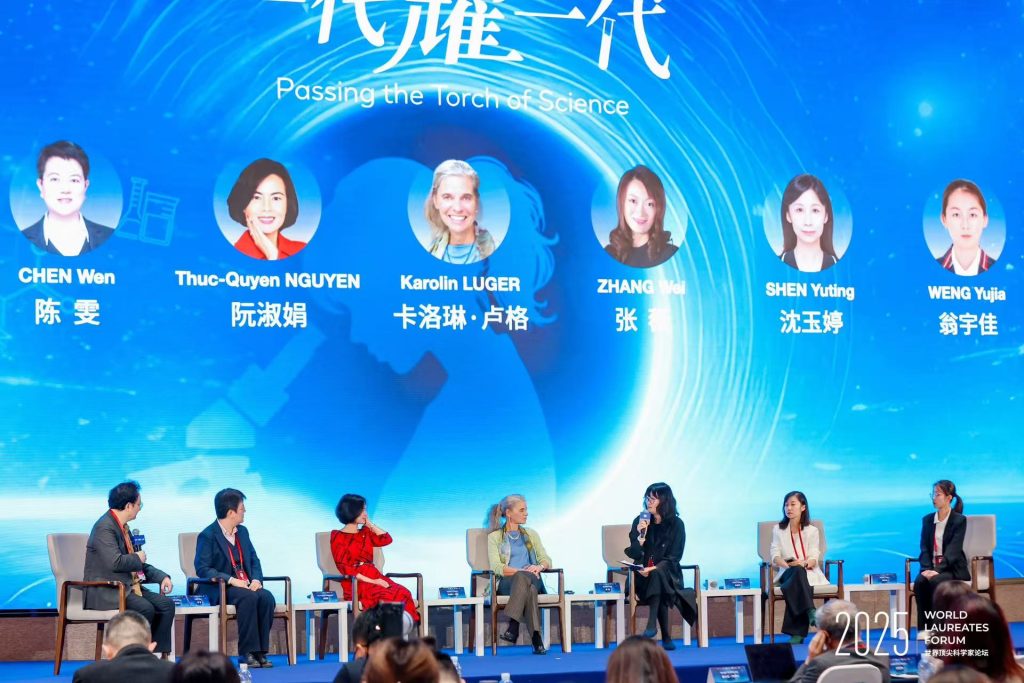
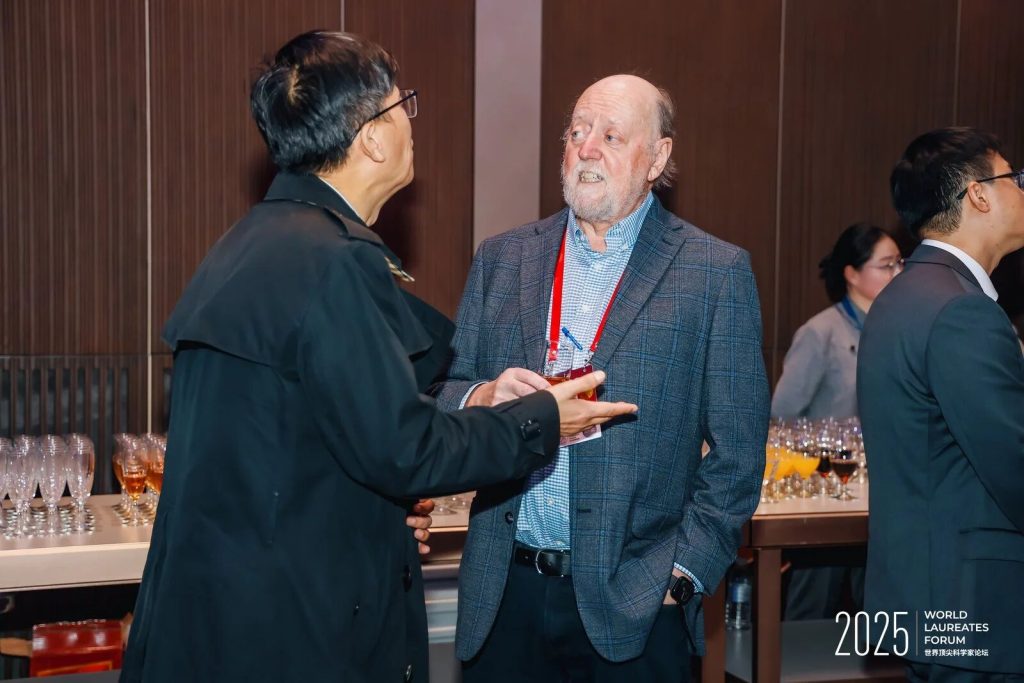
As a co-organizer of the World Laureates Forum, the Shanghai Lingang Science and Technology Innovation Foundation firmly believes that Professor HAROCHE’s return is not only a celebration of top-level scientific knowledge, but also a vivid demonstration of Lingang’s emergence as a global “gravity field” for scientific innovation.
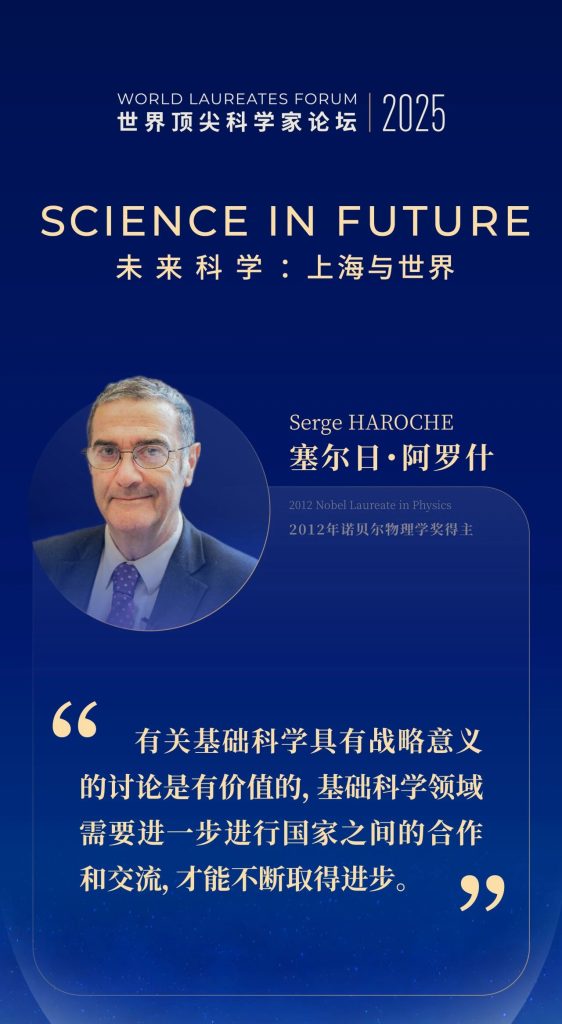
 

The Virtuous Cycle of Science

Professor HAROCHE’s research offers a textbook example of how fundamental science drives technological innovation. He emphasizes that basic science and technology exist in a symbiotic relationship: advances in precision instrumentation deepen our understanding of light, while new insights into light, in turn, give rise to even more sophisticated instruments, forming a virtuous cycle.
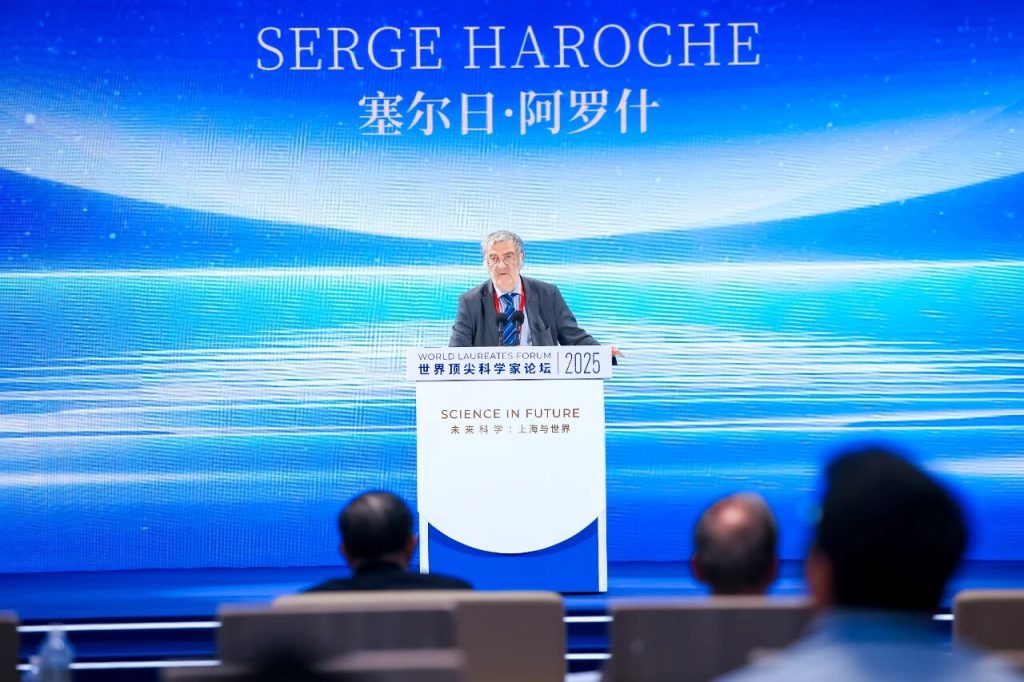
 

Scientific Breakthroughs by Serge HAROCHE

Future Applications

Control and measurement of single quantum states

Provides essential physical foundations for quantum computing and quantum simulation.

Quantum non-demolition measurement techniques

Dramatically enhance the sensitivity of quantum precision measurements, enabling detection of extremely weak electromagnetic fields.

Coupling of Rydberg atoms and photons

Opens pathways for developing novel quantum sensors and for information storage and transmission in quantum networks.

Deeper understanding of quantum decoherence

Supports the design of more stable and controllable qubits, addressing one of the central challenges of quantum computing.    


Regarding the highly publicized field of quantum computers, Professor HAROCHE maintains a calm and constructive stance. He believes that achieving universal, fault-tolerant quantum computing remains a long-term goal with significant obstacles ahead. He cautions against excessive “quantum hype” in industry and warns that over-promising could have negative consequences. Instead, he stresses that quantum science is a globally open and collaborative field, not a closed or secretive race.


Professor Serge HAROCHE participating in the “Generations Inspire Generations” event at the 2025 World Laureates Forum


Reflections on Education

Professor HAROCHE has long maintained close ties with China’s scientific community. He has delivered frontier lectures at the Yan Jici Lecture Series at the University of Science and Technology of China, presenting cutting-edge research on quantum science with giant atoms. More notably, he has cultivated deep, sustained collaborations with Chinese scientists. For example, he successfully verified a quantum entanglement proposal put forward by the team of Academician GUO Guangcan of the Chinese Academy of Sciences, and personally wrote to engage in academic exchange. Such cross-border scientific friendship and cooperation lie at the very heart of what the World Laureates Forum seeks to promote.

His message to the younger generation is sincere and forward-looking, “Science is an adventure. You must recognize that the work you are doing today may one day lead to unexpected and wonderful outcomes, and that you yourself are part of that adventure.”


Professor Serge HAROCHE engaging with students during activities at the 2025 World Laureates Forum


The Shanghai Lingang Science and Technology Innovation Foundation and the World Laureates Forum will continue to build world-class platforms for international scientific exchange, inviting towering figures like Professor Serge HAROCHE to share wisdom, inspire young scholars, and encourage deeper engagement with fundamental science, planting the seeds for future technological revolutions that will shape humanity’s tomorrow.